Development
How to Build a Two Sided Services Marketplace App
A services marketplace app connects providers and customers on one platform. Learn how to plan the transaction model, development timeline, cost, and two-sided user acquisition for your marketplace app.
Two empty rooms instead of one
A services marketplace needs both providers and customers before either side finds it worth opening the app, which is a harder starting position than most other app categories face. This guide covers the architecture, cost, and timeline behind solving that harder, two sided version of the cold start problem.
What a Two Sided Services Marketplace App Actually Does
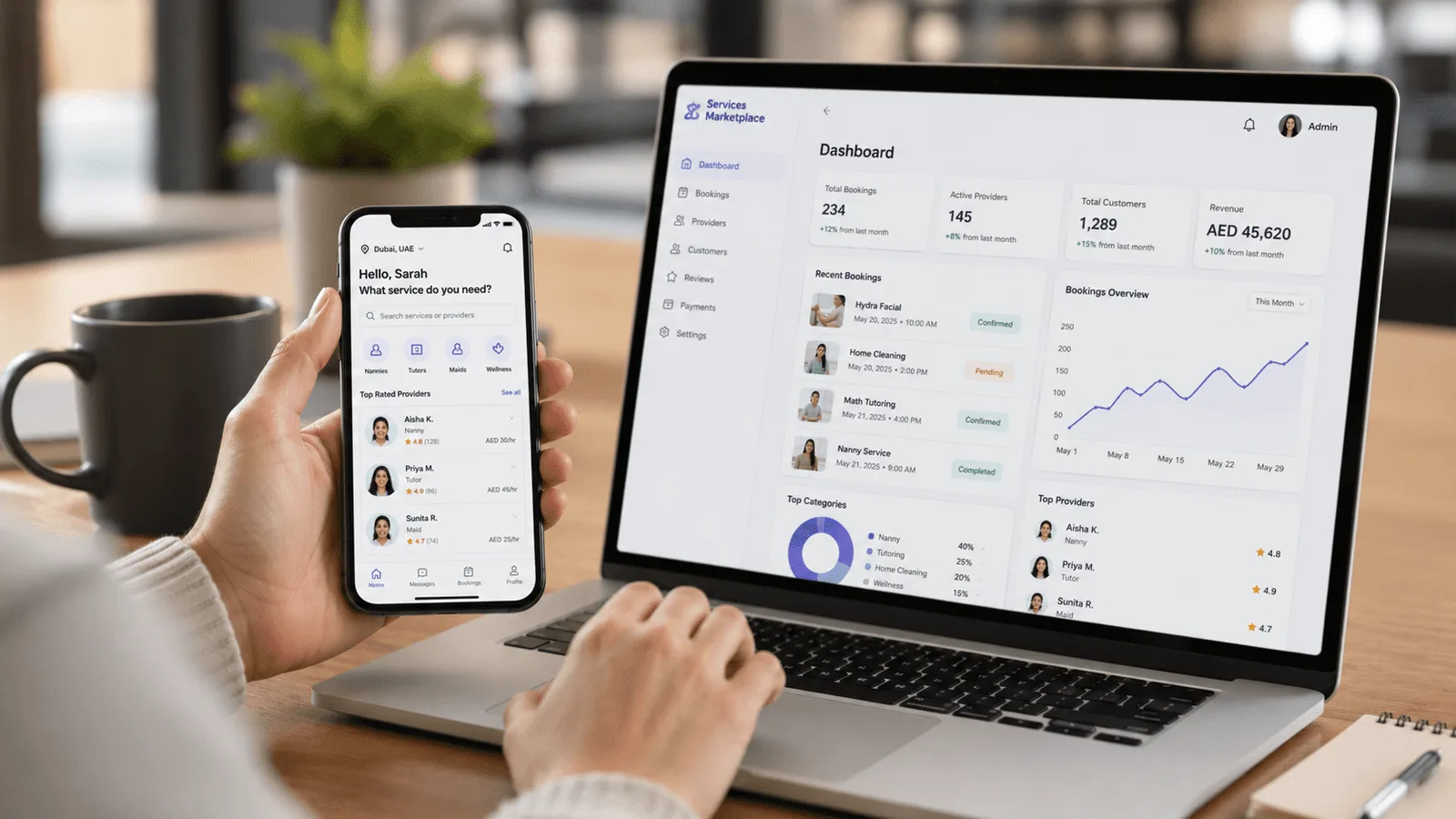
A two sided services marketplace app connects people who offer a service with people who need it. It does this through profiles, search or filtering, and some way to initiate contact or a booking. The global online on demand home services market is projected to grow from 4.7 billion dollars in 2026 to 7.1 billion dollars by 2033, according to 2026 industry research. The app itself mainly handles discovery on both sides at once, provider profiles for customers to evaluate and customer demand for providers to respond to. Both halves need to work well before the marketplace as a whole feels usable. None of this requires anything exotic technically. It requires deciding how much of the transaction happens inside the app, how trust gets established between two strangers, and which side to seed first. A marketplace with plenty of demand and no supply fails just as fast as the reverse. Both failure modes look identical from the outside: an app nobody sticks around in.
Three Ways to Structure the Transaction
Not every marketplace handles the actual transaction the same way, and the three real structures carry very different build complexity.
Structure | Best for | Tradeoff |
Directory with direct contact | Trust based hiring, ongoing relationships | No in app payment, no natural monetization point |
Full transactional booking | Standardized, bookable services | Higher build complexity for payments and scheduling |
Embedded offer layer | Adding matching to an existing app | Usually no payment processing, narrower scope |
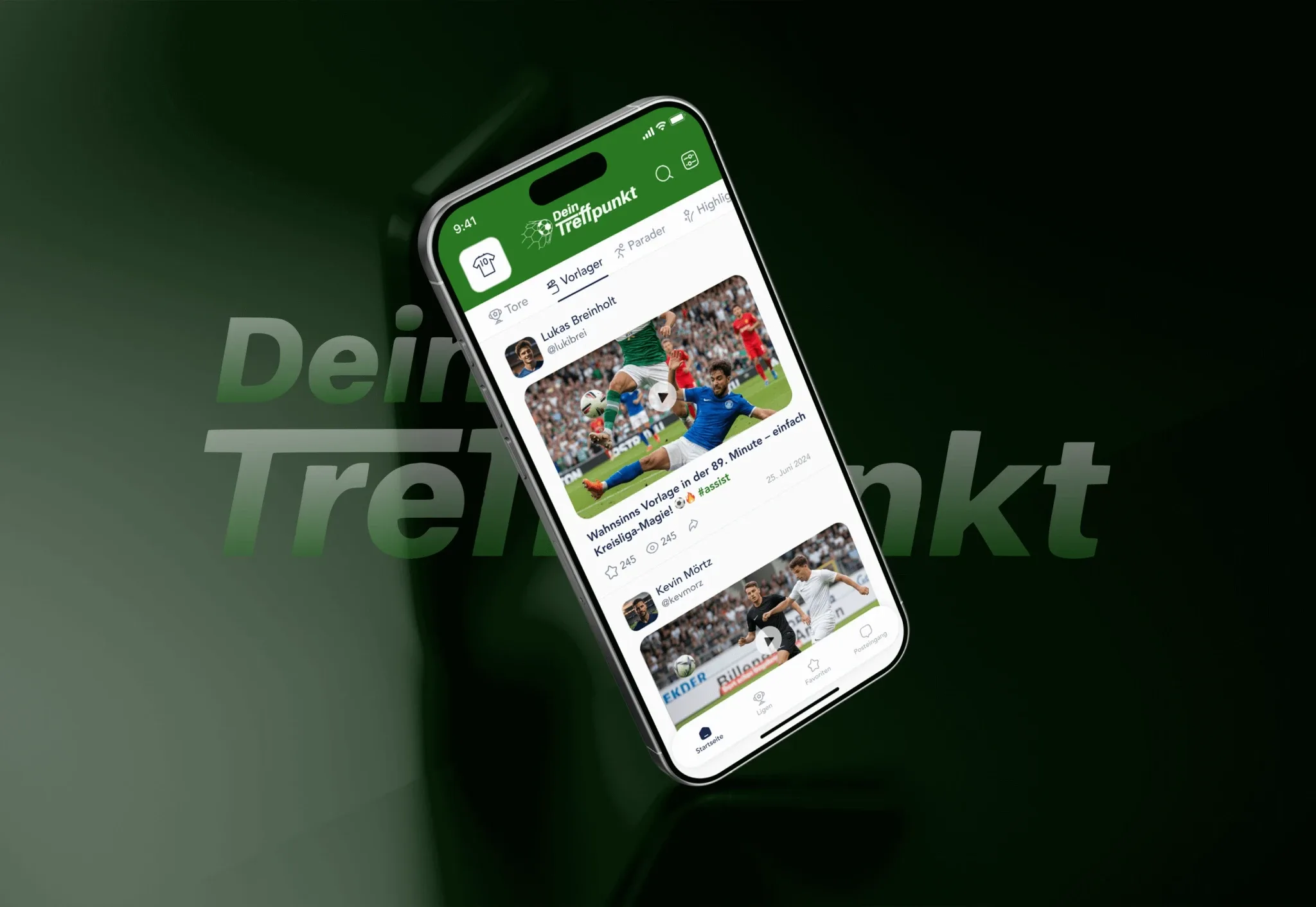
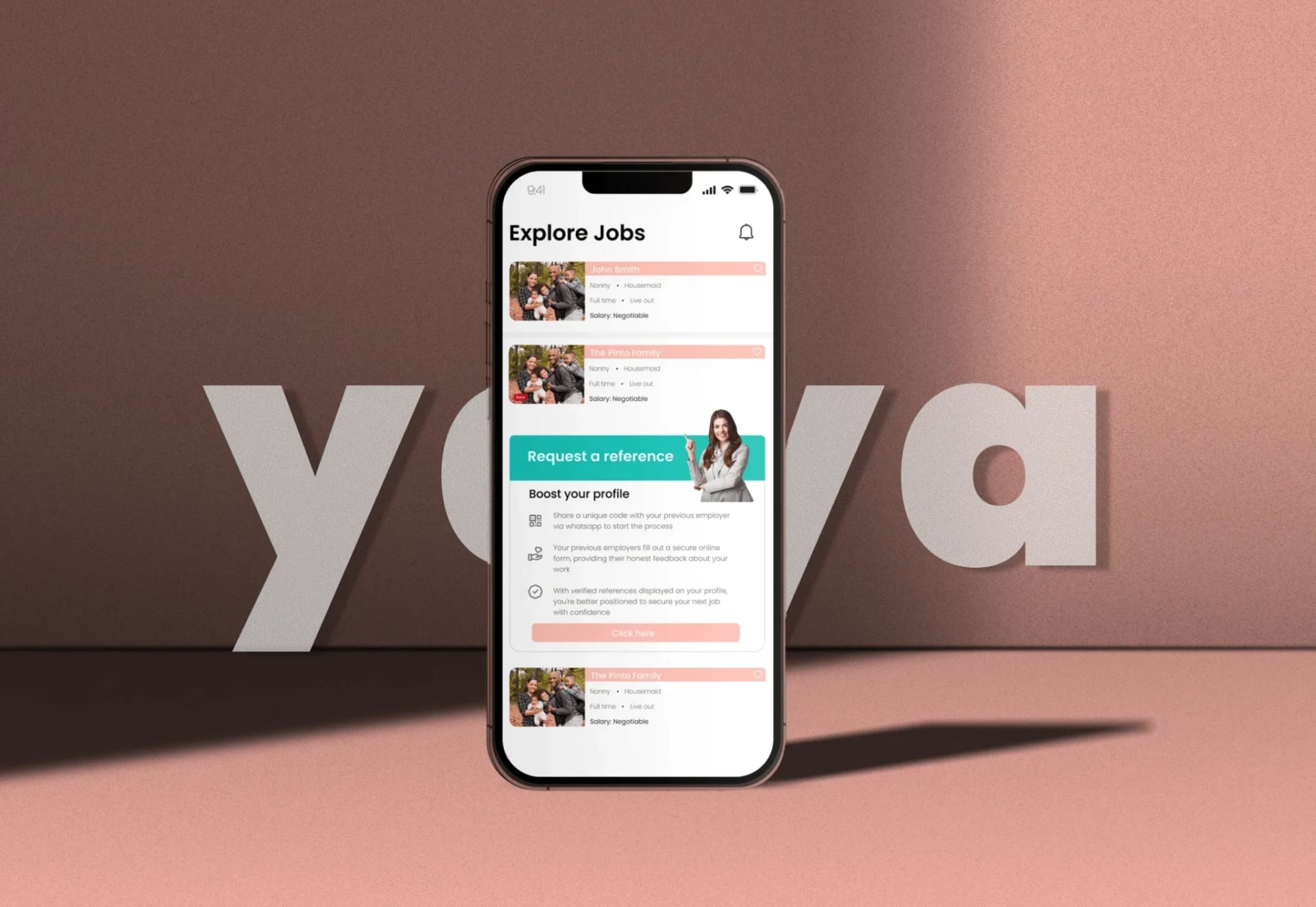
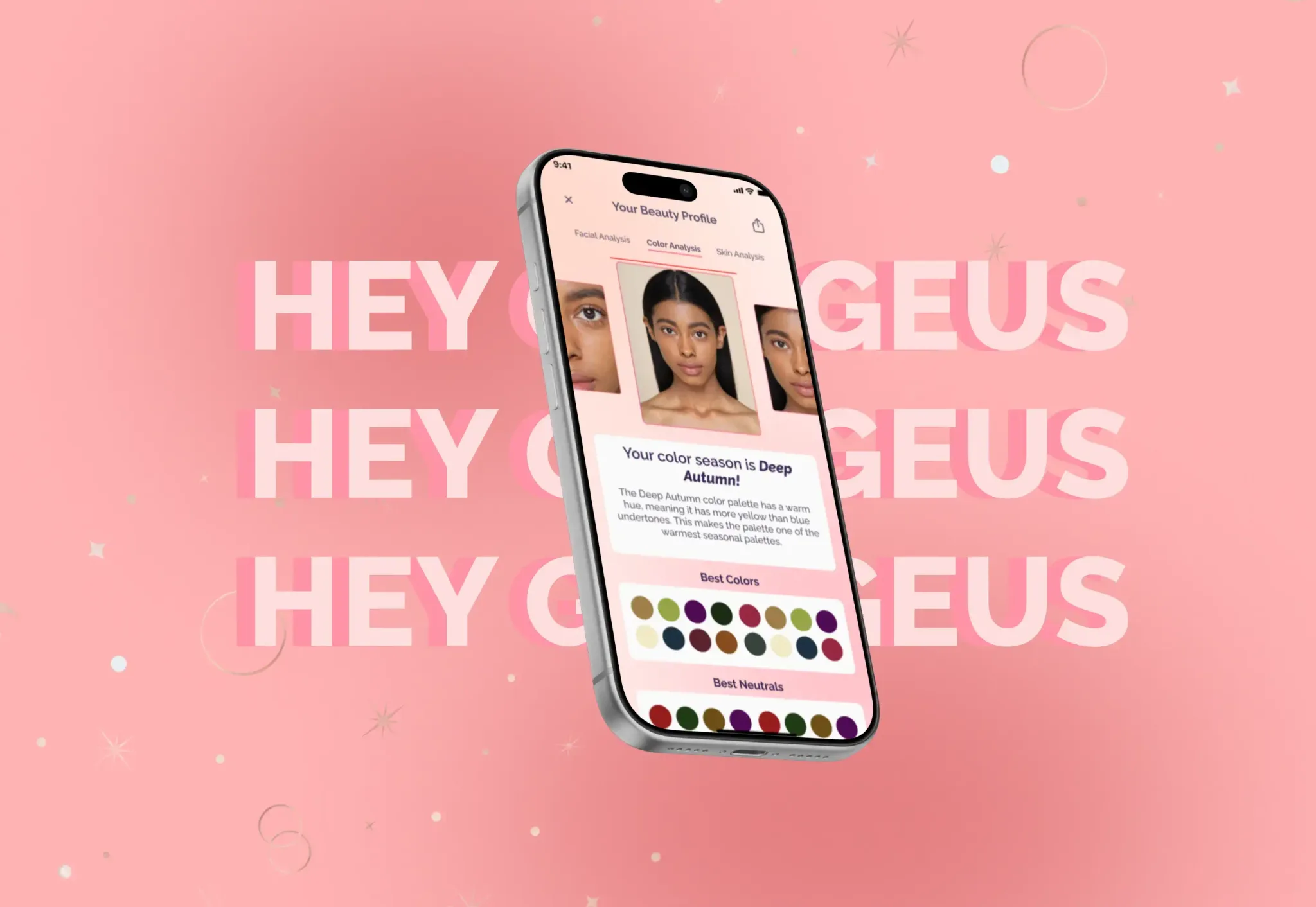
Yaya works as a directory with direct contact, letting families search and filter caregivers, then message and hire them directly. The actual working relationship continues outside the app afterward, closer to how a trusted personal referral would work. Hey Gorgeous runs a full transactional booking flow instead, handling search, booking, deposits, and payment inside the app from the first visit to the checkout. Treffpunkt's Transfer Market is a third pattern, an embedded offer layer inside a broader social app that connects football players and club managers without any payment processing at all.
Choosing the transaction model shapes everything else in the build:
Choose a directory with direct contact when the relationship matters more than the transaction, since trust and ongoing fit, the way Yaya handles caregiver hiring, outweigh instant booking
Choose full transactional booking when the service is standardized enough to price and schedule in advance, the way Hey Gorgeous handles beauty appointments
Choose an embedded offer layer when the goal is adding lightweight matching to a product that already has an audience, rather than building a standalone marketplace
These are not fixed choices forever. A directory can add booking later, once trust and volume justify the build. An embedded offer layer can grow into a fuller marketplace too, if the demand for it turns out to be real. Starting at the lightest model the category can honestly support is usually the safer bet.
How to Scope the First Version
Most marketplace apps fail on sequencing, not on the feature set. A first version that seeds one side deliberately beats one that opens to both sides at once and hopes they meet in the middle.
Pick the transaction model first, since a directory and a full booking flow are genuinely different builds, not variations of the same screens
Decide which side to seed before launch, since supply almost always needs to come first, and a handful of real providers matters more than a marketing push aimed at customers with nothing yet to book
Design the trust signal, ratings, verification, or both, before opening broadly, since two strangers transacting need more reassurance than either side of a typical social app
Teams that open to both sides simultaneously usually end up manually recruiting supply after launch anyway. That happens once an empty provider list makes the app feel broken to the first customers who show up.
What a Realistic Build Timeline Looks Like
Shipped examples in this category took four to six months, and four stages make up that window.
Discovery and scope, where the team locks the transaction model, the trust signals, and the seeding plan before any screen gets designed
Core build, the largest block on the calendar, where profiles, search or filtering, and either messaging or booking come together against that locked scope
Two sided testing, run with real providers and real customers rather than one team member playing both roles, since trust dynamics only show up between actual strangers
Launch and monitor, the first few weeks live, when the seeding plan gets tested against whether real supply and real demand actually meet
Skipping real two sided testing is the most common reason a marketplace that looked balanced in an internal walkthrough feels lopsided the moment real users on both sides show up.


Four Things That Move the Budget and Timeline
These four factors move the budget on a marketplace app more than anything else in the brief:
Category breadth, since Yaya supports nannies, tutors, maids, and wellness coaches across one platform, which added scope even without in app payment
Payment and escrow complexity, since handling deposits and full charges, the way Hey Gorgeous does, adds real build time that a message based directory never needs
Verification depth, since trust based categories like household help usually need deeper provider vetting than a beauty appointment does
Whether the transaction stays in app or moves off platform after first contact, since that decision shapes the entire monetization model, not just one feature
Hey Gorgeous shipped in four months with full payments but one service category, while Yaya took six months with no in app payment but four provider categories. Category breadth, not payment complexity, was the bigger driver for these two. That is easy to miss if a team assumes payment integration is automatically the harder problem to solve.
What This Costs Beyond the Build Fee
The build fee covers the app. What it costs to run afterward depends almost entirely on where the transaction actually happens.
Payment processing fees, a real percentage cut on every transaction for a full booking model like Hey Gorgeous's, with no equivalent cost at all for a directory model like Yaya's
Verification and background check costs, which recur per new provider and scale with how trust sensitive the category is
Customer support and dispute resolution, which grows with transaction volume for a booking model and stays lighter for a directory model where the app facilitates contact rather than payment
A directory model is cheaper to run but has no obvious revenue line built into the product itself. A booking model costs more to operate but has a transaction fee sitting right where the money already moves. That difference is worth deciding on purpose, not discovering after launch when the monetization question finally has to be answered.

Where These Apps Break in Production
The two sided cold start problem is the headline risk, but it is rarely the last one a team has to solve.
Supply side no shows or cancellations, since a customer's trust in the entire marketplace can break on a single bad experience with one provider
Trust and safety incidents, which carry more real weight in categories like household and childcare help than in almost any other marketplace type
Payment disputes, for any model handling money directly, since deposits and cancellations need a clear policy before the first real disagreement, not after
Going off platform after first contact, since a directory model in particular can lose repeat transaction visibility once a family and a caregiver have exchanged contact details once
None of this shows up when a team tests the app with colleagues playing both sides, since colleagues already trust each other and already want the test to succeed. Real strangers extend neither courtesy automatically. It shows up once real strangers, with real money or real trust on the line, use the marketplace as intended. That is why two sided testing with real participants matters more here than in almost any other category.
Services Marketplace Apps We Have Shipped
Neon Apps has built marketplace experiences with different transaction models, each fitting a different kind of service.
Project | Client | Year | Build time | What it solved |
Rui Gomez | 2022 | 6 months | Direct hiring of vetted household and childcare help in the UAE | |
Wazo Ventures | 2023 | 4 months | Full booking and payment flow for beauty service appointments | |
Treffpunkt | 2025 | 9 months | A player to club transfer market embedded inside a football community |
Yaya, Hey Gorgeous, and Treffpunkt sit at three different points on the same spectrum, from the lightest possible matching layer to a fully transactional booking flow. Yaya removes the agency middleman from household hiring in the UAE, letting families search, filter, and message caregivers directly across four categories, with ratings building trust over repeated use. Hey Gorgeous compresses the entire booking journey, find, book, pay, and return, into a few taps. Its deposit system measurably cut no shows for providers, and its reminders did the same on the customer side. Treffpunkt took the lightest version of the model, adding a transfer market to an existing football community rather than building a marketplace as the core product. That choice kept its scope focused on the community itself, with the marketplace feature riding on top of an audience that already existed. Planning SaaS platform development around which of these three transaction depths a service actually needs kept each build scoped correctly. None of the three defaulted to a full payment flow just because that is the familiar pattern.

related projects
FAQ
What is a two sided services marketplace app?
What does Neon Apps bring to a marketplace app project?
Should the app handle payment directly or just facilitate contact?
How does Neon Apps scope a marketplace app project?
How long and how much does a marketplace app cost to build?
Stay Inspired
Get fresh design insights, articles, and resources delivered straight to your inbox.
Get stories, insights, and updates from the Neon Apps team straight to your inbox.
Latest Blogs
Stay Inspired
Get stories, insights, and updates from the Neon Apps team straight to your inbox.
Got a project?
Let's Connect
Got a project? We build world-class mobile and web apps for startups and global brands.
Neon Apps is a product development company building mobile, web, and SaaS products with an 85-member in-house team in Istanbul and New York, delivering scalable products as a long-term development partner.
Industries

Development
How to Build a Two Sided Services Marketplace App
A services marketplace app connects providers and customers on one platform. Learn how to plan the transaction model, development timeline, cost, and two-sided user acquisition for your marketplace app.
Two empty rooms instead of one
A services marketplace needs both providers and customers before either side finds it worth opening the app, which is a harder starting position than most other app categories face. This guide covers the architecture, cost, and timeline behind solving that harder, two sided version of the cold start problem.
What a Two Sided Services Marketplace App Actually Does
A two sided services marketplace app connects people who offer a service with people who need it. It does this through profiles, search or filtering, and some way to initiate contact or a booking. The global online on demand home services market is projected to grow from 4.7 billion dollars in 2026 to 7.1 billion dollars by 2033, according to 2026 industry research. The app itself mainly handles discovery on both sides at once, provider profiles for customers to evaluate and customer demand for providers to respond to. Both halves need to work well before the marketplace as a whole feels usable. None of this requires anything exotic technically. It requires deciding how much of the transaction happens inside the app, how trust gets established between two strangers, and which side to seed first. A marketplace with plenty of demand and no supply fails just as fast as the reverse. Both failure modes look identical from the outside: an app nobody sticks around in.

Three Ways to Structure the Transaction
Not every marketplace handles the actual transaction the same way, and the three real structures carry very different build complexity.
Structure | Best for | Tradeoff |
Directory with direct contact | Trust based hiring, ongoing relationships | No in app payment, no natural monetization point |
Full transactional booking | Standardized, bookable services | Higher build complexity for payments and scheduling |
Embedded offer layer | Adding matching to an existing app | Usually no payment processing, narrower scope |
Yaya works as a directory with direct contact, letting families search and filter caregivers, then message and hire them directly. The actual working relationship continues outside the app afterward, closer to how a trusted personal referral would work. Hey Gorgeous runs a full transactional booking flow instead, handling search, booking, deposits, and payment inside the app from the first visit to the checkout. Treffpunkt's Transfer Market is a third pattern, an embedded offer layer inside a broader social app that connects football players and club managers without any payment processing at all.
Choosing the transaction model shapes everything else in the build:
Choose a directory with direct contact when the relationship matters more than the transaction, since trust and ongoing fit, the way Yaya handles caregiver hiring, outweigh instant booking
Choose full transactional booking when the service is standardized enough to price and schedule in advance, the way Hey Gorgeous handles beauty appointments
Choose an embedded offer layer when the goal is adding lightweight matching to a product that already has an audience, rather than building a standalone marketplace
These are not fixed choices forever. A directory can add booking later, once trust and volume justify the build. An embedded offer layer can grow into a fuller marketplace too, if the demand for it turns out to be real. Starting at the lightest model the category can honestly support is usually the safer bet.
How to Scope the First Version
Most marketplace apps fail on sequencing, not on the feature set. A first version that seeds one side deliberately beats one that opens to both sides at once and hopes they meet in the middle.
Pick the transaction model first, since a directory and a full booking flow are genuinely different builds, not variations of the same screens
Decide which side to seed before launch, since supply almost always needs to come first, and a handful of real providers matters more than a marketing push aimed at customers with nothing yet to book
Design the trust signal, ratings, verification, or both, before opening broadly, since two strangers transacting need more reassurance than either side of a typical social app
Teams that open to both sides simultaneously usually end up manually recruiting supply after launch anyway. That happens once an empty provider list makes the app feel broken to the first customers who show up.
What a Realistic Build Timeline Looks Like
Shipped examples in this category took four to six months, and four stages make up that window.
Discovery and scope, where the team locks the transaction model, the trust signals, and the seeding plan before any screen gets designed
Core build, the largest block on the calendar, where profiles, search or filtering, and either messaging or booking come together against that locked scope
Two sided testing, run with real providers and real customers rather than one team member playing both roles, since trust dynamics only show up between actual strangers
Launch and monitor, the first few weeks live, when the seeding plan gets tested against whether real supply and real demand actually meet
Skipping real two sided testing is the most common reason a marketplace that looked balanced in an internal walkthrough feels lopsided the moment real users on both sides show up.


Four Things That Move the Budget and Timeline
These four factors move the budget on a marketplace app more than anything else in the brief:
Category breadth, since Yaya supports nannies, tutors, maids, and wellness coaches across one platform, which added scope even without in app payment
Payment and escrow complexity, since handling deposits and full charges, the way Hey Gorgeous does, adds real build time that a message based directory never needs
Verification depth, since trust based categories like household help usually need deeper provider vetting than a beauty appointment does
Whether the transaction stays in app or moves off platform after first contact, since that decision shapes the entire monetization model, not just one feature
Hey Gorgeous shipped in four months with full payments but one service category, while Yaya took six months with no in app payment but four provider categories. Category breadth, not payment complexity, was the bigger driver for these two. That is easy to miss if a team assumes payment integration is automatically the harder problem to solve.
What This Costs Beyond the Build Fee
The build fee covers the app. What it costs to run afterward depends almost entirely on where the transaction actually happens.
Payment processing fees, a real percentage cut on every transaction for a full booking model like Hey Gorgeous's, with no equivalent cost at all for a directory model like Yaya's
Verification and background check costs, which recur per new provider and scale with how trust sensitive the category is
Customer support and dispute resolution, which grows with transaction volume for a booking model and stays lighter for a directory model where the app facilitates contact rather than payment
A directory model is cheaper to run but has no obvious revenue line built into the product itself. A booking model costs more to operate but has a transaction fee sitting right where the money already moves. That difference is worth deciding on purpose, not discovering after launch when the monetization question finally has to be answered.

Where These Apps Break in Production
The two sided cold start problem is the headline risk, but it is rarely the last one a team has to solve.
Supply side no shows or cancellations, since a customer's trust in the entire marketplace can break on a single bad experience with one provider
Trust and safety incidents, which carry more real weight in categories like household and childcare help than in almost any other marketplace type
Payment disputes, for any model handling money directly, since deposits and cancellations need a clear policy before the first real disagreement, not after
Going off platform after first contact, since a directory model in particular can lose repeat transaction visibility once a family and a caregiver have exchanged contact details once
None of this shows up when a team tests the app with colleagues playing both sides, since colleagues already trust each other and already want the test to succeed. Real strangers extend neither courtesy automatically. It shows up once real strangers, with real money or real trust on the line, use the marketplace as intended. That is why two sided testing with real participants matters more here than in almost any other category.
Services Marketplace Apps We Have Shipped
Neon Apps has built marketplace experiences with different transaction models, each fitting a different kind of service.
Project | Client | Year | Build time | What it solved |
Rui Gomez | 2022 | 6 months | Direct hiring of vetted household and childcare help in the UAE | |
Wazo Ventures | 2023 | 4 months | Full booking and payment flow for beauty service appointments | |
Treffpunkt | 2025 | 9 months | A player to club transfer market embedded inside a football community |
Yaya, Hey Gorgeous, and Treffpunkt sit at three different points on the same spectrum, from the lightest possible matching layer to a fully transactional booking flow. Yaya removes the agency middleman from household hiring in the UAE, letting families search, filter, and message caregivers directly across four categories, with ratings building trust over repeated use. Hey Gorgeous compresses the entire booking journey, find, book, pay, and return, into a few taps. Its deposit system measurably cut no shows for providers, and its reminders did the same on the customer side. Treffpunkt took the lightest version of the model, adding a transfer market to an existing football community rather than building a marketplace as the core product. That choice kept its scope focused on the community itself, with the marketplace feature riding on top of an audience that already existed. Planning SaaS platform development around which of these three transaction depths a service actually needs kept each build scoped correctly. None of the three defaulted to a full payment flow just because that is the familiar pattern.
related projects
FAQ
What is a two sided services marketplace app?
What does Neon Apps bring to a marketplace app project?
Should the app handle payment directly or just facilitate contact?
How does Neon Apps scope a marketplace app project?
How long and how much does a marketplace app cost to build?
Stay Inspired
Get fresh design insights, articles, and resources delivered straight to your inbox.
Get stories, insights, and updates from the Neon Apps team straight to your inbox.
Latest Blogs
Stay Inspired
Get stories, insights, and updates from the Neon Apps team straight to your inbox.
Got a project?
Let's Connect
Got a project? We build world-class mobile and web apps for startups and global brands.
Neon Apps is a product development company building mobile, web, and SaaS products with an 85-member in-house team in Istanbul and New York, delivering scalable products as a long-term development partner.
Industries

Development
How to Build a Two Sided Services Marketplace App
A services marketplace app connects providers and customers on one platform. Learn how to plan the transaction model, development timeline, cost, and two-sided user acquisition for your marketplace app.
Two empty rooms instead of one
A services marketplace needs both providers and customers before either side finds it worth opening the app, which is a harder starting position than most other app categories face. This guide covers the architecture, cost, and timeline behind solving that harder, two sided version of the cold start problem.
What a Two Sided Services Marketplace App Actually Does
A two sided services marketplace app connects people who offer a service with people who need it. It does this through profiles, search or filtering, and some way to initiate contact or a booking. The global online on demand home services market is projected to grow from 4.7 billion dollars in 2026 to 7.1 billion dollars by 2033, according to 2026 industry research. The app itself mainly handles discovery on both sides at once, provider profiles for customers to evaluate and customer demand for providers to respond to. Both halves need to work well before the marketplace as a whole feels usable. None of this requires anything exotic technically. It requires deciding how much of the transaction happens inside the app, how trust gets established between two strangers, and which side to seed first. A marketplace with plenty of demand and no supply fails just as fast as the reverse. Both failure modes look identical from the outside: an app nobody sticks around in.

Three Ways to Structure the Transaction
Not every marketplace handles the actual transaction the same way, and the three real structures carry very different build complexity.
Structure | Best for | Tradeoff |
Directory with direct contact | Trust based hiring, ongoing relationships | No in app payment, no natural monetization point |
Full transactional booking | Standardized, bookable services | Higher build complexity for payments and scheduling |
Embedded offer layer | Adding matching to an existing app | Usually no payment processing, narrower scope |
Yaya works as a directory with direct contact, letting families search and filter caregivers, then message and hire them directly. The actual working relationship continues outside the app afterward, closer to how a trusted personal referral would work. Hey Gorgeous runs a full transactional booking flow instead, handling search, booking, deposits, and payment inside the app from the first visit to the checkout. Treffpunkt's Transfer Market is a third pattern, an embedded offer layer inside a broader social app that connects football players and club managers without any payment processing at all.
Choosing the transaction model shapes everything else in the build:
Choose a directory with direct contact when the relationship matters more than the transaction, since trust and ongoing fit, the way Yaya handles caregiver hiring, outweigh instant booking
Choose full transactional booking when the service is standardized enough to price and schedule in advance, the way Hey Gorgeous handles beauty appointments
Choose an embedded offer layer when the goal is adding lightweight matching to a product that already has an audience, rather than building a standalone marketplace
These are not fixed choices forever. A directory can add booking later, once trust and volume justify the build. An embedded offer layer can grow into a fuller marketplace too, if the demand for it turns out to be real. Starting at the lightest model the category can honestly support is usually the safer bet.
How to Scope the First Version
Most marketplace apps fail on sequencing, not on the feature set. A first version that seeds one side deliberately beats one that opens to both sides at once and hopes they meet in the middle.
Pick the transaction model first, since a directory and a full booking flow are genuinely different builds, not variations of the same screens
Decide which side to seed before launch, since supply almost always needs to come first, and a handful of real providers matters more than a marketing push aimed at customers with nothing yet to book
Design the trust signal, ratings, verification, or both, before opening broadly, since two strangers transacting need more reassurance than either side of a typical social app
Teams that open to both sides simultaneously usually end up manually recruiting supply after launch anyway. That happens once an empty provider list makes the app feel broken to the first customers who show up.
What a Realistic Build Timeline Looks Like
Shipped examples in this category took four to six months, and four stages make up that window.
Discovery and scope, where the team locks the transaction model, the trust signals, and the seeding plan before any screen gets designed
Core build, the largest block on the calendar, where profiles, search or filtering, and either messaging or booking come together against that locked scope
Two sided testing, run with real providers and real customers rather than one team member playing both roles, since trust dynamics only show up between actual strangers
Launch and monitor, the first few weeks live, when the seeding plan gets tested against whether real supply and real demand actually meet
Skipping real two sided testing is the most common reason a marketplace that looked balanced in an internal walkthrough feels lopsided the moment real users on both sides show up.


Four Things That Move the Budget and Timeline
These four factors move the budget on a marketplace app more than anything else in the brief:
Category breadth, since Yaya supports nannies, tutors, maids, and wellness coaches across one platform, which added scope even without in app payment
Payment and escrow complexity, since handling deposits and full charges, the way Hey Gorgeous does, adds real build time that a message based directory never needs
Verification depth, since trust based categories like household help usually need deeper provider vetting than a beauty appointment does
Whether the transaction stays in app or moves off platform after first contact, since that decision shapes the entire monetization model, not just one feature
Hey Gorgeous shipped in four months with full payments but one service category, while Yaya took six months with no in app payment but four provider categories. Category breadth, not payment complexity, was the bigger driver for these two. That is easy to miss if a team assumes payment integration is automatically the harder problem to solve.
What This Costs Beyond the Build Fee
The build fee covers the app. What it costs to run afterward depends almost entirely on where the transaction actually happens.
Payment processing fees, a real percentage cut on every transaction for a full booking model like Hey Gorgeous's, with no equivalent cost at all for a directory model like Yaya's
Verification and background check costs, which recur per new provider and scale with how trust sensitive the category is
Customer support and dispute resolution, which grows with transaction volume for a booking model and stays lighter for a directory model where the app facilitates contact rather than payment
A directory model is cheaper to run but has no obvious revenue line built into the product itself. A booking model costs more to operate but has a transaction fee sitting right where the money already moves. That difference is worth deciding on purpose, not discovering after launch when the monetization question finally has to be answered.

Where These Apps Break in Production
The two sided cold start problem is the headline risk, but it is rarely the last one a team has to solve.
Supply side no shows or cancellations, since a customer's trust in the entire marketplace can break on a single bad experience with one provider
Trust and safety incidents, which carry more real weight in categories like household and childcare help than in almost any other marketplace type
Payment disputes, for any model handling money directly, since deposits and cancellations need a clear policy before the first real disagreement, not after
Going off platform after first contact, since a directory model in particular can lose repeat transaction visibility once a family and a caregiver have exchanged contact details once
None of this shows up when a team tests the app with colleagues playing both sides, since colleagues already trust each other and already want the test to succeed. Real strangers extend neither courtesy automatically. It shows up once real strangers, with real money or real trust on the line, use the marketplace as intended. That is why two sided testing with real participants matters more here than in almost any other category.
Services Marketplace Apps We Have Shipped
Neon Apps has built marketplace experiences with different transaction models, each fitting a different kind of service.
Project | Client | Year | Build time | What it solved |
Rui Gomez | 2022 | 6 months | Direct hiring of vetted household and childcare help in the UAE | |
Wazo Ventures | 2023 | 4 months | Full booking and payment flow for beauty service appointments | |
Treffpunkt | 2025 | 9 months | A player to club transfer market embedded inside a football community |
Yaya, Hey Gorgeous, and Treffpunkt sit at three different points on the same spectrum, from the lightest possible matching layer to a fully transactional booking flow. Yaya removes the agency middleman from household hiring in the UAE, letting families search, filter, and message caregivers directly across four categories, with ratings building trust over repeated use. Hey Gorgeous compresses the entire booking journey, find, book, pay, and return, into a few taps. Its deposit system measurably cut no shows for providers, and its reminders did the same on the customer side. Treffpunkt took the lightest version of the model, adding a transfer market to an existing football community rather than building a marketplace as the core product. That choice kept its scope focused on the community itself, with the marketplace feature riding on top of an audience that already existed. Planning SaaS platform development around which of these three transaction depths a service actually needs kept each build scoped correctly. None of the three defaulted to a full payment flow just because that is the familiar pattern.
related projects
FAQ
What is a two sided services marketplace app?
What does Neon Apps bring to a marketplace app project?
Should the app handle payment directly or just facilitate contact?
How does Neon Apps scope a marketplace app project?
How long and how much does a marketplace app cost to build?
Stay Inspired
Get fresh design insights, articles, and resources delivered straight to your inbox.
Get stories, insights, and updates from the Neon Apps team straight to your inbox.
Latest Blogs
Stay Inspired
Get stories, insights, and updates from the Neon Apps team straight to your inbox.
Got a project?
Let's Connect
Got a project? We build world-class mobile and web apps for startups and global brands.
Neon Apps is a product development company building mobile, web, and SaaS products with an 85-member in-house team in Istanbul and New York, delivering scalable products as a long-term development partner.
Industries