Summarize with AI

The empty room problem 

A social app with no one in it fails on day one, no matter how polished the design or how solid the engineering behind it is. This guide covers the architecture, cost, and timeline behind a community app, and the cold start problem that sits underneath all of it. 

What a Social Community App Actually Does 

A social community app brings people together around a shared interest, identity, or goal through profiles, groups, events, and some form of messaging or posting. The global online community platform market is projected to reach 1.47 billion dollars in 2026, according to 2026 industry research. It is expected to grow to 3.67 billion dollars by 2035, at a 10.5 percent compound annual rate. The app itself mainly handles discovery, since finding the right group or person matters more here than in almost any other category. It also handles the messaging or activity feed that keeps members coming back. None of this requires anything exotic technically. It requires deciding who the community is for specifically, how new members get discovered by existing ones, and how the app stays worth opening once the initial novelty wears off. That last question is the one most first versions underestimate. 

Product designer sketching community app user-flow on paper

Three Ways to Structure a Community 

Not every community app is organizing people the same way, and the three real structures solve the cold start problem differently. 

Structure 

Best for 

Tradeoff 

Open interest based community 

Broad discovery around shared interests 

Harder to seed with enough early activity to feel alive 

Niche vertical community 

A specific passion with its own built in tools 

Smaller total audience, deeper engagement per user 

Verified gated community 

Trust dependent groups, high value connections 

Verification friction slows signups by design 

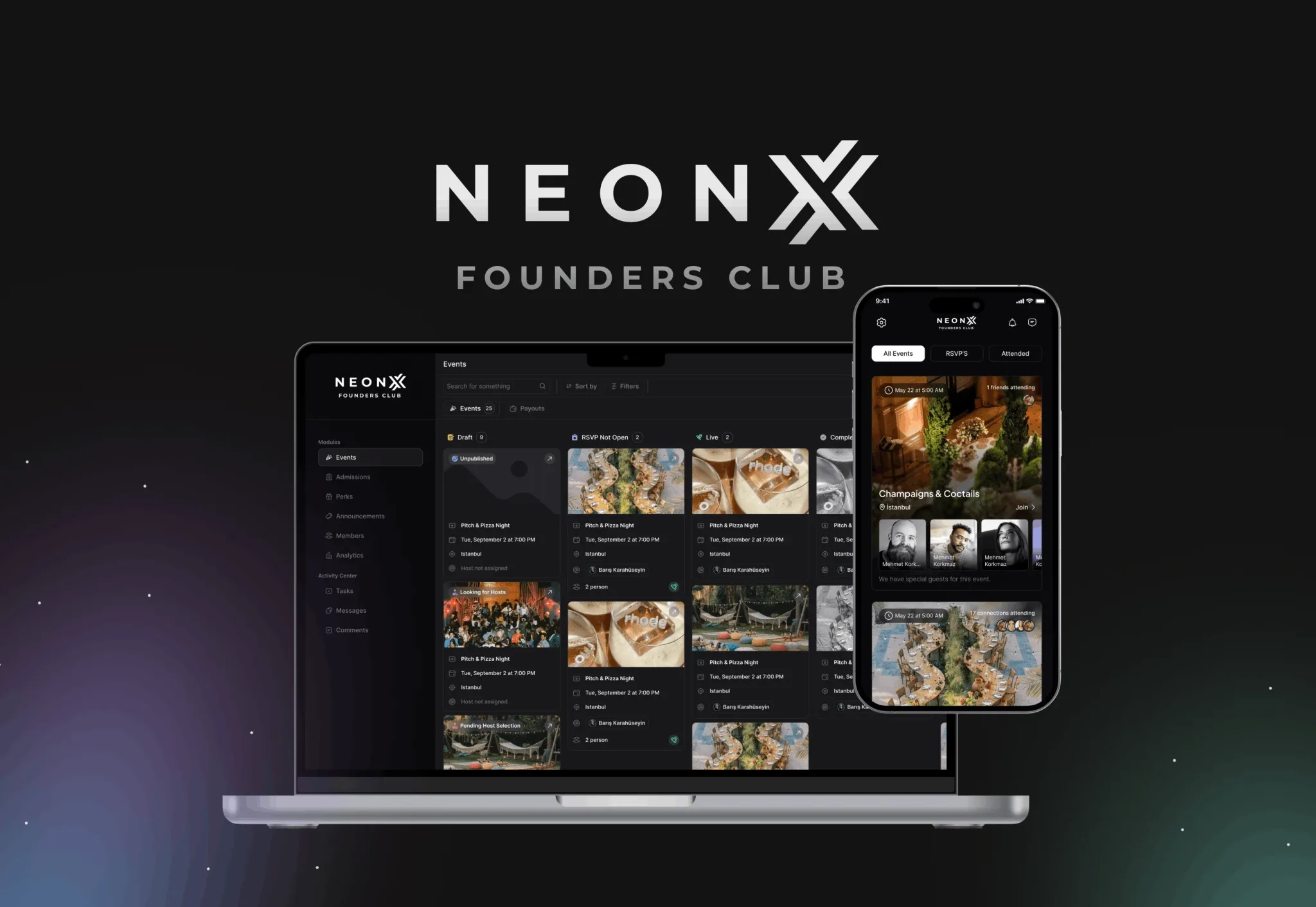
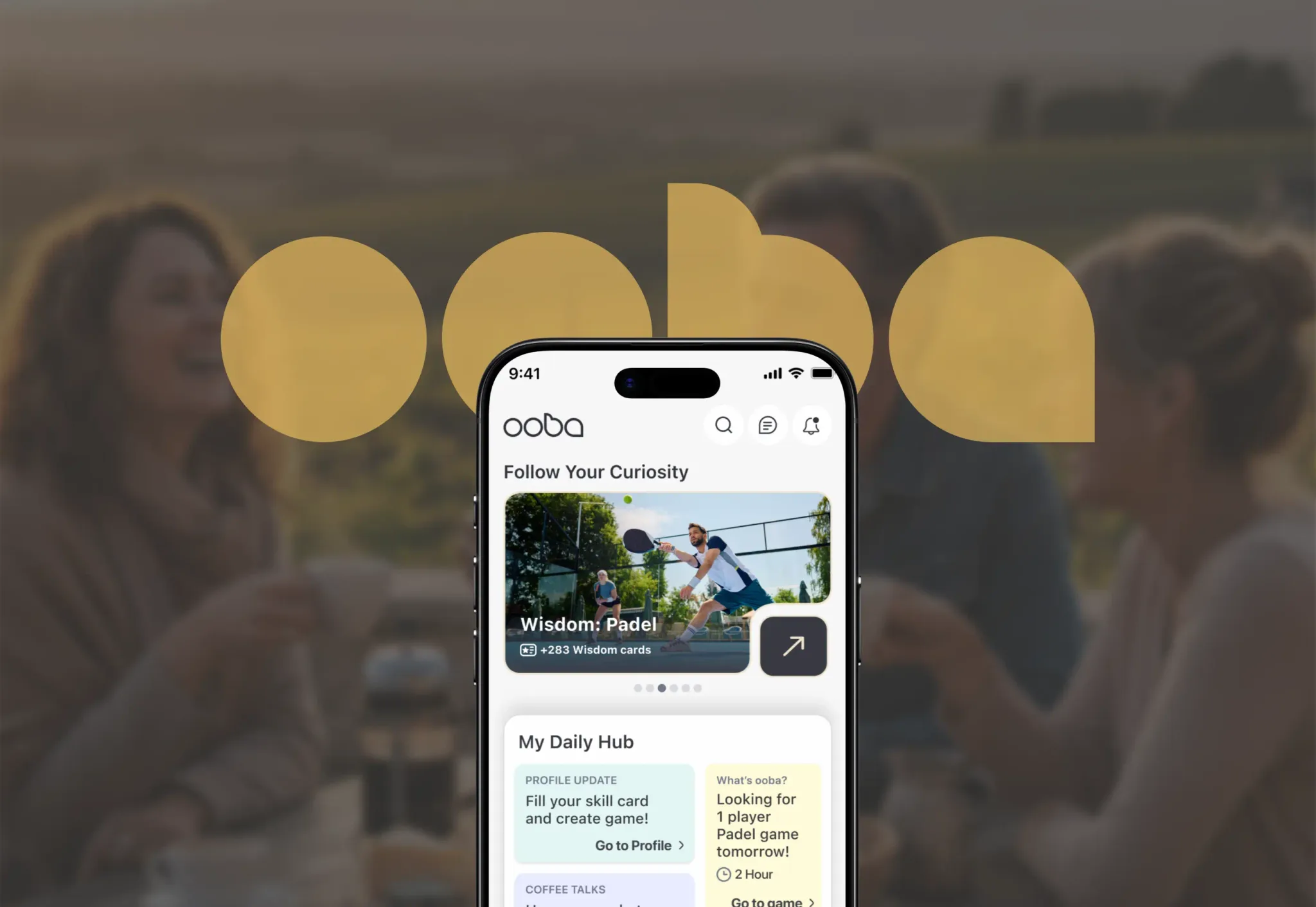
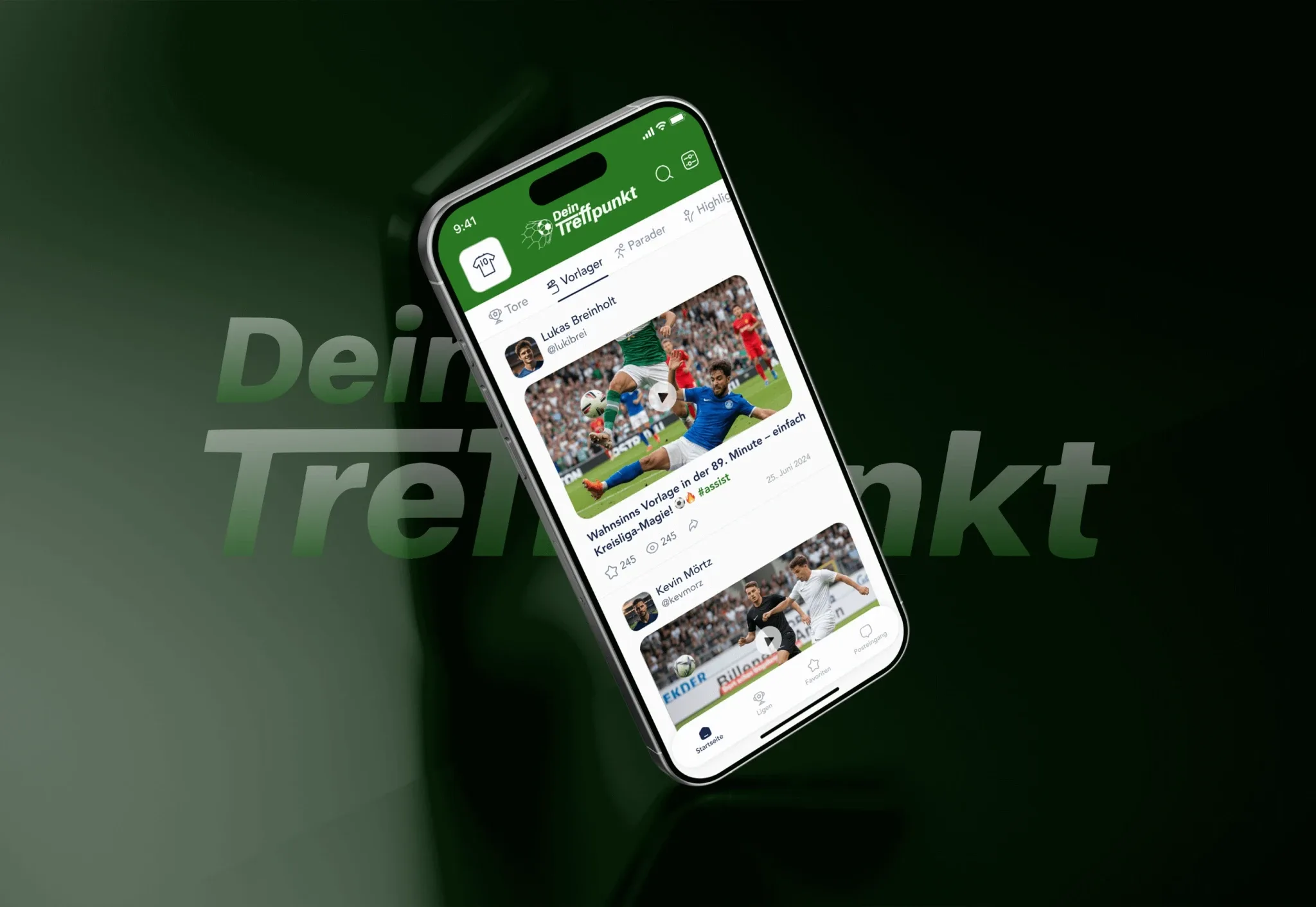
Ooba is an open interest based community, letting members browse groups and events across a wide range of interests. Treffpunkt goes narrow instead, built entirely around amateur football. Its Transfer Market feature lets players and club managers send direct offers, a tool that only makes sense inside one specific vertical. Founders Club is a verified gated community, where every profile goes through verification before joining. Its core value is trust between a smaller group of real founders, not reach across a large public one. 

The right structure changes what has to be solved first: 

  • Choose an open interest based community when broad discovery is the goal, and invest early in whatever gets the first hundred active members into groups that already feel populated 

  • Choose a niche vertical community when one passion is specific enough to support its own tools, the way Treffpunkt's Transfer Market does 

  • That specificity, more than raw size, is what makes a niche community worth joining over a generic alternative 

  • Choose a verified gated community when trust matters more than reach, and treat the verification step itself as core product work, not an onboarding formality 

None of these three structures is inherently better than the others. Each solves a different version of the same discovery problem, and the wrong choice usually shows up as an app that feels technically complete but never quite finds its people. That failure mode is quiet and easy to miss in early reviews, since the app works exactly as specified. It just never becomes a place anyone wants to return to. 

How to Scope the First Version 

Most community apps fail on the cold start problem, not on the feature set. A narrow first version that solves for a populated feeling beats a broad one that launches empty. 

  • Pick one structure from the three above and design the seeding strategy alongside it, since an open community, a niche one, and a gated one each need a different plan for who joins first 

  • Define the moderation policy before launch, since a community without one absorbs its first real conflict with no clear process, which sets the tone for everything after that first incident 

  • Decide how new members get discovered by existing ones early, since discovery is the mechanic that separates a community that grows itself from one that needs constant manual promotion 

  • Write down what success looks like at 30, 60, and 90 days so the seeding plan has a target beyond a vague sense of activity 

Teams that launch broad and hope critical mass arrives on its own usually end up reseeding the community later with the exact narrow focus they should have started with. That second attempt costs real time and real member trust the first one never had to spend. 

What a Realistic Build Timeline Looks Like 

Shipped examples in this category range from six to nine months, and four stages make up that window. 

  • Discovery and scope, where the team locks the community structure, the moderation policy, and the seeding plan before any screen gets designed 

  • Core build, the largest block on the calendar, where profiles, groups or events, and the messaging or feed system come together against that locked scope 

  • Community and moderation testing, run with a real seed group rather than internal test accounts, since moderation tools only reveal their gaps under genuine social behavior 

  • Launch and monitor, the first few weeks live, when real member growth and real moderation cases test the seeding plan and the policy at the same time 

Skipping real seed group testing is the most common reason a community that looked lively in an internal demo opens to the public and feels empty on day one. 

Amateur football players in changing room mid-conversation after match
Moderation decision-tree sketched in notebook on concrete surface

Four Things That Move the Budget and Timeline 

These four factors move the budget on a social community app more than anything else in the brief: 

  • Vertical specific tooling, since Treffpunkt's Transfer Market added a feature with its own logic well beyond a standard profile and feed, part of why it took three months longer than the other two 

  • Verification complexity, since Founders Club's per profile verification before joining is real ongoing product and operational work, not a one time setup 

  • Events and RSVP systems, since both Founders Club and Ooba built event discovery and attendance tracking on top of the core social graph 

  • Moderation depth, since the tools a team needs to handle harassment, spam, and disputes scale with how open the community is to new members 

Neon Apps shipped Ooba and Founders Club in six months each. Treffpunkt took nine months, adding its football specific Transfer Market on top of the standard community feature set. 

What This Costs Beyond the Build Fee 

The build fee covers the app. What a community costs to run depends heavily on how much human judgment moderation actually needs. 

  • Moderation staffing or tooling, since even automated content filtering eventually escalates real disputes to a person, and community apps generate far more of these than most other categories 

  • Backend and messaging infrastructure that scales with active members and content volume rather than with a fixed per use fee, closer to a habit tracker's cost profile than an AI powered app's 

  • Event infrastructure, for any community built around RSVPs or in person meetups, since scheduling and attendance logic carries its own ongoing maintenance 

A community that grows successfully sees its moderation cost grow right along with it. That is a good problem in one sense, and a real budget line in another that needs planning before it becomes urgent. Budgeting for a single moderator on day one is very different from budgeting for a team once membership crosses a real threshold. 

Founders on rooftop terrace silhouetted against glowing city skyline

Where These Apps Break in Production 

The feature set is rarely what kills a community. The emptiness or the mess does. 

  • The cold start problem returning after launch, since even a well seeded community can go quiet again if the discovery mechanic stops surfacing new groups or people effectively 

  • Moderation gaps, since harassment or spam that goes unaddressed for even a short window can drive away the exact early members a community needs most 

  • Niche plateau, since a vertical community can run out of new members within its specific passion faster than a broader one, which needs to be planned for rather than discovered late 

  • Verification friction killing growth, since a gated community that makes joining too slow or too demanding loses members before they ever experience the trust the verification was meant to build 

None of this shows up in an internal demo with a handful of enthusiastic testers who already want the community to succeed. Real strangers, joining with no loyalty to the project, behave very differently from day one. It shows up in the first real week of public activity. That is why the seeding plan and the moderation policy deserve as much design attention as any screen in the app. 

Social Community Apps We Have Shipped 

Neon Apps has built three community apps, each solving the cold start problem with a different structure. 

Project 

Client 

Year 

Build time 

What it solved 

Ooba 

Future Ready 

2025 

6 months 

Interest based groups and events for genuine social connection 

Treffpunkt 

Treffpunkt 

2025 

9 months 

Amateur football community with match highlights and a player transfer market 

Founders Club 

NeonX Ventures 

2025 

6 months 

Verified, in person focused community for startup founders 

Each of these solved cold start differently. Ooba leans on shared interests to help members find groups and events that already match what they care about, rather than asking them to build a following from nothing. That interest matching is doing the same job a friend recommendation would on a general social app, just without needing an existing network first. Treffpunkt leans on a specific passion so deep that its Transfer Market feature alone gives players and club managers a reason to join beyond general networking. Founders Club is preparing for launch, built around verification and in person events rather than open signup. Trust between a smaller group of real founders was the actual product being built, not reach. Planning MVP development around whichever structure fits the community's real audience, rather than defaulting to the most familiar social app pattern, is what shaped each of these three very differently. 

related projects

FAQ

What is a social community app?

What does Neon Apps bring to a community app project?

Should the first version be open, niche, or gated?

How does Neon Apps scope a social community app project?

How long and how much does a social community app cost to build?

Stay Inspired

Get fresh design insights, articles, and resources delivered straight to your inbox.

Get stories, insights, and updates from the Neon Apps team straight to your inbox.

Latest Blogs

Stay Inspired

Get stories, insights, and updates from the Neon Apps team straight to your inbox.

Got a project?

Let's Connect

Got a project? We build world-class mobile and web apps for startups and global brands.

Contact

Email
support@neonapps.co

Whatsapp
+90 552 733 43 99

Address

New York Office : 31 Hudson Yards, 11th Floor 10065 New York / United States

Istanbul Office : Huzur Mah. Fazıl Kaftanoğlu Caddesi No:7 Kat:10 Sarıyer/Istanbul

© Copyright 2025. All Rights Reserved by Neon Apps

Neon Apps is a product development company building mobile, web, and SaaS products with an 85-member in-house team in Istanbul and New York, delivering scalable products as a long-term development partner.

Summarize with AI

The empty room problem 

A social app with no one in it fails on day one, no matter how polished the design or how solid the engineering behind it is. This guide covers the architecture, cost, and timeline behind a community app, and the cold start problem that sits underneath all of it. 

What a Social Community App Actually Does 

A social community app brings people together around a shared interest, identity, or goal through profiles, groups, events, and some form of messaging or posting. The global online community platform market is projected to reach 1.47 billion dollars in 2026, according to 2026 industry research. It is expected to grow to 3.67 billion dollars by 2035, at a 10.5 percent compound annual rate. The app itself mainly handles discovery, since finding the right group or person matters more here than in almost any other category. It also handles the messaging or activity feed that keeps members coming back. None of this requires anything exotic technically. It requires deciding who the community is for specifically, how new members get discovered by existing ones, and how the app stays worth opening once the initial novelty wears off. That last question is the one most first versions underestimate. 

Product designer sketching community app user-flow on paper

Three Ways to Structure a Community 

Not every community app is organizing people the same way, and the three real structures solve the cold start problem differently. 

Structure 

Best for 

Tradeoff 

Open interest based community 

Broad discovery around shared interests 

Harder to seed with enough early activity to feel alive 

Niche vertical community 

A specific passion with its own built in tools 

Smaller total audience, deeper engagement per user 

Verified gated community 

Trust dependent groups, high value connections 

Verification friction slows signups by design 

Ooba is an open interest based community, letting members browse groups and events across a wide range of interests. Treffpunkt goes narrow instead, built entirely around amateur football. Its Transfer Market feature lets players and club managers send direct offers, a tool that only makes sense inside one specific vertical. Founders Club is a verified gated community, where every profile goes through verification before joining. Its core value is trust between a smaller group of real founders, not reach across a large public one. 

The right structure changes what has to be solved first: 

  • Choose an open interest based community when broad discovery is the goal, and invest early in whatever gets the first hundred active members into groups that already feel populated 

  • Choose a niche vertical community when one passion is specific enough to support its own tools, the way Treffpunkt's Transfer Market does 

  • That specificity, more than raw size, is what makes a niche community worth joining over a generic alternative 

  • Choose a verified gated community when trust matters more than reach, and treat the verification step itself as core product work, not an onboarding formality 

None of these three structures is inherently better than the others. Each solves a different version of the same discovery problem, and the wrong choice usually shows up as an app that feels technically complete but never quite finds its people. That failure mode is quiet and easy to miss in early reviews, since the app works exactly as specified. It just never becomes a place anyone wants to return to. 

How to Scope the First Version 

Most community apps fail on the cold start problem, not on the feature set. A narrow first version that solves for a populated feeling beats a broad one that launches empty. 

  • Pick one structure from the three above and design the seeding strategy alongside it, since an open community, a niche one, and a gated one each need a different plan for who joins first 

  • Define the moderation policy before launch, since a community without one absorbs its first real conflict with no clear process, which sets the tone for everything after that first incident 

  • Decide how new members get discovered by existing ones early, since discovery is the mechanic that separates a community that grows itself from one that needs constant manual promotion 

  • Write down what success looks like at 30, 60, and 90 days so the seeding plan has a target beyond a vague sense of activity 

Teams that launch broad and hope critical mass arrives on its own usually end up reseeding the community later with the exact narrow focus they should have started with. That second attempt costs real time and real member trust the first one never had to spend. 

What a Realistic Build Timeline Looks Like 

Shipped examples in this category range from six to nine months, and four stages make up that window. 

  • Discovery and scope, where the team locks the community structure, the moderation policy, and the seeding plan before any screen gets designed 

  • Core build, the largest block on the calendar, where profiles, groups or events, and the messaging or feed system come together against that locked scope 

  • Community and moderation testing, run with a real seed group rather than internal test accounts, since moderation tools only reveal their gaps under genuine social behavior 

  • Launch and monitor, the first few weeks live, when real member growth and real moderation cases test the seeding plan and the policy at the same time 

Skipping real seed group testing is the most common reason a community that looked lively in an internal demo opens to the public and feels empty on day one. 

Amateur football players in changing room mid-conversation after match
Moderation decision-tree sketched in notebook on concrete surface

Four Things That Move the Budget and Timeline 

These four factors move the budget on a social community app more than anything else in the brief: 

  • Vertical specific tooling, since Treffpunkt's Transfer Market added a feature with its own logic well beyond a standard profile and feed, part of why it took three months longer than the other two 

  • Verification complexity, since Founders Club's per profile verification before joining is real ongoing product and operational work, not a one time setup 

  • Events and RSVP systems, since both Founders Club and Ooba built event discovery and attendance tracking on top of the core social graph 

  • Moderation depth, since the tools a team needs to handle harassment, spam, and disputes scale with how open the community is to new members 

Neon Apps shipped Ooba and Founders Club in six months each. Treffpunkt took nine months, adding its football specific Transfer Market on top of the standard community feature set. 

What This Costs Beyond the Build Fee 

The build fee covers the app. What a community costs to run depends heavily on how much human judgment moderation actually needs. 

  • Moderation staffing or tooling, since even automated content filtering eventually escalates real disputes to a person, and community apps generate far more of these than most other categories 

  • Backend and messaging infrastructure that scales with active members and content volume rather than with a fixed per use fee, closer to a habit tracker's cost profile than an AI powered app's 

  • Event infrastructure, for any community built around RSVPs or in person meetups, since scheduling and attendance logic carries its own ongoing maintenance 

A community that grows successfully sees its moderation cost grow right along with it. That is a good problem in one sense, and a real budget line in another that needs planning before it becomes urgent. Budgeting for a single moderator on day one is very different from budgeting for a team once membership crosses a real threshold. 

Founders on rooftop terrace silhouetted against glowing city skyline

Where These Apps Break in Production 

The feature set is rarely what kills a community. The emptiness or the mess does. 

  • The cold start problem returning after launch, since even a well seeded community can go quiet again if the discovery mechanic stops surfacing new groups or people effectively 

  • Moderation gaps, since harassment or spam that goes unaddressed for even a short window can drive away the exact early members a community needs most 

  • Niche plateau, since a vertical community can run out of new members within its specific passion faster than a broader one, which needs to be planned for rather than discovered late 

  • Verification friction killing growth, since a gated community that makes joining too slow or too demanding loses members before they ever experience the trust the verification was meant to build 

None of this shows up in an internal demo with a handful of enthusiastic testers who already want the community to succeed. Real strangers, joining with no loyalty to the project, behave very differently from day one. It shows up in the first real week of public activity. That is why the seeding plan and the moderation policy deserve as much design attention as any screen in the app. 

Social Community Apps We Have Shipped 

Neon Apps has built three community apps, each solving the cold start problem with a different structure. 

Project 

Client 

Year 

Build time 

What it solved 

Ooba 

Future Ready 

2025 

6 months 

Interest based groups and events for genuine social connection 

Treffpunkt 

Treffpunkt 

2025 

9 months 

Amateur football community with match highlights and a player transfer market 

Founders Club 

NeonX Ventures 

2025 

6 months 

Verified, in person focused community for startup founders 

Each of these solved cold start differently. Ooba leans on shared interests to help members find groups and events that already match what they care about, rather than asking them to build a following from nothing. That interest matching is doing the same job a friend recommendation would on a general social app, just without needing an existing network first. Treffpunkt leans on a specific passion so deep that its Transfer Market feature alone gives players and club managers a reason to join beyond general networking. Founders Club is preparing for launch, built around verification and in person events rather than open signup. Trust between a smaller group of real founders was the actual product being built, not reach. Planning MVP development around whichever structure fits the community's real audience, rather than defaulting to the most familiar social app pattern, is what shaped each of these three very differently. 
related projects

FAQ

What is a social community app?

What does Neon Apps bring to a community app project?

Should the first version be open, niche, or gated?

How does Neon Apps scope a social community app project?

How long and how much does a social community app cost to build?

Stay Inspired

Get fresh design insights, articles, and resources delivered straight to your inbox.

Get stories, insights, and updates from the Neon Apps team straight to your inbox.

Latest Blogs

Stay Inspired

Get stories, insights, and updates from the Neon Apps team straight to your inbox.

Got a project?

Let's Connect

Got a project? We build world-class mobile and web apps for startups and global brands.

Contact

Email
support@neonapps.co

Whatsapp
+90 552 733 43 99

Address

New York Office : 31 Hudson Yards, 11th Floor 10065 New York / United States

Istanbul Office : Huzur Mah. Fazıl Kaftanoğlu Caddesi No:7 Kat:10 Sarıyer/Istanbul

© Copyright 2025. All Rights Reserved by Neon Apps

Neon Apps is a product development company building mobile, web, and SaaS products with an 85-member in-house team in Istanbul and New York, delivering scalable products as a long-term development partner.

Summarize with AI

The empty room problem 

A social app with no one in it fails on day one, no matter how polished the design or how solid the engineering behind it is. This guide covers the architecture, cost, and timeline behind a community app, and the cold start problem that sits underneath all of it. 

What a Social Community App Actually Does 

A social community app brings people together around a shared interest, identity, or goal through profiles, groups, events, and some form of messaging or posting. The global online community platform market is projected to reach 1.47 billion dollars in 2026, according to 2026 industry research. It is expected to grow to 3.67 billion dollars by 2035, at a 10.5 percent compound annual rate. The app itself mainly handles discovery, since finding the right group or person matters more here than in almost any other category. It also handles the messaging or activity feed that keeps members coming back. None of this requires anything exotic technically. It requires deciding who the community is for specifically, how new members get discovered by existing ones, and how the app stays worth opening once the initial novelty wears off. That last question is the one most first versions underestimate. 

Product designer sketching community app user-flow on paper

Three Ways to Structure a Community 

Not every community app is organizing people the same way, and the three real structures solve the cold start problem differently. 

Structure 

Best for 

Tradeoff 

Open interest based community 

Broad discovery around shared interests 

Harder to seed with enough early activity to feel alive 

Niche vertical community 

A specific passion with its own built in tools 

Smaller total audience, deeper engagement per user 

Verified gated community 

Trust dependent groups, high value connections 

Verification friction slows signups by design 

Ooba is an open interest based community, letting members browse groups and events across a wide range of interests. Treffpunkt goes narrow instead, built entirely around amateur football. Its Transfer Market feature lets players and club managers send direct offers, a tool that only makes sense inside one specific vertical. Founders Club is a verified gated community, where every profile goes through verification before joining. Its core value is trust between a smaller group of real founders, not reach across a large public one. 

The right structure changes what has to be solved first: 

  • Choose an open interest based community when broad discovery is the goal, and invest early in whatever gets the first hundred active members into groups that already feel populated 

  • Choose a niche vertical community when one passion is specific enough to support its own tools, the way Treffpunkt's Transfer Market does 

  • That specificity, more than raw size, is what makes a niche community worth joining over a generic alternative 

  • Choose a verified gated community when trust matters more than reach, and treat the verification step itself as core product work, not an onboarding formality 

None of these three structures is inherently better than the others. Each solves a different version of the same discovery problem, and the wrong choice usually shows up as an app that feels technically complete but never quite finds its people. That failure mode is quiet and easy to miss in early reviews, since the app works exactly as specified. It just never becomes a place anyone wants to return to. 

How to Scope the First Version 

Most community apps fail on the cold start problem, not on the feature set. A narrow first version that solves for a populated feeling beats a broad one that launches empty. 

  • Pick one structure from the three above and design the seeding strategy alongside it, since an open community, a niche one, and a gated one each need a different plan for who joins first 

  • Define the moderation policy before launch, since a community without one absorbs its first real conflict with no clear process, which sets the tone for everything after that first incident 

  • Decide how new members get discovered by existing ones early, since discovery is the mechanic that separates a community that grows itself from one that needs constant manual promotion 

  • Write down what success looks like at 30, 60, and 90 days so the seeding plan has a target beyond a vague sense of activity 

Teams that launch broad and hope critical mass arrives on its own usually end up reseeding the community later with the exact narrow focus they should have started with. That second attempt costs real time and real member trust the first one never had to spend. 

What a Realistic Build Timeline Looks Like 

Shipped examples in this category range from six to nine months, and four stages make up that window. 

  • Discovery and scope, where the team locks the community structure, the moderation policy, and the seeding plan before any screen gets designed 

  • Core build, the largest block on the calendar, where profiles, groups or events, and the messaging or feed system come together against that locked scope 

  • Community and moderation testing, run with a real seed group rather than internal test accounts, since moderation tools only reveal their gaps under genuine social behavior 

  • Launch and monitor, the first few weeks live, when real member growth and real moderation cases test the seeding plan and the policy at the same time 

Skipping real seed group testing is the most common reason a community that looked lively in an internal demo opens to the public and feels empty on day one. 

Amateur football players in changing room mid-conversation after match
Moderation decision-tree sketched in notebook on concrete surface

Four Things That Move the Budget and Timeline 

These four factors move the budget on a social community app more than anything else in the brief: 

  • Vertical specific tooling, since Treffpunkt's Transfer Market added a feature with its own logic well beyond a standard profile and feed, part of why it took three months longer than the other two 

  • Verification complexity, since Founders Club's per profile verification before joining is real ongoing product and operational work, not a one time setup 

  • Events and RSVP systems, since both Founders Club and Ooba built event discovery and attendance tracking on top of the core social graph 

  • Moderation depth, since the tools a team needs to handle harassment, spam, and disputes scale with how open the community is to new members 

Neon Apps shipped Ooba and Founders Club in six months each. Treffpunkt took nine months, adding its football specific Transfer Market on top of the standard community feature set. 

What This Costs Beyond the Build Fee 

The build fee covers the app. What a community costs to run depends heavily on how much human judgment moderation actually needs. 

  • Moderation staffing or tooling, since even automated content filtering eventually escalates real disputes to a person, and community apps generate far more of these than most other categories 

  • Backend and messaging infrastructure that scales with active members and content volume rather than with a fixed per use fee, closer to a habit tracker's cost profile than an AI powered app's 

  • Event infrastructure, for any community built around RSVPs or in person meetups, since scheduling and attendance logic carries its own ongoing maintenance 

A community that grows successfully sees its moderation cost grow right along with it. That is a good problem in one sense, and a real budget line in another that needs planning before it becomes urgent. Budgeting for a single moderator on day one is very different from budgeting for a team once membership crosses a real threshold. 

Founders on rooftop terrace silhouetted against glowing city skyline

Where These Apps Break in Production 

The feature set is rarely what kills a community. The emptiness or the mess does. 

  • The cold start problem returning after launch, since even a well seeded community can go quiet again if the discovery mechanic stops surfacing new groups or people effectively 

  • Moderation gaps, since harassment or spam that goes unaddressed for even a short window can drive away the exact early members a community needs most 

  • Niche plateau, since a vertical community can run out of new members within its specific passion faster than a broader one, which needs to be planned for rather than discovered late 

  • Verification friction killing growth, since a gated community that makes joining too slow or too demanding loses members before they ever experience the trust the verification was meant to build 

None of this shows up in an internal demo with a handful of enthusiastic testers who already want the community to succeed. Real strangers, joining with no loyalty to the project, behave very differently from day one. It shows up in the first real week of public activity. That is why the seeding plan and the moderation policy deserve as much design attention as any screen in the app. 

Social Community Apps We Have Shipped 

Neon Apps has built three community apps, each solving the cold start problem with a different structure. 

Project 

Client 

Year 

Build time 

What it solved 

Ooba 

Future Ready 

2025 

6 months 

Interest based groups and events for genuine social connection 

Treffpunkt 

Treffpunkt 

2025 

9 months 

Amateur football community with match highlights and a player transfer market 

Founders Club 

NeonX Ventures 

2025 

6 months 

Verified, in person focused community for startup founders 

Each of these solved cold start differently. Ooba leans on shared interests to help members find groups and events that already match what they care about, rather than asking them to build a following from nothing. That interest matching is doing the same job a friend recommendation would on a general social app, just without needing an existing network first. Treffpunkt leans on a specific passion so deep that its Transfer Market feature alone gives players and club managers a reason to join beyond general networking. Founders Club is preparing for launch, built around verification and in person events rather than open signup. Trust between a smaller group of real founders was the actual product being built, not reach. Planning MVP development around whichever structure fits the community's real audience, rather than defaulting to the most familiar social app pattern, is what shaped each of these three very differently. 
related projects

FAQ

What is a social community app?

What does Neon Apps bring to a community app project?

Should the first version be open, niche, or gated?

How does Neon Apps scope a social community app project?

How long and how much does a social community app cost to build?

Stay Inspired

Get fresh design insights, articles, and resources delivered straight to your inbox.

Get stories, insights, and updates from the Neon Apps team straight to your inbox.

Latest Blogs

Stay Inspired

Get stories, insights, and updates from the Neon Apps team straight to your inbox.

Got a project?

Let's Connect

Got a project? We build world-class mobile and web apps for startups and global brands.

Contact

Email
support@neonapps.co

Whatsapp
+90 552 733 43 99

Address

New York Office : 31 Hudson Yards, 11th Floor 10065 New York / United States

Istanbul Office : Huzur Mah. Fazıl Kaftanoğlu Caddesi No:7 Kat:10 Sarıyer/Istanbul

© Copyright 2025. All Rights Reserved by Neon Apps

Neon Apps is a product development company building mobile, web, and SaaS products with an 85-member in-house team in Istanbul and New York, delivering scalable products as a long-term development partner.