
Summarize with AI

The day the streak breaks 

Every habit app works fine on day one, when motivation is highest and the setup still feels new. The real design problem shows up on the day a user misses, since what happens next decides whether they open the app again tomorrow. This guide covers the architecture, cost, and timeline behind building one that survives that moment. 

What a Habit Tracking App Actually Does 

A habit tracking app helps a user build or maintain a routine through reminders, a streak or counter, and some form of progress visualization over time. Retention is the defining challenge in this category. According to 2026 industry research on habit app usage, nearly half of users stop opening a habit app within 60 days. Only about 38 percent are still using one after 90 days. The app itself mainly handles the schedule, the reminder timing, and the display of progress in a way that keeps a user coming back past that drop off window. None of this requires anything exotic under the hood. It requires getting the reminder cadence right and deciding how the app talks to a user after a missed day. Setup also needs to stay light enough that starting a new habit takes seconds, not minutes. 

Top-down angle view of a diverse tech team sitting around a wooden conference table in a cozy tech startup office, laptops open with lines of code and charts visible, coffee cups, notebooks, collaborative mood, soft ambient lighting, ultra-detailed, realistic photography --ar 16:9

Two Ways to Structure a Habit App 

Not every habit app is solving the same problem, and the two real structures need different product thinking. 

Structure 

Best for 

Tradeoff 

Single purpose streak app 

One specific, high stakes goal like sobriety 

Narrow audience, deep focus on one counter 

Multi habit tracker 

Users building several routines at once 

More setup, less specialized messaging per habit 

Social or competitive habit app 

Group accountability, shared leaderboards 

Needs a social graph and moderation Neon Apps has not taken on 

Unwine is a single purpose streak app, built entirely around one sobriety counter, its milestones, and encouragement tuned to that one goal. Atomic is a multi habit tracker, letting a user create any habit, set a daily, weekly, or custom schedule, and track several routines side by side. A social or competitive habit app, the kind built around shared streaks or group leaderboards, is a third real pattern in the category. Neon Apps has not built one of these, since it adds a social graph and moderation layer that a private, individual tracker never needs. 

Picking the right structure changes what the app needs to get right first: 

  • Choose a single purpose streak app when the goal is specific and emotionally significant enough that a dedicated experience, tuned entirely to that one counter, earns its narrower audience 

  • Choose a multi habit tracker when users need to manage several different routines, and invest in fast habit creation so adding a new one takes seconds 

  • Avoid the social or competitive structure in a first version unless group accountability is the actual product thesis, since it adds real scope beyond individual tracking 

The retention numbers above apply across all three structures, which is worth keeping in mind before assuming a more social or gamified version automatically performs better. A well designed single habit app with the right reminder timing can outperform a broader, feature heavy one that gets that timing wrong. 

How to Scope the First Version 

Most habit apps fail on reminder design and missed day handling, not on the tracking mechanic itself. A narrow first version that gets those two things right beats a feature rich one that gets them wrong. 

  • Pick single purpose or multi habit first, since Unwine's one counter and Atomic's flexible schedule system are genuinely different builds, not variations of the same screen 

  • Design reminder timing before the streak logic, including quiet hours, since Atomic's reminders pause during set quiet periods rather than firing on a fixed schedule regardless of time 

  • Decide how the app responds to a missed day before launch, since a punitive reset feels very different from a forgiving one that treats a missed day as data instead of failure 

Teams that build the streak counter first and figure out missed day handling later usually ship something that quietly punishes the exact users who most need encouragement. By the time that gets noticed, it usually shows up as a retention number, not as a bug report. 

What a Realistic Build Timeline Looks Like 

Shipped examples in this category took about six months regardless of single or multi habit structure, and four stages make up that window. 

  • Discovery and scope, where the team locks the habit structure, the reminder philosophy, and the missed day response before any screen gets designed 

  • Core build, the largest block on the calendar, where the schedule system, the notification engine, and the streak logic come together against that locked scope 

  • Behavioral testing, run over real weeks rather than a quick demo, since reminder fatigue and missed day reactions only show up after repeated real use 

  • Launch and monitor, the first few weeks live, when real usage patterns reveal which reminder times and messages actually keep people coming back 

Skipping behavioral testing is the most common reason a habit app that felt encouraging in a five day internal trial starts losing users by week three in the real world. 

Product team mapping reminder logic and missed-day flows on whiteboard
Technical evaluation notebooks with handwritten AI model benchmark grids

Four Things That Move the Budget and Timeline 

These four factors move the budget on a habit tracking app more than anything else in the brief: 

  • Schedule flexibility, since supporting daily, weekly, and fully custom recurrence rules, the way Atomic does, takes more design and testing than a single fixed daily counter 

  • Reminder intelligence, since quiet hours, adaptive timing, and tone all add real design work beyond a basic push notification at a fixed time 

  • Progress visualization depth, since charts that show completed and missed days together, revealing a pattern rather than just a number, need more design work than a raw streak count 

  • Missed day and recovery design, since deciding how the app responds to a broken streak is a real product decision, not a small copywriting detail 

Neon Apps shipped both Atomic and Unwine in about six months. That similar timeline, despite very different structures, suggests the reminder and progress systems take the time, not the single versus multi habit choice. 

What This Costs Beyond the Build Fee 

The cost profile here looks different from most other categories, since there is no generative model or per use API call driving ongoing cost. 

  • Push notification infrastructure, which scales with active users and reminder frequency rather than with any per generation fee 

  • Standard app hosting and a lightweight backend for schedules, streaks, and progress history, priced closer to a typical consumer app than to an AI heavy one 

  • Analytics and cohort tracking to see which reminder times and messages actually correlate with users staying past the 60 and 90 day drop off points 

  • Guessing at that correlation instead of measuring it wastes the cheapest lever this category has available 

A habit tracker is one of the cheaper categories to run after launch. The real ongoing investment is iteration on reminder timing and missed day messaging, not infrastructure spend. That makes this category unusual. The build fee is a bigger share of total cost of ownership here than in almost any AI powered app. There is no ongoing per use fee competing for the same budget over time. 

Architect pausing mid-gesture at whiteboard with branching AI model decision diagram

Where These Apps Break in Production 

The tracking mechanic itself rarely breaks. The psychology around it does. 

  • Notification fatigue, a factor in a large share of habit app churn, since reminders that ignore quiet hours or fire too often train users to dismiss or disable them entirely 

  • Streak anxiety, since some users start optimizing to protect a number rather than to build the actual habit, which is the opposite of what the app was meant to encourage 

  • Punitive missed day framing, since resetting a streak to zero with no acknowledgment of the days that came before it turns one missed day into a reason to quit entirely 

  • Setup friction, since anything more than a few taps to create a new habit works against the exact moment of motivation that made a user open the app in the first place 

None of this shows up in a short internal trial where the team already believes in the habit they are testing, and already wants the app to succeed. It shows up in week three, on the day a real user misses for the first time. That exact moment deserves more design attention than almost any other screen in the app. 

Habit Tracking Apps We Have Shipped 

Neon Apps has built two apps in this category, each structured around a different kind of habit. 

Project 

Client 

Year 

Build time 

What it solved 

Atomic 

KitUp 

2024 

6 months 

Multi habit tracking with flexible schedules and smart reminders 

Unwine 

Stoikk 

2023 

6 months 

Single purpose sobriety counter with milestones and encouragement 

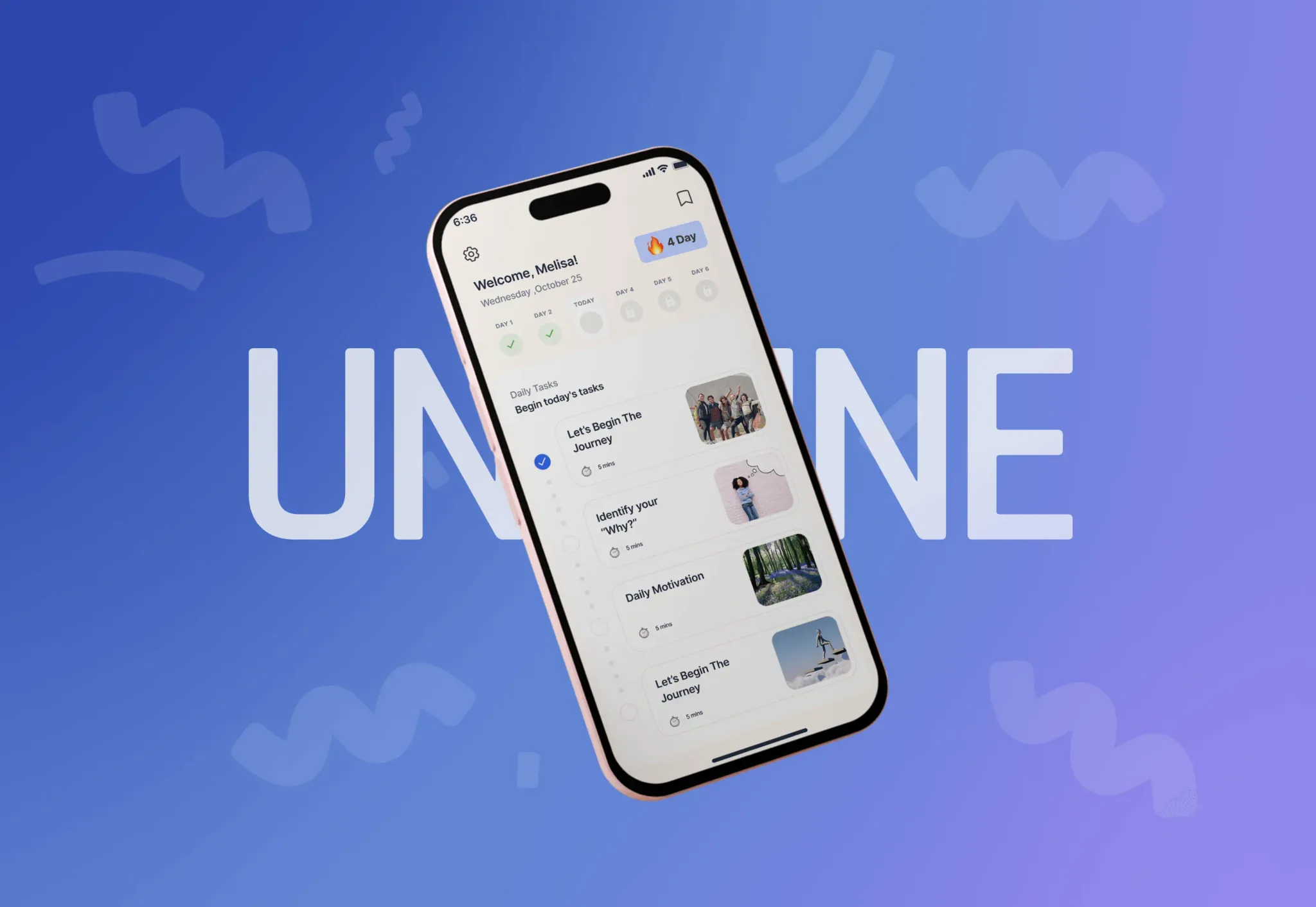
Atomic and Unwine solve the same underlying retention problem from opposite directions. Atomic supports any habit a user wants to build, so its reminders pause during quiet hours instead of firing on a fixed schedule. Its progress charts show completed and missed days together, helping users spot their own patterns rather than fixate on a single number. Unwine goes narrow instead of broad, built entirely around one sobriety counter with milestones and daily encouragement tuned to that one goal rather than a general purpose habit engine. Every screen in Unwine exists to serve that single counter, where Atomic's screens have to work for whatever habit a given user chose. Both treat a missed day as something to acknowledge honestly rather than punish, which shows up in Atomic's pattern focused charts and in Unwine's motivational, encouragement first messaging alike. That shared instinct, more than any shared screen, is what actually connects two otherwise very different apps. Planning app growth consulting around the 60 and 90 day drop off points that define this category, rather than around launch week metrics alone, shaped both builds from the start.
related projects

FAQ

What is a habit tracking app?

What does Neon Apps bring to a habit tracking app project?

Should the app track one habit or many?

How does Neon Apps scope a habit tracking app project?

How long and how much does a habit tracking app cost to build?

Stay Inspired

Get fresh design insights, articles, and resources delivered straight to your inbox.

Get stories, insights, and updates from the Neon Apps team straight to your inbox.

Latest Blogs

Stay Inspired

Get stories, insights, and updates from the Neon Apps team straight to your inbox.

Got a project?

Let's Connect

Got a project? We build world-class mobile and web apps for startups and global brands.

Contact

Email
support@neonapps.co

Whatsapp
+90 552 733 43 99

Address

New York Office : 31 Hudson Yards, 11th Floor 10065 New York / United States

Istanbul Office : Huzur Mah. Fazıl Kaftanoğlu Caddesi No:7 Kat:10 Sarıyer/Istanbul

© Copyright 2025. All Rights Reserved by Neon Apps

Neon Apps is a product development company building mobile, web, and SaaS products with an 85-member in-house team in Istanbul and New York, delivering scalable products as a long-term development partner.

Summarize with AI

The day the streak breaks 

Every habit app works fine on day one, when motivation is highest and the setup still feels new. The real design problem shows up on the day a user misses, since what happens next decides whether they open the app again tomorrow. This guide covers the architecture, cost, and timeline behind building one that survives that moment. 

What a Habit Tracking App Actually Does 

A habit tracking app helps a user build or maintain a routine through reminders, a streak or counter, and some form of progress visualization over time. Retention is the defining challenge in this category. According to 2026 industry research on habit app usage, nearly half of users stop opening a habit app within 60 days. Only about 38 percent are still using one after 90 days. The app itself mainly handles the schedule, the reminder timing, and the display of progress in a way that keeps a user coming back past that drop off window. None of this requires anything exotic under the hood. It requires getting the reminder cadence right and deciding how the app talks to a user after a missed day. Setup also needs to stay light enough that starting a new habit takes seconds, not minutes. 

Top-down angle view of a diverse tech team sitting around a wooden conference table in a cozy tech startup office, laptops open with lines of code and charts visible, coffee cups, notebooks, collaborative mood, soft ambient lighting, ultra-detailed, realistic photography --ar 16:9

Two Ways to Structure a Habit App 

Not every habit app is solving the same problem, and the two real structures need different product thinking. 

Structure 

Best for 

Tradeoff 

Single purpose streak app 

One specific, high stakes goal like sobriety 

Narrow audience, deep focus on one counter 

Multi habit tracker 

Users building several routines at once 

More setup, less specialized messaging per habit 

Social or competitive habit app 

Group accountability, shared leaderboards 

Needs a social graph and moderation Neon Apps has not taken on 

Unwine is a single purpose streak app, built entirely around one sobriety counter, its milestones, and encouragement tuned to that one goal. Atomic is a multi habit tracker, letting a user create any habit, set a daily, weekly, or custom schedule, and track several routines side by side. A social or competitive habit app, the kind built around shared streaks or group leaderboards, is a third real pattern in the category. Neon Apps has not built one of these, since it adds a social graph and moderation layer that a private, individual tracker never needs. 

Picking the right structure changes what the app needs to get right first: 

  • Choose a single purpose streak app when the goal is specific and emotionally significant enough that a dedicated experience, tuned entirely to that one counter, earns its narrower audience 

  • Choose a multi habit tracker when users need to manage several different routines, and invest in fast habit creation so adding a new one takes seconds 

  • Avoid the social or competitive structure in a first version unless group accountability is the actual product thesis, since it adds real scope beyond individual tracking 

The retention numbers above apply across all three structures, which is worth keeping in mind before assuming a more social or gamified version automatically performs better. A well designed single habit app with the right reminder timing can outperform a broader, feature heavy one that gets that timing wrong. 

How to Scope the First Version 

Most habit apps fail on reminder design and missed day handling, not on the tracking mechanic itself. A narrow first version that gets those two things right beats a feature rich one that gets them wrong. 

  • Pick single purpose or multi habit first, since Unwine's one counter and Atomic's flexible schedule system are genuinely different builds, not variations of the same screen 

  • Design reminder timing before the streak logic, including quiet hours, since Atomic's reminders pause during set quiet periods rather than firing on a fixed schedule regardless of time 

  • Decide how the app responds to a missed day before launch, since a punitive reset feels very different from a forgiving one that treats a missed day as data instead of failure 

Teams that build the streak counter first and figure out missed day handling later usually ship something that quietly punishes the exact users who most need encouragement. By the time that gets noticed, it usually shows up as a retention number, not as a bug report. 

What a Realistic Build Timeline Looks Like 

Shipped examples in this category took about six months regardless of single or multi habit structure, and four stages make up that window. 

  • Discovery and scope, where the team locks the habit structure, the reminder philosophy, and the missed day response before any screen gets designed 

  • Core build, the largest block on the calendar, where the schedule system, the notification engine, and the streak logic come together against that locked scope 

  • Behavioral testing, run over real weeks rather than a quick demo, since reminder fatigue and missed day reactions only show up after repeated real use 

  • Launch and monitor, the first few weeks live, when real usage patterns reveal which reminder times and messages actually keep people coming back 

Skipping behavioral testing is the most common reason a habit app that felt encouraging in a five day internal trial starts losing users by week three in the real world. 

Product team mapping reminder logic and missed-day flows on whiteboard
Technical evaluation notebooks with handwritten AI model benchmark grids

Four Things That Move the Budget and Timeline 

These four factors move the budget on a habit tracking app more than anything else in the brief: 

  • Schedule flexibility, since supporting daily, weekly, and fully custom recurrence rules, the way Atomic does, takes more design and testing than a single fixed daily counter 

  • Reminder intelligence, since quiet hours, adaptive timing, and tone all add real design work beyond a basic push notification at a fixed time 

  • Progress visualization depth, since charts that show completed and missed days together, revealing a pattern rather than just a number, need more design work than a raw streak count 

  • Missed day and recovery design, since deciding how the app responds to a broken streak is a real product decision, not a small copywriting detail 

Neon Apps shipped both Atomic and Unwine in about six months. That similar timeline, despite very different structures, suggests the reminder and progress systems take the time, not the single versus multi habit choice. 

What This Costs Beyond the Build Fee 

The cost profile here looks different from most other categories, since there is no generative model or per use API call driving ongoing cost. 

  • Push notification infrastructure, which scales with active users and reminder frequency rather than with any per generation fee 

  • Standard app hosting and a lightweight backend for schedules, streaks, and progress history, priced closer to a typical consumer app than to an AI heavy one 

  • Analytics and cohort tracking to see which reminder times and messages actually correlate with users staying past the 60 and 90 day drop off points 

  • Guessing at that correlation instead of measuring it wastes the cheapest lever this category has available 

A habit tracker is one of the cheaper categories to run after launch. The real ongoing investment is iteration on reminder timing and missed day messaging, not infrastructure spend. That makes this category unusual. The build fee is a bigger share of total cost of ownership here than in almost any AI powered app. There is no ongoing per use fee competing for the same budget over time. 

Architect pausing mid-gesture at whiteboard with branching AI model decision diagram

Where These Apps Break in Production 

The tracking mechanic itself rarely breaks. The psychology around it does. 

  • Notification fatigue, a factor in a large share of habit app churn, since reminders that ignore quiet hours or fire too often train users to dismiss or disable them entirely 

  • Streak anxiety, since some users start optimizing to protect a number rather than to build the actual habit, which is the opposite of what the app was meant to encourage 

  • Punitive missed day framing, since resetting a streak to zero with no acknowledgment of the days that came before it turns one missed day into a reason to quit entirely 

  • Setup friction, since anything more than a few taps to create a new habit works against the exact moment of motivation that made a user open the app in the first place 

None of this shows up in a short internal trial where the team already believes in the habit they are testing, and already wants the app to succeed. It shows up in week three, on the day a real user misses for the first time. That exact moment deserves more design attention than almost any other screen in the app. 

Habit Tracking Apps We Have Shipped 

Neon Apps has built two apps in this category, each structured around a different kind of habit. 

Project 

Client 

Year 

Build time 

What it solved 

Atomic 

KitUp 

2024 

6 months 

Multi habit tracking with flexible schedules and smart reminders 

Unwine 

Stoikk 

2023 

6 months 

Single purpose sobriety counter with milestones and encouragement 

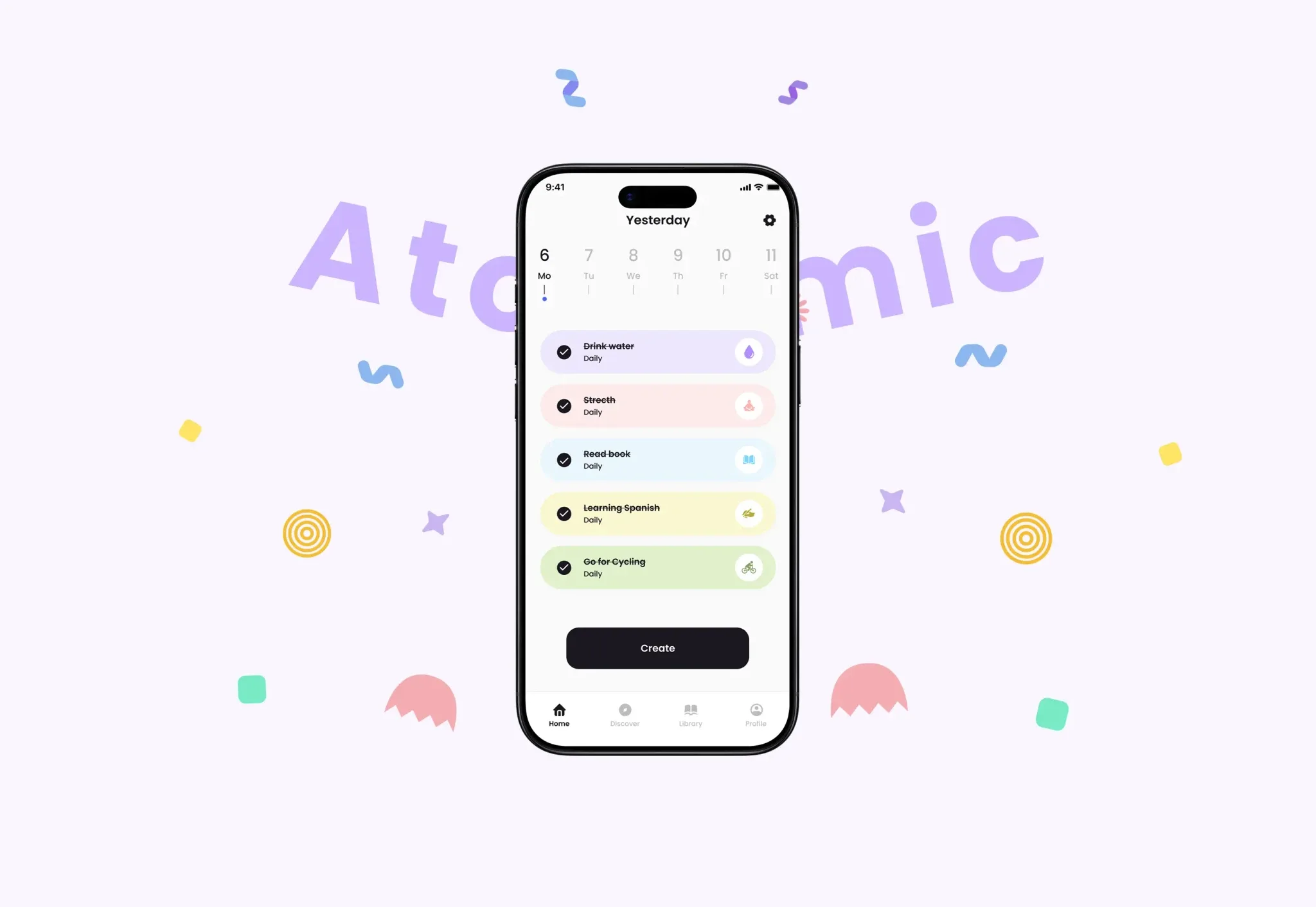
Atomic and Unwine solve the same underlying retention problem from opposite directions. Atomic supports any habit a user wants to build, so its reminders pause during quiet hours instead of firing on a fixed schedule. Its progress charts show completed and missed days together, helping users spot their own patterns rather than fixate on a single number. Unwine goes narrow instead of broad, built entirely around one sobriety counter with milestones and daily encouragement tuned to that one goal rather than a general purpose habit engine. Every screen in Unwine exists to serve that single counter, where Atomic's screens have to work for whatever habit a given user chose. Both treat a missed day as something to acknowledge honestly rather than punish, which shows up in Atomic's pattern focused charts and in Unwine's motivational, encouragement first messaging alike. That shared instinct, more than any shared screen, is what actually connects two otherwise very different apps. Planning app growth consulting around the 60 and 90 day drop off points that define this category, rather than around launch week metrics alone, shaped both builds from the start.
related projects

FAQ

What is a habit tracking app?

What does Neon Apps bring to a habit tracking app project?

Should the app track one habit or many?

How does Neon Apps scope a habit tracking app project?

How long and how much does a habit tracking app cost to build?

Stay Inspired

Get fresh design insights, articles, and resources delivered straight to your inbox.

Get stories, insights, and updates from the Neon Apps team straight to your inbox.

Latest Blogs

Stay Inspired

Get stories, insights, and updates from the Neon Apps team straight to your inbox.

Got a project?

Let's Connect

Got a project? We build world-class mobile and web apps for startups and global brands.

Contact

Email
support@neonapps.co

Whatsapp
+90 552 733 43 99

Address

New York Office : 31 Hudson Yards, 11th Floor 10065 New York / United States

Istanbul Office : Huzur Mah. Fazıl Kaftanoğlu Caddesi No:7 Kat:10 Sarıyer/Istanbul

© Copyright 2025. All Rights Reserved by Neon Apps

Neon Apps is a product development company building mobile, web, and SaaS products with an 85-member in-house team in Istanbul and New York, delivering scalable products as a long-term development partner.

Summarize with AI

The day the streak breaks 

Every habit app works fine on day one, when motivation is highest and the setup still feels new. The real design problem shows up on the day a user misses, since what happens next decides whether they open the app again tomorrow. This guide covers the architecture, cost, and timeline behind building one that survives that moment. 

What a Habit Tracking App Actually Does 

A habit tracking app helps a user build or maintain a routine through reminders, a streak or counter, and some form of progress visualization over time. Retention is the defining challenge in this category. According to 2026 industry research on habit app usage, nearly half of users stop opening a habit app within 60 days. Only about 38 percent are still using one after 90 days. The app itself mainly handles the schedule, the reminder timing, and the display of progress in a way that keeps a user coming back past that drop off window. None of this requires anything exotic under the hood. It requires getting the reminder cadence right and deciding how the app talks to a user after a missed day. Setup also needs to stay light enough that starting a new habit takes seconds, not minutes. 

Top-down angle view of a diverse tech team sitting around a wooden conference table in a cozy tech startup office, laptops open with lines of code and charts visible, coffee cups, notebooks, collaborative mood, soft ambient lighting, ultra-detailed, realistic photography --ar 16:9

Two Ways to Structure a Habit App 

Not every habit app is solving the same problem, and the two real structures need different product thinking. 

Structure 

Best for 

Tradeoff 

Single purpose streak app 

One specific, high stakes goal like sobriety 

Narrow audience, deep focus on one counter 

Multi habit tracker 

Users building several routines at once 

More setup, less specialized messaging per habit 

Social or competitive habit app 

Group accountability, shared leaderboards 

Needs a social graph and moderation Neon Apps has not taken on 

Unwine is a single purpose streak app, built entirely around one sobriety counter, its milestones, and encouragement tuned to that one goal. Atomic is a multi habit tracker, letting a user create any habit, set a daily, weekly, or custom schedule, and track several routines side by side. A social or competitive habit app, the kind built around shared streaks or group leaderboards, is a third real pattern in the category. Neon Apps has not built one of these, since it adds a social graph and moderation layer that a private, individual tracker never needs. 

Picking the right structure changes what the app needs to get right first: 

  • Choose a single purpose streak app when the goal is specific and emotionally significant enough that a dedicated experience, tuned entirely to that one counter, earns its narrower audience 

  • Choose a multi habit tracker when users need to manage several different routines, and invest in fast habit creation so adding a new one takes seconds 

  • Avoid the social or competitive structure in a first version unless group accountability is the actual product thesis, since it adds real scope beyond individual tracking 

The retention numbers above apply across all three structures, which is worth keeping in mind before assuming a more social or gamified version automatically performs better. A well designed single habit app with the right reminder timing can outperform a broader, feature heavy one that gets that timing wrong. 

How to Scope the First Version 

Most habit apps fail on reminder design and missed day handling, not on the tracking mechanic itself. A narrow first version that gets those two things right beats a feature rich one that gets them wrong. 

  • Pick single purpose or multi habit first, since Unwine's one counter and Atomic's flexible schedule system are genuinely different builds, not variations of the same screen 

  • Design reminder timing before the streak logic, including quiet hours, since Atomic's reminders pause during set quiet periods rather than firing on a fixed schedule regardless of time 

  • Decide how the app responds to a missed day before launch, since a punitive reset feels very different from a forgiving one that treats a missed day as data instead of failure 

Teams that build the streak counter first and figure out missed day handling later usually ship something that quietly punishes the exact users who most need encouragement. By the time that gets noticed, it usually shows up as a retention number, not as a bug report. 

What a Realistic Build Timeline Looks Like 

Shipped examples in this category took about six months regardless of single or multi habit structure, and four stages make up that window. 

  • Discovery and scope, where the team locks the habit structure, the reminder philosophy, and the missed day response before any screen gets designed 

  • Core build, the largest block on the calendar, where the schedule system, the notification engine, and the streak logic come together against that locked scope 

  • Behavioral testing, run over real weeks rather than a quick demo, since reminder fatigue and missed day reactions only show up after repeated real use 

  • Launch and monitor, the first few weeks live, when real usage patterns reveal which reminder times and messages actually keep people coming back 

Skipping behavioral testing is the most common reason a habit app that felt encouraging in a five day internal trial starts losing users by week three in the real world. 

Product team mapping reminder logic and missed-day flows on whiteboard
Technical evaluation notebooks with handwritten AI model benchmark grids

Four Things That Move the Budget and Timeline 

These four factors move the budget on a habit tracking app more than anything else in the brief: 

  • Schedule flexibility, since supporting daily, weekly, and fully custom recurrence rules, the way Atomic does, takes more design and testing than a single fixed daily counter 

  • Reminder intelligence, since quiet hours, adaptive timing, and tone all add real design work beyond a basic push notification at a fixed time 

  • Progress visualization depth, since charts that show completed and missed days together, revealing a pattern rather than just a number, need more design work than a raw streak count 

  • Missed day and recovery design, since deciding how the app responds to a broken streak is a real product decision, not a small copywriting detail 

Neon Apps shipped both Atomic and Unwine in about six months. That similar timeline, despite very different structures, suggests the reminder and progress systems take the time, not the single versus multi habit choice. 

What This Costs Beyond the Build Fee 

The cost profile here looks different from most other categories, since there is no generative model or per use API call driving ongoing cost. 

  • Push notification infrastructure, which scales with active users and reminder frequency rather than with any per generation fee 

  • Standard app hosting and a lightweight backend for schedules, streaks, and progress history, priced closer to a typical consumer app than to an AI heavy one 

  • Analytics and cohort tracking to see which reminder times and messages actually correlate with users staying past the 60 and 90 day drop off points 

  • Guessing at that correlation instead of measuring it wastes the cheapest lever this category has available 

A habit tracker is one of the cheaper categories to run after launch. The real ongoing investment is iteration on reminder timing and missed day messaging, not infrastructure spend. That makes this category unusual. The build fee is a bigger share of total cost of ownership here than in almost any AI powered app. There is no ongoing per use fee competing for the same budget over time. 

Architect pausing mid-gesture at whiteboard with branching AI model decision diagram

Where These Apps Break in Production 

The tracking mechanic itself rarely breaks. The psychology around it does. 

  • Notification fatigue, a factor in a large share of habit app churn, since reminders that ignore quiet hours or fire too often train users to dismiss or disable them entirely 

  • Streak anxiety, since some users start optimizing to protect a number rather than to build the actual habit, which is the opposite of what the app was meant to encourage 

  • Punitive missed day framing, since resetting a streak to zero with no acknowledgment of the days that came before it turns one missed day into a reason to quit entirely 

  • Setup friction, since anything more than a few taps to create a new habit works against the exact moment of motivation that made a user open the app in the first place 

None of this shows up in a short internal trial where the team already believes in the habit they are testing, and already wants the app to succeed. It shows up in week three, on the day a real user misses for the first time. That exact moment deserves more design attention than almost any other screen in the app. 

Habit Tracking Apps We Have Shipped 

Neon Apps has built two apps in this category, each structured around a different kind of habit. 

Project 

Client 

Year 

Build time 

What it solved 

Atomic 

KitUp 

2024 

6 months 

Multi habit tracking with flexible schedules and smart reminders 

Unwine 

Stoikk 

2023 

6 months 

Single purpose sobriety counter with milestones and encouragement 

Atomic and Unwine solve the same underlying retention problem from opposite directions. Atomic supports any habit a user wants to build, so its reminders pause during quiet hours instead of firing on a fixed schedule. Its progress charts show completed and missed days together, helping users spot their own patterns rather than fixate on a single number. Unwine goes narrow instead of broad, built entirely around one sobriety counter with milestones and daily encouragement tuned to that one goal rather than a general purpose habit engine. Every screen in Unwine exists to serve that single counter, where Atomic's screens have to work for whatever habit a given user chose. Both treat a missed day as something to acknowledge honestly rather than punish, which shows up in Atomic's pattern focused charts and in Unwine's motivational, encouragement first messaging alike. That shared instinct, more than any shared screen, is what actually connects two otherwise very different apps. Planning app growth consulting around the 60 and 90 day drop off points that define this category, rather than around launch week metrics alone, shaped both builds from the start.

related projects

FAQ

What is a habit tracking app?

What does Neon Apps bring to a habit tracking app project?

Should the app track one habit or many?

How does Neon Apps scope a habit tracking app project?

How long and how much does a habit tracking app cost to build?

Stay Inspired

Get fresh design insights, articles, and resources delivered straight to your inbox.

Get stories, insights, and updates from the Neon Apps team straight to your inbox.

Latest Blogs

Stay Inspired

Get stories, insights, and updates from the Neon Apps team straight to your inbox.

Got a project?

Let's Connect

Got a project? We build world-class mobile and web apps for startups and global brands.

Contact

Email
support@neonapps.co

Whatsapp
+90 552 733 43 99

Address

New York Office : 31 Hudson Yards, 11th Floor 10065 New York / United States

Istanbul Office : Huzur Mah. Fazıl Kaftanoğlu Caddesi No:7 Kat:10 Sarıyer/Istanbul

© Copyright 2025. All Rights Reserved by Neon Apps

Neon Apps is a product development company building mobile, web, and SaaS products with an 85-member in-house team in Istanbul and New York, delivering scalable products as a long-term development partner.