
Project ManagerSeptember 7, 2026
The moment the signal drops
A field operations app has to work the instant connectivity does not. The whole point is capturing evidence on a worksite or in the field, not in an office with reliable wifi. This guide covers the architecture, cost, and timeline behind building one that actually holds up offline.
What a Field Operations App Actually Does
A field operations app lets workers capture structured data, photos, and evidence on site, then syncs that record back to a system managers and office staff can review. The global field service management market is projected to grow from 6.2 billion dollars in 2026 to 23.6 billion dollars by 2035, according to 2026 industry research. The app itself mainly handles guided data capture, whether that is a barcode scan, a structured form, or a photo linked to a specific record. It also handles the sync logic that reconciles what happened in the field with the system of record. None of this requires reinventing offline architecture from scratch. It requires deciding whether the app is building that system of record itself or feeding into one that already exists. Sync also needs to survive a real signal dead zone, not just a brief connection drop that resolves itself in a few seconds.

Two Ways to Build Field Operations Software
Not every field app is solving the same integration problem, and the two real patterns need different architecture.
Pattern | Best for | Tradeoff |
Full stack platform | No existing system of record to build against | More build surface across mobile, web, and backend |
Mobile capture layer | Adding field capture to a platform that already exists | Constrained by the existing platform's data model and API |
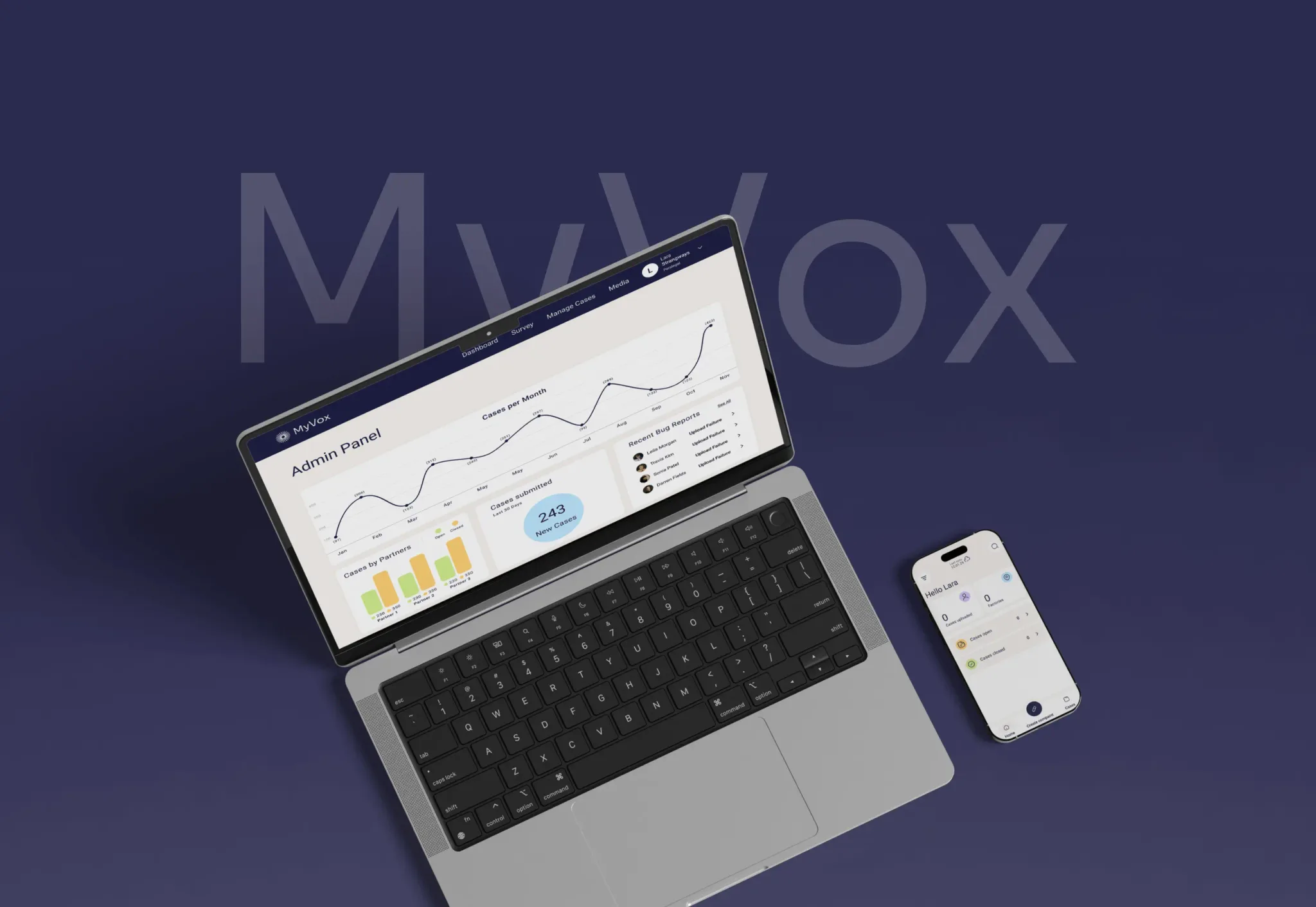
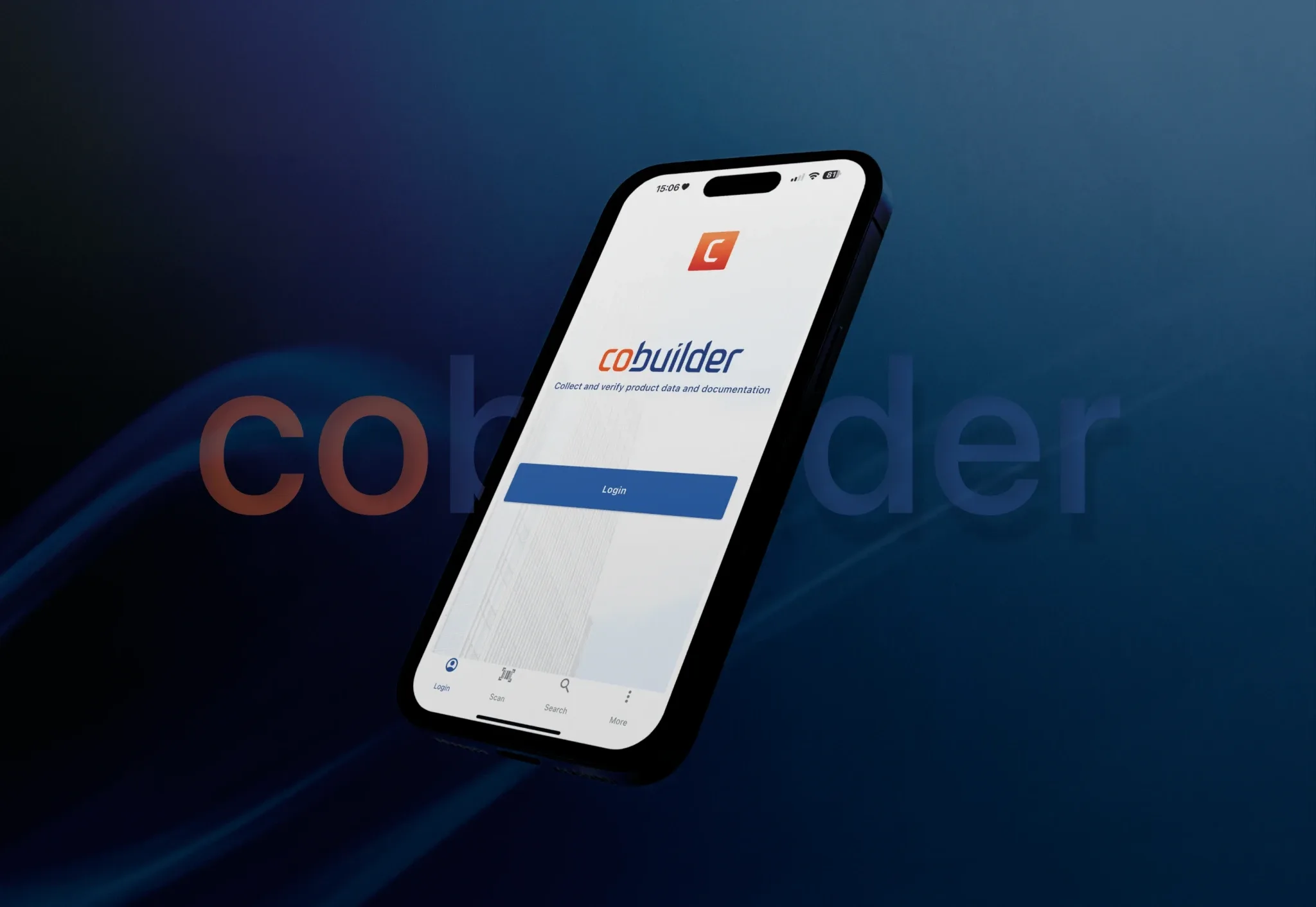
MyVox is a full stack platform, with a mobile app and a web console sharing the same backend. Both were built together, because no system of record existed yet for the law firm's field and office reporting. Cobuilder takes the other path. Its mobile capture layer scans barcodes, links photos to products, and syncs directly into the Cobuilder platform the client already operates. No separate web console got built on top of it.
Choosing the pattern changes the actual scope of the build:
Choose a full stack platform when no system of record exists yet, and expect the web console and the mobile app to need roughly equal design attention
Choose a mobile capture layer when a platform already exists and the real gap is getting field data into it reliably, which is a narrower, more focused build
Confirm the existing platform's API and data model early if integrating, since the mobile app's design is constrained by what that system can actually accept
Neither pattern is more advanced than the other. A capture layer that reliably feeds a solid existing system is a real success. It is not a smaller achievement than building a platform from the ground up, and it usually ships faster too.
How to Scope the First Version
Most field operations apps fail on sync reliability, not on the capture screens themselves. A first version that gets offline behavior right beats one with more capture options and a shakier sync layer.
Decide whether to build a full stack platform or a capture layer integrating into an existing one, since MyVox and Cobuilder are genuinely different builds, not variations of the same app
Design the offline sync architecture before the capture screens, since a worker on a site with no signal still needs the app to work exactly as if they were connected
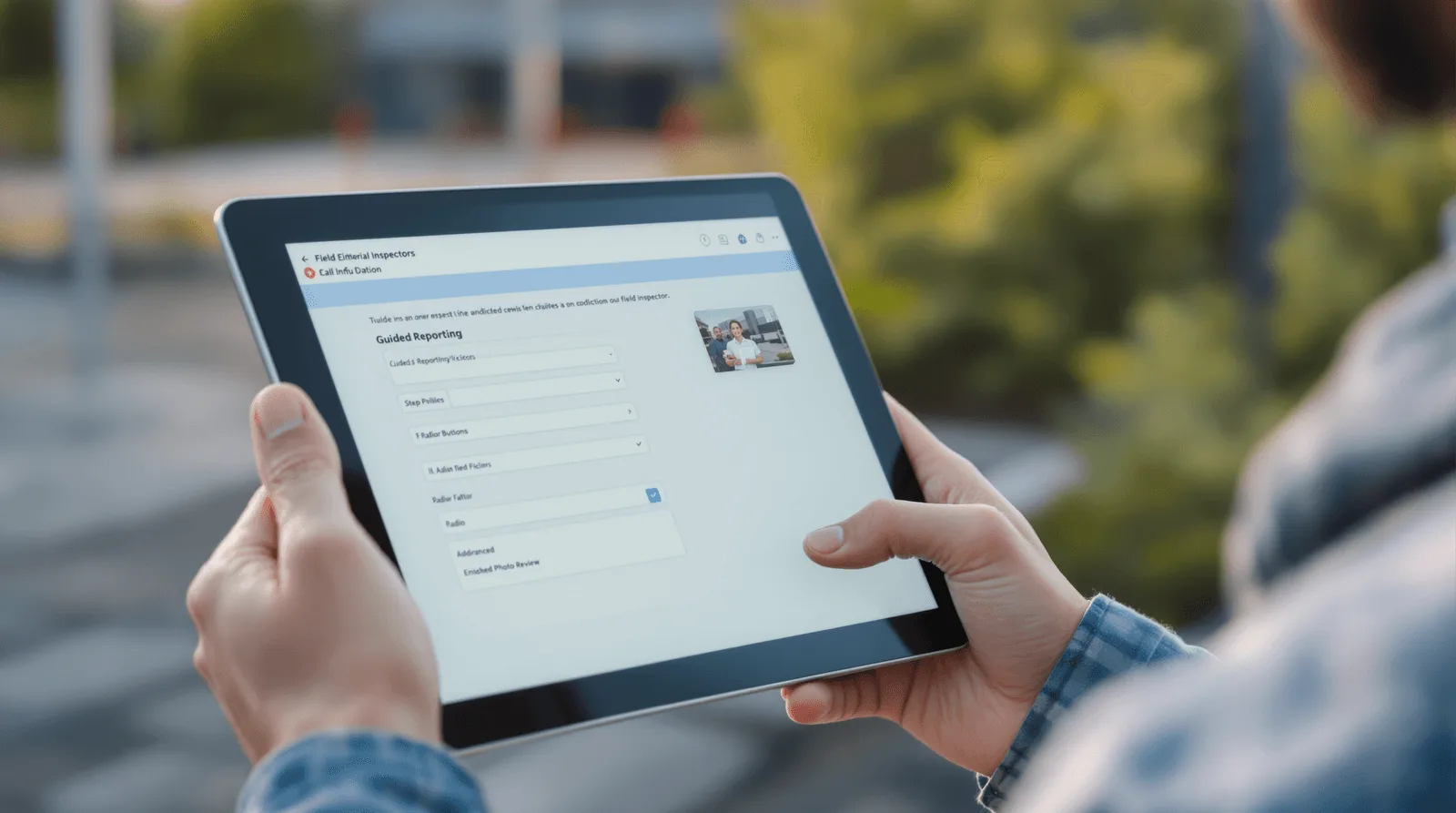
Balance structured forms against free text carefully, since MyVox's guided reporting with hints and examples gets more consistent data than an open text field ever would
Too much structure has a real cost too, since it slows down a worker who is trying to move fast on site
Teams that treat offline sync as an edge case to handle later usually discover something surprising. The real edge case is the office, not the field, once real workers start losing signal in the exact places the app needs to work.
What a Realistic Build Timeline Looks Like
Shipped examples in this category ranged from seven months to a year, and the difference tracked closely with how much of the system each one had to build from scratch.
Discovery and scope, where the team locks the platform pattern, the sync architecture, and the balance of structured versus free form data capture before any screen gets designed
Core build, the largest block on the calendar, where capture screens, sync logic, and, for a full stack platform, the web console come together against that locked scope
Offline and role based testing, run with real field conditions and real role differences between a worker's view and a manager's, not just a clean office wifi test
Launch and monitor, the first few weeks live, when real field conditions test whether sync actually reconciles cleanly or quietly loses or duplicates records
Skipping real offline testing is the most common reason a capture flow that worked perfectly in the office starts losing or duplicating records. That happens once real workers use it in real dead zones.
Four Things That Move the Budget and Timeline
These four factors move the budget on a field operations app more than anything else in the brief:
Full stack versus integration, since MyVox's shared mobile and web backend took a year while Cobuilder's mobile only capture layer took seven months
Offline sync depth, since reconciling records captured with no connection, the way both of these apps need to, adds real engineering time beyond an always online app
Evidence capture complexity, since barcode scanning, photo linking, and multi issue tracking each bring their own edge cases to test
Role based views, since MyVox's web dashboard for reviewing, searching, and exporting cases is a distinct build from the mobile reporting flow, not a smaller version of it
Neon Apps shipped Cobuilder's mobile capture layer in seven months and MyVox's full mobile and web platform in a year. Building less against an existing system, rather than building the whole system, was the larger factor in that gap. That gap is worth expecting going in, not discovering partway through a fixed price quote.
What This Costs Beyond the Build Fee
The build fee covers the app. What it costs to run afterward depends heavily on which of the two patterns was chosen.
Backend hosting and sync infrastructure, a real ongoing cost for a full stack platform like MyVox that owns its own system of record
Conflict resolution and data integrity monitoring, since offline sync at scale occasionally needs a person to review a genuinely ambiguous conflict an algorithm cannot resolve alone
Barcode or scanning SDK licensing, if the capture flow depends on a third party library rather than a basic camera based scan
A mobile capture layer like Cobuilder's carries almost none of the backend hosting cost, since it rides on infrastructure the existing platform already operates and pays for. That makes the ongoing cost conversation for an integration layer much shorter than for a platform that owns its own data. It also means giving up control over that infrastructure's roadmap.
Where These Apps Break in Production
The capture screens themselves rarely fail. The sync and integration layer underneath them does.
Sync conflicts, since two field workers editing or scanning related records while both offline can create a conflict that only surfaces once both reconnect
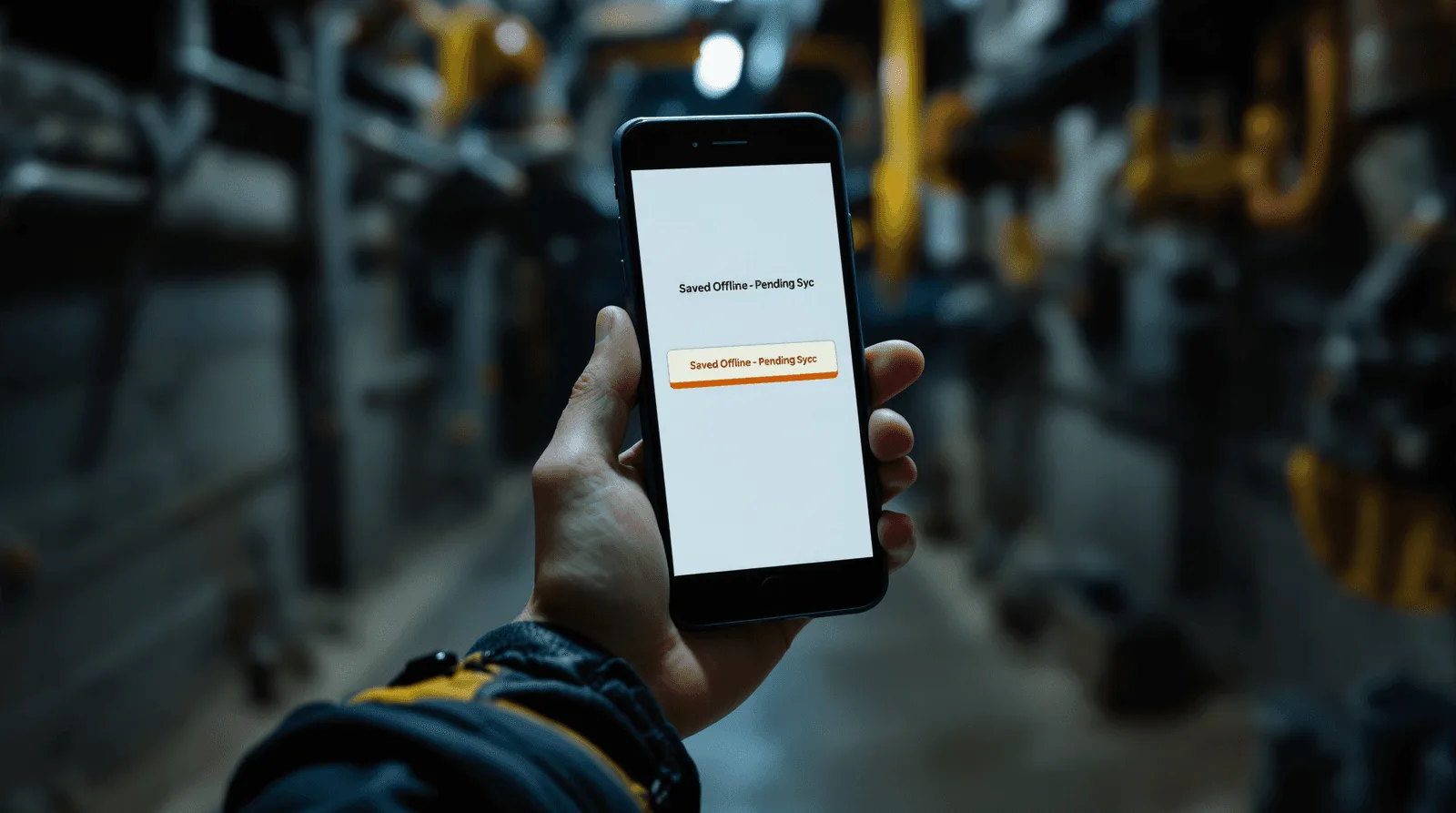
Signal dead zones swallowing captures, since a photo or form filled out with no connection needs to queue reliably, not silently fail the moment a worker moves on
Integration drift, since a mobile capture layer built against another platform's API can break without warning if that platform changes its data model on its own schedule
Structured form fatigue, since a worker moving fast on site will rush or skip guided fields under time pressure, which quietly degrades the data quality the structure was meant to protect
None of this shows up in a demo run over office wifi, with a team member playing the field worker and a clean signal the whole time. It shows up on a real site with a real spotty connection, where nobody is pretending the network is more reliable than it actually is. That is why offline testing under realistic field conditions belongs in the build plan, not as a fix after the first lost record gets reported.
Field Operations Apps We Have Shipped
Neon Apps has built two field operations apps, each following a different one of the two real patterns.
Project | Client | Year | Build time | What it solved |
Cobuilder | 2022 | 7 months | Barcode and photo based field capture syncing into an existing platform | |
Global Rights Compliance | 2025 | 1 year | Full mobile and web case reporting platform for legal field teams |
Cobuilder and MyVox solved two different versions of the same field data problem. Cobuilder focused entirely on getting accurate data off a construction site, using barcode scanning to confirm deliveries and flag mismatches. Every record syncs directly into the client's existing platform, rather than a system Neon Apps had to build. MyVox had no existing system to integrate with. Its mobile app guides paralegals through structured case reporting in the field, and its web console lets office staff review, search, and export the same cases. Both were built together on one shared backend. MyVox is currently preparing for its pilot release after strong internal testing, with a dashboard that now surfaces case counts and missing details to speed up review. That refinement is the kind of detail that tends to surface only after real testing, not before it. Planning web app development around whether a system of record already exists, rather than defaulting to building one from scratch, is what shaped these two very differently scoped builds.