Development
Which is Best for Your Business: Firebase Analytics, Amplitude, or Mixpanel?
Which is Best for Your Business: Firebase Analytics, Amplitude, or Mixpanel?

You choose the right analytics stack, turning your product data into clear, actionable growth insights with Neon Apps.
You choose the right analytics stack, turning your product data into clear, actionable growth insights with Neon Apps.
Choosing the right analytics platform is a strategic decision that directly impacts how effectively you can understand users, measure performance, and drive growth. At Neon Apps, we help startups, app studios, and enterprise teams turn raw product data into clear, actionable insights by selecting and implementing the right mobile app analytics stack from day one.
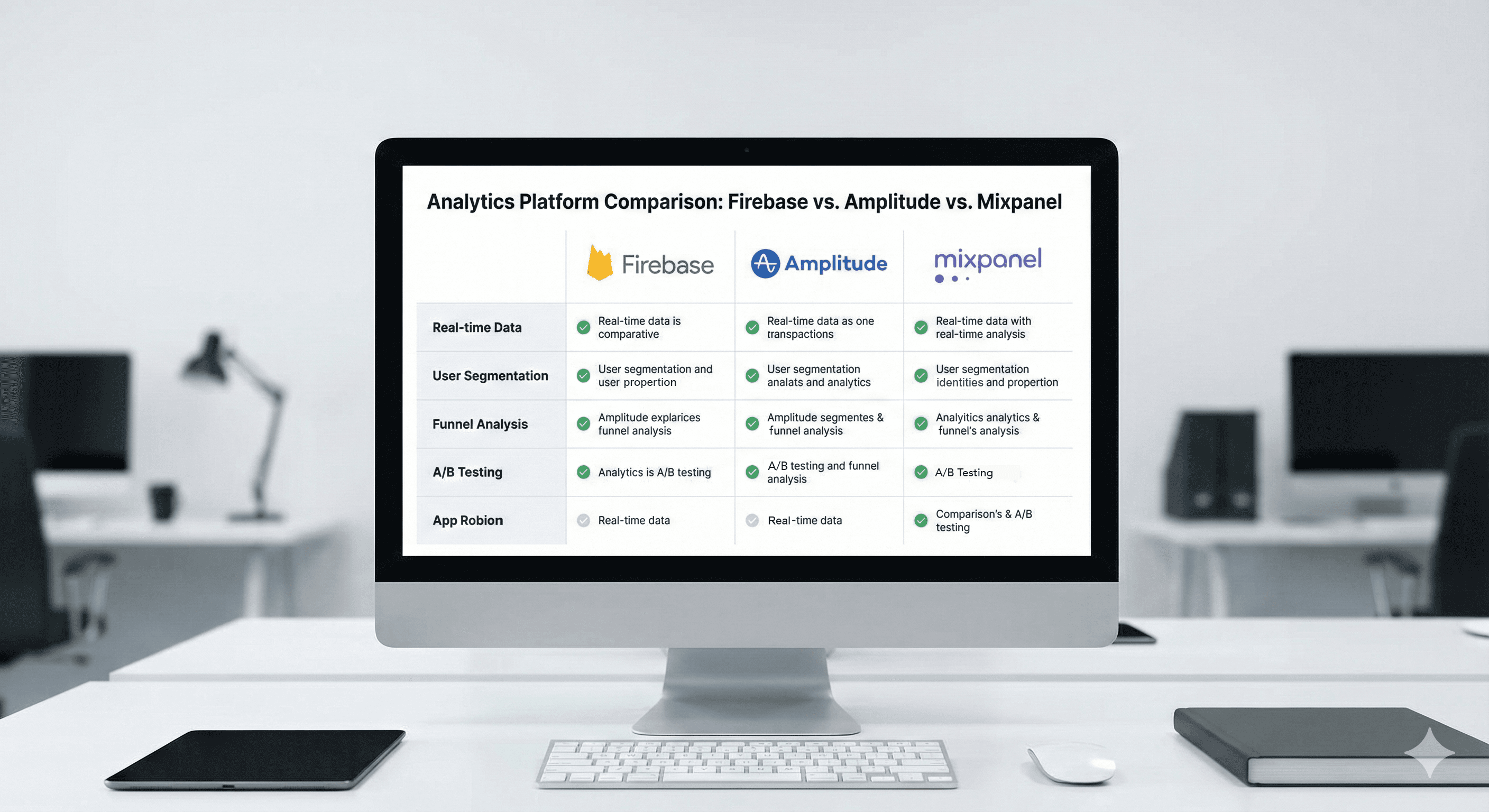
Analytics tools are not interchangeable. Each platform is designed with a different philosophy around data collection, analysis depth, and decision-making support. Firebase Analytics, Amplitude, and Mixpanel are among the most widely used solutions, but they serve different needs depending on product maturity, team structure, and business goals. Choosing the wrong tool can limit visibility, create reporting gaps, or slow down iteration.
That is why we approach analytics selection as part of product strategy, not just a technical setup. Whether your priority is lightweight event tracking, deep behavioral analysis, funnel optimization, or long-term retention insights, the right tool enables teams to track meaningful KPIs, validate assumptions, and make confident product decisions. Understanding the strengths and limitations of Firebase Analytics, Amplitude, and Mixpanel is the first step toward building a data foundation that truly supports growth.
1. Firebase Analytics: Simplicity and Google Integration
Firebase Analytics is a widely used solution for teams that need a lightweight, cost-effective analytics tool with deep integration into the Google ecosystem. It works especially well for tracking core metrics such as user acquisition, basic conversion events, engagement frequency, and simple funnel performance. Its real-time reporting and automatic event tracking make it easy to get started without heavy setup or ongoing maintenance.
At Neon Apps, we often recommend Firebase Analytics for startups and early-stage products building their first MVP. It provides immediate visibility into how users move through onboarding, which features they interact with, and where drop-offs occur. In one social community app we developed, Firebase helped the team track onboarding completion, feature adoption, and early retention. These insights enabled rapid iteration during the MVP phase without slowing down development.
That said, Firebase is best suited for foundational analytics. As products mature, teams often outgrow its capabilities. When deeper customer journey mapping, advanced user segmentation, or sophisticated experimentation becomes necessary, Firebase’s limitations become more apparent. At that stage, tools like Amplitude or Mixpanel typically offer more flexibility and analytical depth.
2. Amplitude: Deep Product Insights and Segmentation
Amplitude is designed for teams that want deep product analytics and a strong understanding of user behavior over time. It excels at event-based analysis, cohort tracking, and detailed funnel exploration, making it especially valuable for subscription-driven products and fast-growing startups focused on retention and engagement.
In one of our subscription wellness apps, we used Amplitude to analyze how users interacted across multiple features throughout their lifecycle. By building detailed cohorts and comparing behavior patterns, we identified which actions correlated with long-term retention. This allowed us to optimize feature placement, refine onboarding flows, and uncover high-value user segments that informed both product decisions and marketing attribution strategies.
Amplitude also offers robust predictive analytics, enabling teams to forecast churn risk, lifetime value, and engagement trends. These insights allow product and growth teams to act proactively rather than reactively. By adjusting onboarding flows, paywall timing, and engagement mechanics based on predictive signals, our clients are able to improve retention and revenue performance with greater confidence.
3. Mixpanel: Flexibility and Real-Time Analysis
Mixpanel is widely recognized for its flexibility, powerful event-based tracking, and real-time analytics capabilities. It enables teams to deeply analyze how users interact with specific features, track custom events, and immediately see the impact of product changes on key metrics. Custom dashboards, advanced funnels, and retention reports make Mixpanel especially useful for teams that need fast, actionable insights.
At Neon Apps, we have supported multiple enterprise clients in transitioning from Firebase to Mixpanel as their products matured and analytics needs became more complex. For example, a sports management app we worked on used Mixpanel to track in-app purchases, feature adoption, and user behavior across both iOS and Android. This cross-platform visibility helped the team identify engagement gaps, refine monetization flows, and ultimately improve both retention and customer lifetime value.
Another advantage of Mixpanel is its strong ecosystem of integrations. By connecting with marketing automation and CRM tools, teams can unify product analytics with campaign performance data. This alignment makes it easier to measure how acquisition efforts translate into in-app behavior, allowing for more accurate optimization of growth and engagement strategies.
4. Choosing the Right Tool for Your Business
There is no single analytics platform that fits every product. Choosing the right tool depends on several factors, including your app’s growth stage, product complexity, internal expertise, and business goals. Firebase is often the best choice for early-stage teams that need quick setup, essential metrics, and tight Google integration. Amplitude excels when deep behavioral analysis, cohort tracking, and long-term retention insights are critical. Mixpanel is ideal for teams that require real-time data, flexible dashboards, and strong cross-platform tracking.
At Neon Apps, we help clients evaluate analytics platforms based on their mobile app KPIs, user retention strategies, and the level of insight needed to make fast, confident decisions. In many cases, we also support phased approaches, starting with one tool and migrating or combining solutions as analytics requirements evolve. This ensures that the analytics stack grows alongside the product, continuously supporting smarter decisions and sustainable growth.
5. Maximizing Insights with Integration and Advanced Features
To fully unlock the value of any analytics platform, integration capabilities and advanced analytical features play a critical role. Analytics should not live in isolation. Connecting your product data with marketing tools, CRM systems, and experimentation platforms allows teams to build a complete picture of the user journey, from acquisition to long-term engagement. This integration enables accurate marketing attribution, meaningful A/B testing, and deeper insights into how users interact with the product across channels.
For subscription-based apps, we place particular emphasis on advanced segmentation and continuous monitoring of user engagement metrics. By tracking behavior patterns across lifecycle stages, teams can identify churn risks, optimize paywall timing, and refine onboarding flows. These insights directly support smarter mobile app monetization strategiesand more confident feature prioritization, ensuring development efforts are focused on what delivers measurable impact.
6. Conclusion: Aligning Analytics With Your Growth Goals
Choosing the right analytics tool is not about following trends or selecting the most popular platform. It is about aligning analytics capabilities with your product goals, growth strategy, and internal workflows. When event tracking, cohort analysis, and predictive insights are used thoughtfully, analytics becomes a decision-making engine rather than a reporting layer.
At Neon Apps, we focus on designing analytics strategies that evolve alongside the product. By selecting the right mix of tools and implementing them with intention, we help teams turn raw data into actionable insights. Whether an app is preparing for launch or scaling globally, a well-aligned analytics strategy ensures that every product and growth decision is supported by real, reliable evidence.
FAQ
Which analytics tool is best for mobile apps: Firebase, Amplitude, or Mixpanel?
When should you use Firebase Analytics?
Why do companies switch to Amplitude or Mixpanel?
What is the main difference between Amplitude and Mixpanel?
How does Neon Apps build an effective analytics strategy?
Stay Inspired
Get fresh design insights, articles, and resources delivered straight to your inbox.
Get stories, insights, and updates from the Neon Apps team straight to your inbox.
Latest Blogs


Stay Inspired
Get stories, insights, and updates from the Neon Apps team straight to your inbox.
Got a project?
Let's Connect
Got a project? We build world-class mobile and web apps for startups and global brands.

Neon Apps is a product development company building mobile, web, and SaaS products with an 85-member in-house team in Istanbul and New York, delivering scalable products as a long-term development partner.
Development
Which is Best for Your Business: Firebase Analytics, Amplitude, or Mixpanel?
Which is Best for Your Business: Firebase Analytics, Amplitude, or Mixpanel?
You choose the right analytics stack, turning your product data into clear, actionable growth insights with Neon Apps.
You choose the right analytics stack, turning your product data into clear, actionable growth insights with Neon Apps.
Choosing the right analytics platform is a strategic decision that directly impacts how effectively you can understand users, measure performance, and drive growth. At Neon Apps, we help startups, app studios, and enterprise teams turn raw product data into clear, actionable insights by selecting and implementing the right mobile app analytics stack from day one.
Analytics tools are not interchangeable. Each platform is designed with a different philosophy around data collection, analysis depth, and decision-making support. Firebase Analytics, Amplitude, and Mixpanel are among the most widely used solutions, but they serve different needs depending on product maturity, team structure, and business goals. Choosing the wrong tool can limit visibility, create reporting gaps, or slow down iteration.
That is why we approach analytics selection as part of product strategy, not just a technical setup. Whether your priority is lightweight event tracking, deep behavioral analysis, funnel optimization, or long-term retention insights, the right tool enables teams to track meaningful KPIs, validate assumptions, and make confident product decisions. Understanding the strengths and limitations of Firebase Analytics, Amplitude, and Mixpanel is the first step toward building a data foundation that truly supports growth.
1. Firebase Analytics: Simplicity and Google Integration
Firebase Analytics is a widely used solution for teams that need a lightweight, cost-effective analytics tool with deep integration into the Google ecosystem. It works especially well for tracking core metrics such as user acquisition, basic conversion events, engagement frequency, and simple funnel performance. Its real-time reporting and automatic event tracking make it easy to get started without heavy setup or ongoing maintenance.
At Neon Apps, we often recommend Firebase Analytics for startups and early-stage products building their first MVP. It provides immediate visibility into how users move through onboarding, which features they interact with, and where drop-offs occur. In one social community app we developed, Firebase helped the team track onboarding completion, feature adoption, and early retention. These insights enabled rapid iteration during the MVP phase without slowing down development.
That said, Firebase is best suited for foundational analytics. As products mature, teams often outgrow its capabilities. When deeper customer journey mapping, advanced user segmentation, or sophisticated experimentation becomes necessary, Firebase’s limitations become more apparent. At that stage, tools like Amplitude or Mixpanel typically offer more flexibility and analytical depth.
2. Amplitude: Deep Product Insights and Segmentation
Amplitude is designed for teams that want deep product analytics and a strong understanding of user behavior over time. It excels at event-based analysis, cohort tracking, and detailed funnel exploration, making it especially valuable for subscription-driven products and fast-growing startups focused on retention and engagement.
In one of our subscription wellness apps, we used Amplitude to analyze how users interacted across multiple features throughout their lifecycle. By building detailed cohorts and comparing behavior patterns, we identified which actions correlated with long-term retention. This allowed us to optimize feature placement, refine onboarding flows, and uncover high-value user segments that informed both product decisions and marketing attribution strategies.
Amplitude also offers robust predictive analytics, enabling teams to forecast churn risk, lifetime value, and engagement trends. These insights allow product and growth teams to act proactively rather than reactively. By adjusting onboarding flows, paywall timing, and engagement mechanics based on predictive signals, our clients are able to improve retention and revenue performance with greater confidence.
3. Mixpanel: Flexibility and Real-Time Analysis
Mixpanel is widely recognized for its flexibility, powerful event-based tracking, and real-time analytics capabilities. It enables teams to deeply analyze how users interact with specific features, track custom events, and immediately see the impact of product changes on key metrics. Custom dashboards, advanced funnels, and retention reports make Mixpanel especially useful for teams that need fast, actionable insights.
At Neon Apps, we have supported multiple enterprise clients in transitioning from Firebase to Mixpanel as their products matured and analytics needs became more complex. For example, a sports management app we worked on used Mixpanel to track in-app purchases, feature adoption, and user behavior across both iOS and Android. This cross-platform visibility helped the team identify engagement gaps, refine monetization flows, and ultimately improve both retention and customer lifetime value.
Another advantage of Mixpanel is its strong ecosystem of integrations. By connecting with marketing automation and CRM tools, teams can unify product analytics with campaign performance data. This alignment makes it easier to measure how acquisition efforts translate into in-app behavior, allowing for more accurate optimization of growth and engagement strategies.
4. Choosing the Right Tool for Your Business
There is no single analytics platform that fits every product. Choosing the right tool depends on several factors, including your app’s growth stage, product complexity, internal expertise, and business goals. Firebase is often the best choice for early-stage teams that need quick setup, essential metrics, and tight Google integration. Amplitude excels when deep behavioral analysis, cohort tracking, and long-term retention insights are critical. Mixpanel is ideal for teams that require real-time data, flexible dashboards, and strong cross-platform tracking.
At Neon Apps, we help clients evaluate analytics platforms based on their mobile app KPIs, user retention strategies, and the level of insight needed to make fast, confident decisions. In many cases, we also support phased approaches, starting with one tool and migrating or combining solutions as analytics requirements evolve. This ensures that the analytics stack grows alongside the product, continuously supporting smarter decisions and sustainable growth.
5. Maximizing Insights with Integration and Advanced Features
To fully unlock the value of any analytics platform, integration capabilities and advanced analytical features play a critical role. Analytics should not live in isolation. Connecting your product data with marketing tools, CRM systems, and experimentation platforms allows teams to build a complete picture of the user journey, from acquisition to long-term engagement. This integration enables accurate marketing attribution, meaningful A/B testing, and deeper insights into how users interact with the product across channels.
For subscription-based apps, we place particular emphasis on advanced segmentation and continuous monitoring of user engagement metrics. By tracking behavior patterns across lifecycle stages, teams can identify churn risks, optimize paywall timing, and refine onboarding flows. These insights directly support smarter mobile app monetization strategiesand more confident feature prioritization, ensuring development efforts are focused on what delivers measurable impact.
6. Conclusion: Aligning Analytics With Your Growth Goals
Choosing the right analytics tool is not about following trends or selecting the most popular platform. It is about aligning analytics capabilities with your product goals, growth strategy, and internal workflows. When event tracking, cohort analysis, and predictive insights are used thoughtfully, analytics becomes a decision-making engine rather than a reporting layer.
At Neon Apps, we focus on designing analytics strategies that evolve alongside the product. By selecting the right mix of tools and implementing them with intention, we help teams turn raw data into actionable insights. Whether an app is preparing for launch or scaling globally, a well-aligned analytics strategy ensures that every product and growth decision is supported by real, reliable evidence.
FAQ
Which analytics tool is best for mobile apps: Firebase, Amplitude, or Mixpanel?
When should you use Firebase Analytics?
Why do companies switch to Amplitude or Mixpanel?
What is the main difference between Amplitude and Mixpanel?
How does Neon Apps build an effective analytics strategy?
Stay Inspired
Get fresh design insights, articles, and resources delivered straight to your inbox.
Get stories, insights, and updates from the Neon Apps team straight to your inbox.
Latest Blogs
Stay Inspired
Get stories, insights, and updates from the Neon Apps team straight to your inbox.
Got a project?
Let's Connect
Got a project? We build world-class mobile and web apps for startups and global brands.
Neon Apps is a product development company building mobile, web, and SaaS products with an 85-member in-house team in Istanbul and New York, delivering scalable products as a long-term development partner.
Development
Which is Best for Your Business: Firebase Analytics, Amplitude, or Mixpanel?
Which is Best for Your Business: Firebase Analytics, Amplitude, or Mixpanel?
You choose the right analytics stack, turning your product data into clear, actionable growth insights with Neon Apps.
You choose the right analytics stack, turning your product data into clear, actionable growth insights with Neon Apps.
Choosing the right analytics platform is a strategic decision that directly impacts how effectively you can understand users, measure performance, and drive growth. At Neon Apps, we help startups, app studios, and enterprise teams turn raw product data into clear, actionable insights by selecting and implementing the right mobile app analytics stack from day one.
Analytics tools are not interchangeable. Each platform is designed with a different philosophy around data collection, analysis depth, and decision-making support. Firebase Analytics, Amplitude, and Mixpanel are among the most widely used solutions, but they serve different needs depending on product maturity, team structure, and business goals. Choosing the wrong tool can limit visibility, create reporting gaps, or slow down iteration.
That is why we approach analytics selection as part of product strategy, not just a technical setup. Whether your priority is lightweight event tracking, deep behavioral analysis, funnel optimization, or long-term retention insights, the right tool enables teams to track meaningful KPIs, validate assumptions, and make confident product decisions. Understanding the strengths and limitations of Firebase Analytics, Amplitude, and Mixpanel is the first step toward building a data foundation that truly supports growth.
1. Firebase Analytics: Simplicity and Google Integration
Firebase Analytics is a widely used solution for teams that need a lightweight, cost-effective analytics tool with deep integration into the Google ecosystem. It works especially well for tracking core metrics such as user acquisition, basic conversion events, engagement frequency, and simple funnel performance. Its real-time reporting and automatic event tracking make it easy to get started without heavy setup or ongoing maintenance.
At Neon Apps, we often recommend Firebase Analytics for startups and early-stage products building their first MVP. It provides immediate visibility into how users move through onboarding, which features they interact with, and where drop-offs occur. In one social community app we developed, Firebase helped the team track onboarding completion, feature adoption, and early retention. These insights enabled rapid iteration during the MVP phase without slowing down development.
That said, Firebase is best suited for foundational analytics. As products mature, teams often outgrow its capabilities. When deeper customer journey mapping, advanced user segmentation, or sophisticated experimentation becomes necessary, Firebase’s limitations become more apparent. At that stage, tools like Amplitude or Mixpanel typically offer more flexibility and analytical depth.
2. Amplitude: Deep Product Insights and Segmentation
Amplitude is designed for teams that want deep product analytics and a strong understanding of user behavior over time. It excels at event-based analysis, cohort tracking, and detailed funnel exploration, making it especially valuable for subscription-driven products and fast-growing startups focused on retention and engagement.
In one of our subscription wellness apps, we used Amplitude to analyze how users interacted across multiple features throughout their lifecycle. By building detailed cohorts and comparing behavior patterns, we identified which actions correlated with long-term retention. This allowed us to optimize feature placement, refine onboarding flows, and uncover high-value user segments that informed both product decisions and marketing attribution strategies.
Amplitude also offers robust predictive analytics, enabling teams to forecast churn risk, lifetime value, and engagement trends. These insights allow product and growth teams to act proactively rather than reactively. By adjusting onboarding flows, paywall timing, and engagement mechanics based on predictive signals, our clients are able to improve retention and revenue performance with greater confidence.
3. Mixpanel: Flexibility and Real-Time Analysis
Mixpanel is widely recognized for its flexibility, powerful event-based tracking, and real-time analytics capabilities. It enables teams to deeply analyze how users interact with specific features, track custom events, and immediately see the impact of product changes on key metrics. Custom dashboards, advanced funnels, and retention reports make Mixpanel especially useful for teams that need fast, actionable insights.
At Neon Apps, we have supported multiple enterprise clients in transitioning from Firebase to Mixpanel as their products matured and analytics needs became more complex. For example, a sports management app we worked on used Mixpanel to track in-app purchases, feature adoption, and user behavior across both iOS and Android. This cross-platform visibility helped the team identify engagement gaps, refine monetization flows, and ultimately improve both retention and customer lifetime value.
Another advantage of Mixpanel is its strong ecosystem of integrations. By connecting with marketing automation and CRM tools, teams can unify product analytics with campaign performance data. This alignment makes it easier to measure how acquisition efforts translate into in-app behavior, allowing for more accurate optimization of growth and engagement strategies.
4. Choosing the Right Tool for Your Business
There is no single analytics platform that fits every product. Choosing the right tool depends on several factors, including your app’s growth stage, product complexity, internal expertise, and business goals. Firebase is often the best choice for early-stage teams that need quick setup, essential metrics, and tight Google integration. Amplitude excels when deep behavioral analysis, cohort tracking, and long-term retention insights are critical. Mixpanel is ideal for teams that require real-time data, flexible dashboards, and strong cross-platform tracking.
At Neon Apps, we help clients evaluate analytics platforms based on their mobile app KPIs, user retention strategies, and the level of insight needed to make fast, confident decisions. In many cases, we also support phased approaches, starting with one tool and migrating or combining solutions as analytics requirements evolve. This ensures that the analytics stack grows alongside the product, continuously supporting smarter decisions and sustainable growth.
5. Maximizing Insights with Integration and Advanced Features
To fully unlock the value of any analytics platform, integration capabilities and advanced analytical features play a critical role. Analytics should not live in isolation. Connecting your product data with marketing tools, CRM systems, and experimentation platforms allows teams to build a complete picture of the user journey, from acquisition to long-term engagement. This integration enables accurate marketing attribution, meaningful A/B testing, and deeper insights into how users interact with the product across channels.
For subscription-based apps, we place particular emphasis on advanced segmentation and continuous monitoring of user engagement metrics. By tracking behavior patterns across lifecycle stages, teams can identify churn risks, optimize paywall timing, and refine onboarding flows. These insights directly support smarter mobile app monetization strategiesand more confident feature prioritization, ensuring development efforts are focused on what delivers measurable impact.
6. Conclusion: Aligning Analytics With Your Growth Goals
Choosing the right analytics tool is not about following trends or selecting the most popular platform. It is about aligning analytics capabilities with your product goals, growth strategy, and internal workflows. When event tracking, cohort analysis, and predictive insights are used thoughtfully, analytics becomes a decision-making engine rather than a reporting layer.
At Neon Apps, we focus on designing analytics strategies that evolve alongside the product. By selecting the right mix of tools and implementing them with intention, we help teams turn raw data into actionable insights. Whether an app is preparing for launch or scaling globally, a well-aligned analytics strategy ensures that every product and growth decision is supported by real, reliable evidence.
FAQ
Which analytics tool is best for mobile apps: Firebase, Amplitude, or Mixpanel?
When should you use Firebase Analytics?
Why do companies switch to Amplitude or Mixpanel?
What is the main difference between Amplitude and Mixpanel?
How does Neon Apps build an effective analytics strategy?
Stay Inspired
Get fresh design insights, articles, and resources delivered straight to your inbox.
Get stories, insights, and updates from the Neon Apps team straight to your inbox.
Latest Blogs
Stay Inspired
Get stories, insights, and updates from the Neon Apps team straight to your inbox.
Got a project?
Let's Connect
Got a project? We build world-class mobile and web apps for startups and global brands.
Neon Apps is a product development company building mobile, web, and SaaS products with an 85-member in-house team in Istanbul and New York, delivering scalable products as a long-term development partner.