Development
Top 10 Mistakes to Avoid in Mobile App Development
Top 10 Mistakes to Avoid in Mobile App Development
Avoid the most common mistakes in mobile app development and build smarter, faster and more successful products.
Avoid the most common mistakes in mobile app development and build smarter, faster and more successful products.
Avoiding common mistakes in mobile app development can be the difference between a product that struggles and one that scales successfully. Building a mobile app is not just a technical effort; it is a combination of strategy, product thinking, user experience, and execution. Small missteps early on can quickly turn into expensive problems later.
As a mobile app development company, we see many teams repeat the same costly mistakes before coming to us for support. These issues often lead to delayed launches, wasted development time, and poor user adoption. Whether you are building your first MVP or scaling a global product, understanding these pitfalls early can save months of work and prevent unnecessary rework.
At Neon Apps, we have delivered more than five hundred mobile products end to end, including community platforms, subscription-based apps, and enterprise solutions. This experience gives us a clear view into where most projects go off track and what teams should avoid to build smarter, faster, and more successful mobile apps.
1. Starting Without a Clear Product Strategy
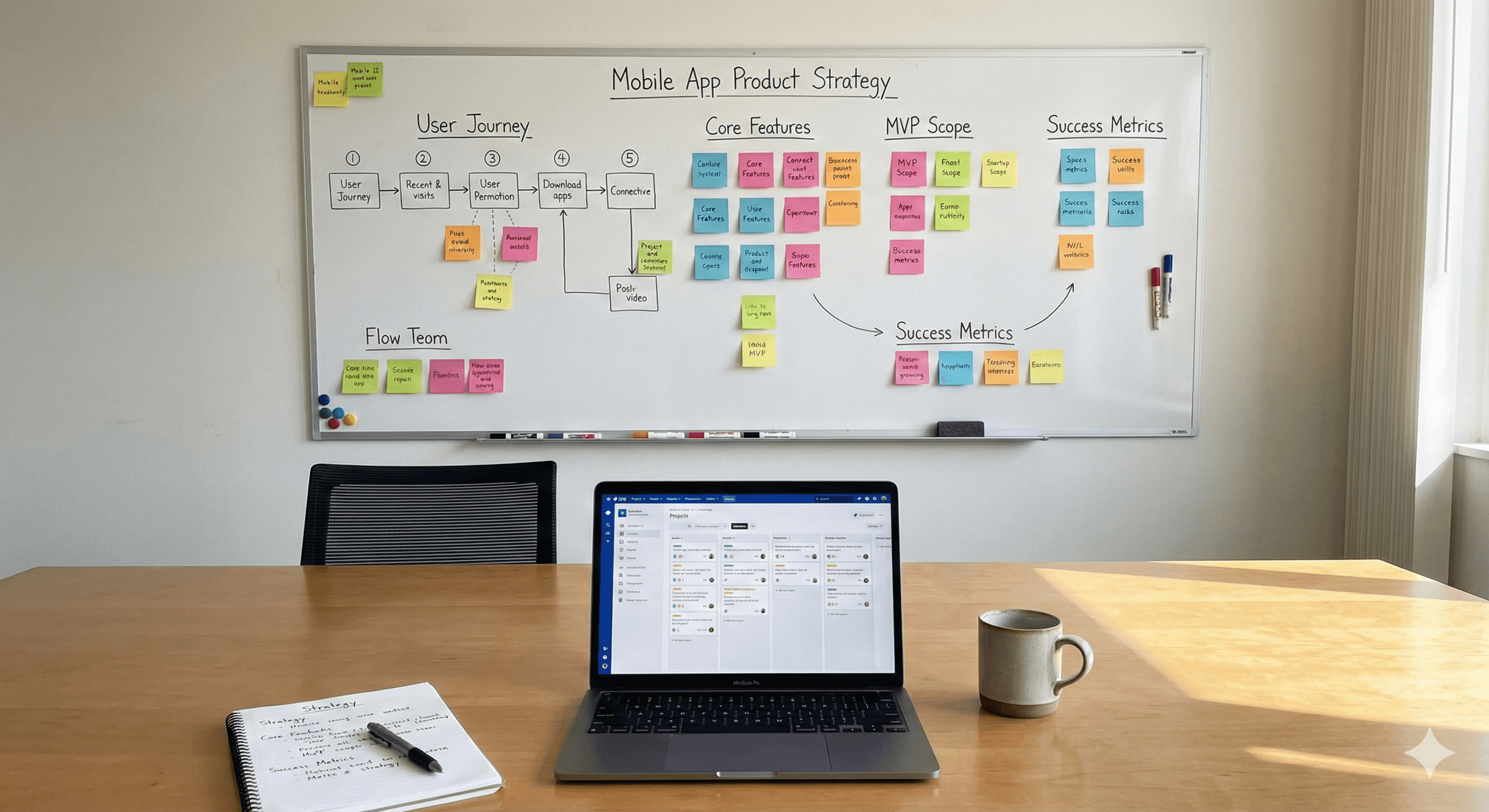
One of the biggest mistakes in mobile app development is jumping into design or coding without a strategic foundation. We often meet founders who already have screens designed but no validated use cases or feature priorities. This leads to bloated MVPs, unnecessary iterations and higher costs.
At Neon Apps, we begin every project with structured product workshops where we define the app’s core value, target users and success metrics. For example, in a fitness tracking app we built, focusing on three essential features instead of ten reduced the MVP timeline by half and increased adoption during early testing.
A clear strategy is also crucial for corporate clients. When working with a global food chain on their customer loyalty app, establishing user journeys upfront prevented redesigns across multiple teams and ensured stable integration with backend systems.
2. Ignoring Platform Differences and Architecture
Many teams underestimate the importance of platform-specific behavior, especially when working with cross platform mobile app development frameworks. While technologies like Flutter and React Native offer speed advantages, they still require careful architectural planning.
We’ve seen companies build a shared codebase without isolating business logic, which becomes a bottleneck when scaling to tablets, watches or responsive web. As a mobile app development agency, we structure our code to remain modular, testable and expandable for future devices.
In one of our subscription-based wellness apps, proper architecture allowed us to launch on both iOS and Android simultaneously and later repurpose parts of the codebase for a web dashboard with minimal overhead.
3. Overcomplicating the MVP
Another common pitfall is treating the MVP like a full product. This affects speed, budget and team motivation. Companies often feel pressured to match competitors immediately, but missing a market window is more damaging than launching lean.
In our experience delivering custom mobile app development projects, the most successful apps begin with one sharp, well executed value proposition. When building a caregiver–family matching platform, we launched with only onboarding, matching and messaging. Features like reviews, payments and video calls were added only after early traction.
By focusing the MVP, teams also reduce long-term maintenance. We help founders identify what is essential so they avoid unnecessary complexity and move faster to real user feedback.
4. Neglecting UI and UX Fundamentals
Design is not just aesthetics. Poor onboarding, confusing flows and overloaded interfaces are responsible for most user drop offs. Many teams hire separate designers and developers who don’t collaborate, which causes misalignment and slows the project.
As a custom mobile app development company, we run product, design and development in one integrated workflow. This lets us refine user flows continuously and ensure that every screen supports conversion and retention.
We applied this approach when building a padel community app. By simplifying the match booking flow from eight steps to four, user retention after day seven improved significantly. Small UX changes had a major impact on engagement.
5. Underestimating Backend and Scalability Needs
Clients often assume backend work is simple or optional. However, poor API structure or unstable infrastructure creates major issues once users join. We have taken over many projects where the app looks good visually but crashes under basic traffic.
During large enterprise builds, like airline or restaurant apps, we design backends for long-term scalability from day one. This includes consistent data models, documentation and proper caching strategies.
Even for startups, scalable backend planning is essential. A social fitness MVP we built grew to tens of thousands of users in the first months because the backend was designed for expansion, not just demo use.
6. Not Having the Right Team or Relying on Freelancers Alone
Founders often try to hire mobile app developers one by one and assemble a team themselves. This causes communication issues, misaligned timelines or incomplete handovers.
Working with an experienced mobile app development agency like ours ensures consistency, speed and cross-functional coordination. At Neon Apps, our teams include product managers, developers and designers who work in synchronization, allowing us to predict challenges early and maintain quality even on large-scale projects.
App studios also rely on us for this reason. Companies like Lyrebird and other subscription-focused teams partner with us when their in-house teams are at capacity. We help them produce multiple MVPs in parallel, without compromising quality or speed.
7. Forgetting About Analytics and Tracking
Many companies ship apps with no analytics, making it impossible to understand user behavior or optimize the experience. By the time they realize this, they need additional releases or major redesigns.
We include analytics planning in all mobile app development services, integrating tools like Firebase, Mixpanel and custom event pipelines to help clients track onboarding, retention and revenue flows.
This setup enabled one of our subscription health apps to pinpoint exactly where users were dropping off in onboarding, leading to a redesign that boosted subscription conversions within weeks.
8. Treating QA as an Afterthought
Skipping thorough testing is a serious mistake that leads to app store rejections, negative reviews and brand damage. QA is not just manual clicking; it requires device coverage, edge cases, automation and release discipline.
Our testing process includes functional tests across multiple devices, real-user scenarios and stress conditions. For example, a large corporate client’s delivery app required testing across dozens of screen sizes and network conditions to ensure flawless experience for millions of users.
Strong QA also reduces long-term costs. Fixing bugs post-launch is always more expensive than catching them early.
9. Ignoring App Store Optimization and Launch Readiness
A great product can still fail if the launch is weak. Some teams publish without screenshots, keyword research or proper descriptions, which results in low visibility and poor conversion.
As a full-cycle mobile app development company, we guide clients through launch preparation. This includes optimizing listings, preparing graphics, setting up analytics and planning A/B tests. For one of our subscription productivity apps, improving the screenshots and keyword strategy increased organic downloads dramatically.
Launch support is especially crucial for MVPs where first impressions matter most.
10. Not Planning for Post Launch Iteration
Many founders think the job is done once the app is live. In reality, launch is only the start. Without iteration, user feedback and continuous updates, engagement drops quickly.
We structure every project with a roadmap for the next six to twelve months. This includes analytics-driven improvements, performance enhancements and new features aligned with real usage data.
For example, a finance app we built tripled its retention rate through structured post-launch cycles focused on user insights rather than assumptions.
FAQ
What are the most common mistakes in mobile app development?
Why is a clear product strategy important?
How does poor UX impact mobile apps?
Why is backend scalability critical?
What happens if you skip analytics and testing?
Stay Inspired
Get fresh design insights, articles, and resources delivered straight to your inbox.
Get stories, insights, and updates from the Neon Apps team straight to your inbox.
Latest Blogs


Stay Inspired
Get stories, insights, and updates from the Neon Apps team straight to your inbox.
Got a project?
Let's Connect
Got a project? We build world-class mobile and web apps for startups and global brands.

Neon Apps is a product development company building mobile, web, and SaaS products with an 85-member in-house team in Istanbul and New York, delivering scalable products as a long-term development partner.
Development
Top 10 Mistakes to Avoid in Mobile App Development
Top 10 Mistakes to Avoid in Mobile App Development
Avoid the most common mistakes in mobile app development and build smarter, faster and more successful products.
Avoid the most common mistakes in mobile app development and build smarter, faster and more successful products.
Avoiding common mistakes in mobile app development can be the difference between a product that struggles and one that scales successfully. Building a mobile app is not just a technical effort; it is a combination of strategy, product thinking, user experience, and execution. Small missteps early on can quickly turn into expensive problems later.
As a mobile app development company, we see many teams repeat the same costly mistakes before coming to us for support. These issues often lead to delayed launches, wasted development time, and poor user adoption. Whether you are building your first MVP or scaling a global product, understanding these pitfalls early can save months of work and prevent unnecessary rework.
At Neon Apps, we have delivered more than five hundred mobile products end to end, including community platforms, subscription-based apps, and enterprise solutions. This experience gives us a clear view into where most projects go off track and what teams should avoid to build smarter, faster, and more successful mobile apps.
1. Starting Without a Clear Product Strategy
One of the biggest mistakes in mobile app development is jumping into design or coding without a strategic foundation. We often meet founders who already have screens designed but no validated use cases or feature priorities. This leads to bloated MVPs, unnecessary iterations and higher costs.
At Neon Apps, we begin every project with structured product workshops where we define the app’s core value, target users and success metrics. For example, in a fitness tracking app we built, focusing on three essential features instead of ten reduced the MVP timeline by half and increased adoption during early testing.
A clear strategy is also crucial for corporate clients. When working with a global food chain on their customer loyalty app, establishing user journeys upfront prevented redesigns across multiple teams and ensured stable integration with backend systems.
2. Ignoring Platform Differences and Architecture
Many teams underestimate the importance of platform-specific behavior, especially when working with cross platform mobile app development frameworks. While technologies like Flutter and React Native offer speed advantages, they still require careful architectural planning.
We’ve seen companies build a shared codebase without isolating business logic, which becomes a bottleneck when scaling to tablets, watches or responsive web. As a mobile app development agency, we structure our code to remain modular, testable and expandable for future devices.
In one of our subscription-based wellness apps, proper architecture allowed us to launch on both iOS and Android simultaneously and later repurpose parts of the codebase for a web dashboard with minimal overhead.
3. Overcomplicating the MVP
Another common pitfall is treating the MVP like a full product. This affects speed, budget and team motivation. Companies often feel pressured to match competitors immediately, but missing a market window is more damaging than launching lean.
In our experience delivering custom mobile app development projects, the most successful apps begin with one sharp, well executed value proposition. When building a caregiver–family matching platform, we launched with only onboarding, matching and messaging. Features like reviews, payments and video calls were added only after early traction.
By focusing the MVP, teams also reduce long-term maintenance. We help founders identify what is essential so they avoid unnecessary complexity and move faster to real user feedback.
4. Neglecting UI and UX Fundamentals
Design is not just aesthetics. Poor onboarding, confusing flows and overloaded interfaces are responsible for most user drop offs. Many teams hire separate designers and developers who don’t collaborate, which causes misalignment and slows the project.
As a custom mobile app development company, we run product, design and development in one integrated workflow. This lets us refine user flows continuously and ensure that every screen supports conversion and retention.
We applied this approach when building a padel community app. By simplifying the match booking flow from eight steps to four, user retention after day seven improved significantly. Small UX changes had a major impact on engagement.
5. Underestimating Backend and Scalability Needs
Clients often assume backend work is simple or optional. However, poor API structure or unstable infrastructure creates major issues once users join. We have taken over many projects where the app looks good visually but crashes under basic traffic.
During large enterprise builds, like airline or restaurant apps, we design backends for long-term scalability from day one. This includes consistent data models, documentation and proper caching strategies.
Even for startups, scalable backend planning is essential. A social fitness MVP we built grew to tens of thousands of users in the first months because the backend was designed for expansion, not just demo use.
6. Not Having the Right Team or Relying on Freelancers Alone
Founders often try to hire mobile app developers one by one and assemble a team themselves. This causes communication issues, misaligned timelines or incomplete handovers.
Working with an experienced mobile app development agency like ours ensures consistency, speed and cross-functional coordination. At Neon Apps, our teams include product managers, developers and designers who work in synchronization, allowing us to predict challenges early and maintain quality even on large-scale projects.
App studios also rely on us for this reason. Companies like Lyrebird and other subscription-focused teams partner with us when their in-house teams are at capacity. We help them produce multiple MVPs in parallel, without compromising quality or speed.
7. Forgetting About Analytics and Tracking
Many companies ship apps with no analytics, making it impossible to understand user behavior or optimize the experience. By the time they realize this, they need additional releases or major redesigns.
We include analytics planning in all mobile app development services, integrating tools like Firebase, Mixpanel and custom event pipelines to help clients track onboarding, retention and revenue flows.
This setup enabled one of our subscription health apps to pinpoint exactly where users were dropping off in onboarding, leading to a redesign that boosted subscription conversions within weeks.
8. Treating QA as an Afterthought
Skipping thorough testing is a serious mistake that leads to app store rejections, negative reviews and brand damage. QA is not just manual clicking; it requires device coverage, edge cases, automation and release discipline.
Our testing process includes functional tests across multiple devices, real-user scenarios and stress conditions. For example, a large corporate client’s delivery app required testing across dozens of screen sizes and network conditions to ensure flawless experience for millions of users.
Strong QA also reduces long-term costs. Fixing bugs post-launch is always more expensive than catching them early.
9. Ignoring App Store Optimization and Launch Readiness
A great product can still fail if the launch is weak. Some teams publish without screenshots, keyword research or proper descriptions, which results in low visibility and poor conversion.
As a full-cycle mobile app development company, we guide clients through launch preparation. This includes optimizing listings, preparing graphics, setting up analytics and planning A/B tests. For one of our subscription productivity apps, improving the screenshots and keyword strategy increased organic downloads dramatically.
Launch support is especially crucial for MVPs where first impressions matter most.
10. Not Planning for Post Launch Iteration
Many founders think the job is done once the app is live. In reality, launch is only the start. Without iteration, user feedback and continuous updates, engagement drops quickly.
We structure every project with a roadmap for the next six to twelve months. This includes analytics-driven improvements, performance enhancements and new features aligned with real usage data.
For example, a finance app we built tripled its retention rate through structured post-launch cycles focused on user insights rather than assumptions.
FAQ
What are the most common mistakes in mobile app development?
Why is a clear product strategy important?
How does poor UX impact mobile apps?
Why is backend scalability critical?
What happens if you skip analytics and testing?
Stay Inspired
Get fresh design insights, articles, and resources delivered straight to your inbox.
Get stories, insights, and updates from the Neon Apps team straight to your inbox.
Latest Blogs
Stay Inspired
Get stories, insights, and updates from the Neon Apps team straight to your inbox.
Got a project?
Let's Connect
Got a project? We build world-class mobile and web apps for startups and global brands.
Neon Apps is a product development company building mobile, web, and SaaS products with an 85-member in-house team in Istanbul and New York, delivering scalable products as a long-term development partner.
Development
Top 10 Mistakes to Avoid in Mobile App Development
Top 10 Mistakes to Avoid in Mobile App Development
Avoid the most common mistakes in mobile app development and build smarter, faster and more successful products.
Avoid the most common mistakes in mobile app development and build smarter, faster and more successful products.
Avoiding common mistakes in mobile app development can be the difference between a product that struggles and one that scales successfully. Building a mobile app is not just a technical effort; it is a combination of strategy, product thinking, user experience, and execution. Small missteps early on can quickly turn into expensive problems later.
As a mobile app development company, we see many teams repeat the same costly mistakes before coming to us for support. These issues often lead to delayed launches, wasted development time, and poor user adoption. Whether you are building your first MVP or scaling a global product, understanding these pitfalls early can save months of work and prevent unnecessary rework.
At Neon Apps, we have delivered more than five hundred mobile products end to end, including community platforms, subscription-based apps, and enterprise solutions. This experience gives us a clear view into where most projects go off track and what teams should avoid to build smarter, faster, and more successful mobile apps.
1. Starting Without a Clear Product Strategy
One of the biggest mistakes in mobile app development is jumping into design or coding without a strategic foundation. We often meet founders who already have screens designed but no validated use cases or feature priorities. This leads to bloated MVPs, unnecessary iterations and higher costs.
At Neon Apps, we begin every project with structured product workshops where we define the app’s core value, target users and success metrics. For example, in a fitness tracking app we built, focusing on three essential features instead of ten reduced the MVP timeline by half and increased adoption during early testing.
A clear strategy is also crucial for corporate clients. When working with a global food chain on their customer loyalty app, establishing user journeys upfront prevented redesigns across multiple teams and ensured stable integration with backend systems.
2. Ignoring Platform Differences and Architecture
Many teams underestimate the importance of platform-specific behavior, especially when working with cross platform mobile app development frameworks. While technologies like Flutter and React Native offer speed advantages, they still require careful architectural planning.
We’ve seen companies build a shared codebase without isolating business logic, which becomes a bottleneck when scaling to tablets, watches or responsive web. As a mobile app development agency, we structure our code to remain modular, testable and expandable for future devices.
In one of our subscription-based wellness apps, proper architecture allowed us to launch on both iOS and Android simultaneously and later repurpose parts of the codebase for a web dashboard with minimal overhead.
3. Overcomplicating the MVP
Another common pitfall is treating the MVP like a full product. This affects speed, budget and team motivation. Companies often feel pressured to match competitors immediately, but missing a market window is more damaging than launching lean.
In our experience delivering custom mobile app development projects, the most successful apps begin with one sharp, well executed value proposition. When building a caregiver–family matching platform, we launched with only onboarding, matching and messaging. Features like reviews, payments and video calls were added only after early traction.
By focusing the MVP, teams also reduce long-term maintenance. We help founders identify what is essential so they avoid unnecessary complexity and move faster to real user feedback.
4. Neglecting UI and UX Fundamentals
Design is not just aesthetics. Poor onboarding, confusing flows and overloaded interfaces are responsible for most user drop offs. Many teams hire separate designers and developers who don’t collaborate, which causes misalignment and slows the project.
As a custom mobile app development company, we run product, design and development in one integrated workflow. This lets us refine user flows continuously and ensure that every screen supports conversion and retention.
We applied this approach when building a padel community app. By simplifying the match booking flow from eight steps to four, user retention after day seven improved significantly. Small UX changes had a major impact on engagement.
5. Underestimating Backend and Scalability Needs
Clients often assume backend work is simple or optional. However, poor API structure or unstable infrastructure creates major issues once users join. We have taken over many projects where the app looks good visually but crashes under basic traffic.
During large enterprise builds, like airline or restaurant apps, we design backends for long-term scalability from day one. This includes consistent data models, documentation and proper caching strategies.
Even for startups, scalable backend planning is essential. A social fitness MVP we built grew to tens of thousands of users in the first months because the backend was designed for expansion, not just demo use.
6. Not Having the Right Team or Relying on Freelancers Alone
Founders often try to hire mobile app developers one by one and assemble a team themselves. This causes communication issues, misaligned timelines or incomplete handovers.
Working with an experienced mobile app development agency like ours ensures consistency, speed and cross-functional coordination. At Neon Apps, our teams include product managers, developers and designers who work in synchronization, allowing us to predict challenges early and maintain quality even on large-scale projects.
App studios also rely on us for this reason. Companies like Lyrebird and other subscription-focused teams partner with us when their in-house teams are at capacity. We help them produce multiple MVPs in parallel, without compromising quality or speed.
7. Forgetting About Analytics and Tracking
Many companies ship apps with no analytics, making it impossible to understand user behavior or optimize the experience. By the time they realize this, they need additional releases or major redesigns.
We include analytics planning in all mobile app development services, integrating tools like Firebase, Mixpanel and custom event pipelines to help clients track onboarding, retention and revenue flows.
This setup enabled one of our subscription health apps to pinpoint exactly where users were dropping off in onboarding, leading to a redesign that boosted subscription conversions within weeks.
8. Treating QA as an Afterthought
Skipping thorough testing is a serious mistake that leads to app store rejections, negative reviews and brand damage. QA is not just manual clicking; it requires device coverage, edge cases, automation and release discipline.
Our testing process includes functional tests across multiple devices, real-user scenarios and stress conditions. For example, a large corporate client’s delivery app required testing across dozens of screen sizes and network conditions to ensure flawless experience for millions of users.
Strong QA also reduces long-term costs. Fixing bugs post-launch is always more expensive than catching them early.
9. Ignoring App Store Optimization and Launch Readiness
A great product can still fail if the launch is weak. Some teams publish without screenshots, keyword research or proper descriptions, which results in low visibility and poor conversion.
As a full-cycle mobile app development company, we guide clients through launch preparation. This includes optimizing listings, preparing graphics, setting up analytics and planning A/B tests. For one of our subscription productivity apps, improving the screenshots and keyword strategy increased organic downloads dramatically.
Launch support is especially crucial for MVPs where first impressions matter most.
10. Not Planning for Post Launch Iteration
Many founders think the job is done once the app is live. In reality, launch is only the start. Without iteration, user feedback and continuous updates, engagement drops quickly.
We structure every project with a roadmap for the next six to twelve months. This includes analytics-driven improvements, performance enhancements and new features aligned with real usage data.
For example, a finance app we built tripled its retention rate through structured post-launch cycles focused on user insights rather than assumptions.
FAQ
What are the most common mistakes in mobile app development?
Why is a clear product strategy important?
How does poor UX impact mobile apps?
Why is backend scalability critical?
What happens if you skip analytics and testing?
Stay Inspired
Get fresh design insights, articles, and resources delivered straight to your inbox.
Get stories, insights, and updates from the Neon Apps team straight to your inbox.
Latest Blogs
Stay Inspired
Get stories, insights, and updates from the Neon Apps team straight to your inbox.
Got a project?
Let's Connect
Got a project? We build world-class mobile and web apps for startups and global brands.
Neon Apps is a product development company building mobile, web, and SaaS products with an 85-member in-house team in Istanbul and New York, delivering scalable products as a long-term development partner.