Development
Understanding MVP Limits to Prevent Unnecessary Mobile App Development
Understanding MVP Limits to Prevent Unnecessary Mobile App Development
Build smarter MVPs by focusing on what truly matters, reducing wasted effort and accelerating real validation with Neon Apps.
Build smarter MVPs by focusing on what truly matters, reducing wasted effort and accelerating real validation with Neon Apps.
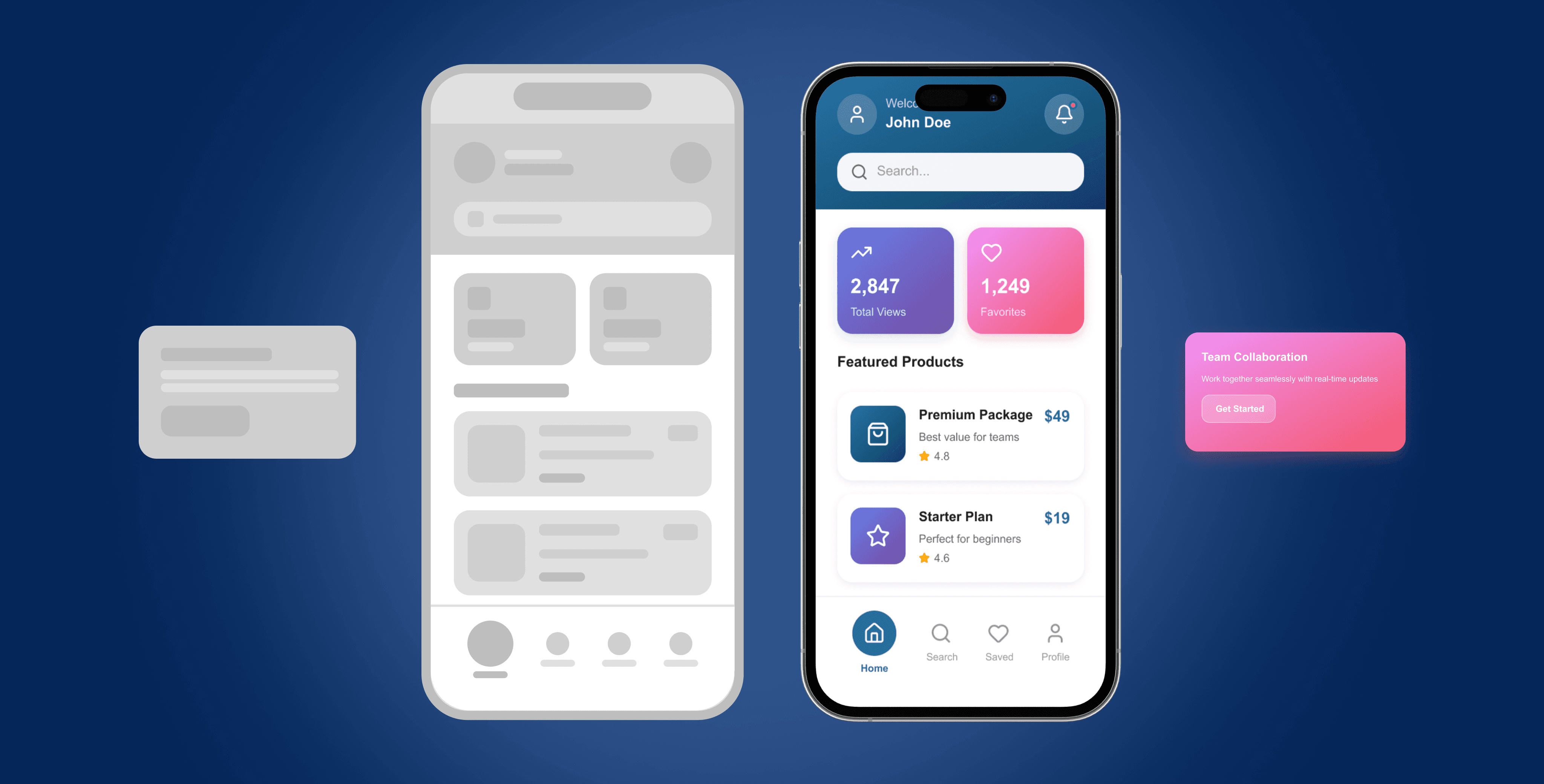
At Neon Apps, we work closely with startups and app studios to develop minimum viable products that validate ideas quickly while saving time, budget, and engineering effort. Understanding the limits of an MVP is critical to this process. An MVP is not about building everything you might need in the future, but about delivering just enough to test assumptions and learn from real users.
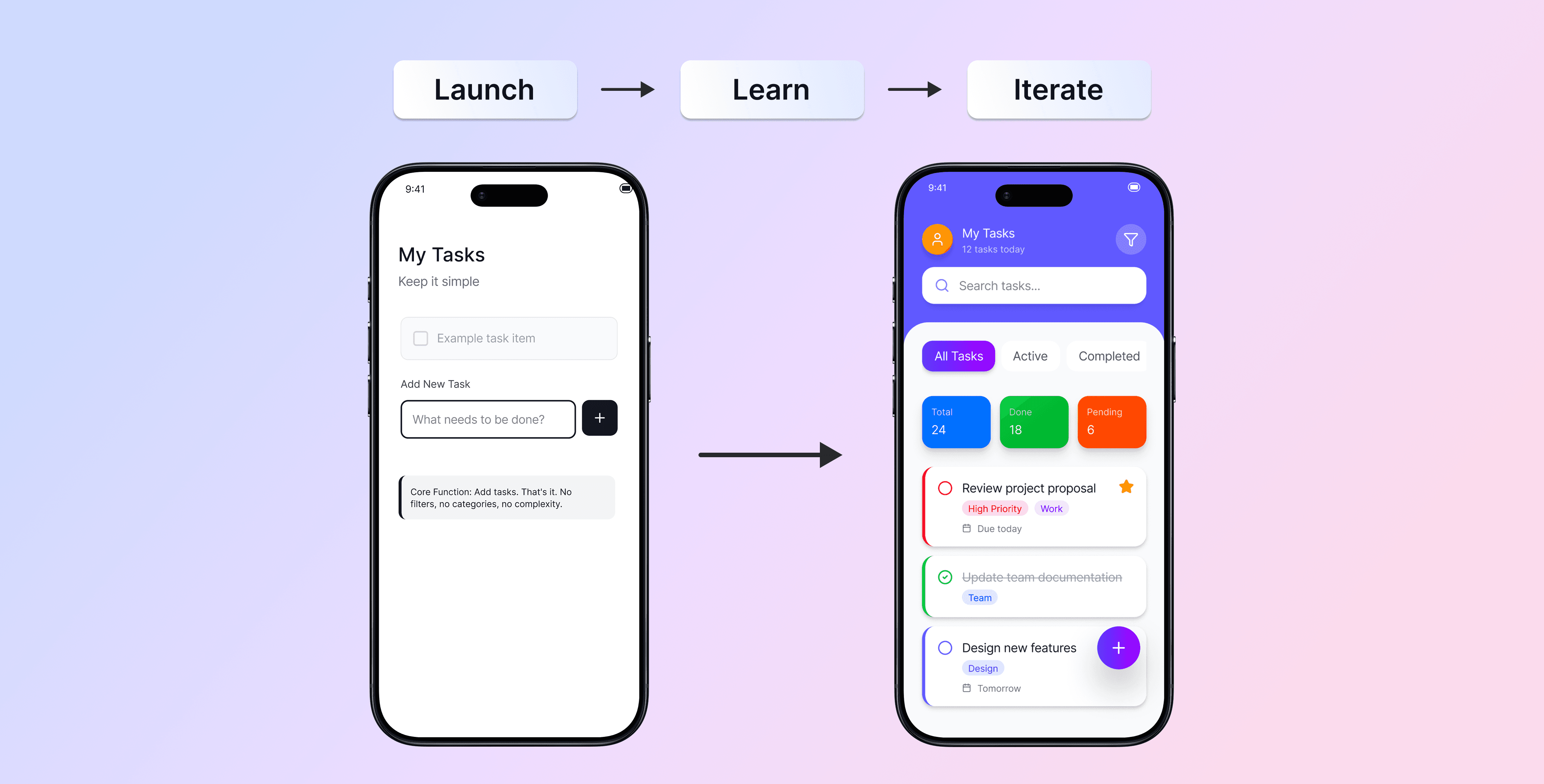
Many teams lose momentum by spending months building non-essential features, over-polishing early versions, or trying to anticipate every edge case before launch. This approach delays market entry and significantly increases development costs without reducing risk. By applying clear feature prioritization, iterative design, and continuous user feedback integration, we help teams stay focused on what truly matters at each stage.
Our goal is to maximize efficiency across the software development life cycle by ensuring that every feature serves a validation purpose. This allows teams to launch faster, learn earlier, and make informed decisions about where to invest next, instead of committing resources to assumptions that have not yet been proven.
1. Define Core Objectives Clearly
Before starting an MVP, it is essential to clearly define what problem the app solves and what success looks like at this early stage. Without well-defined objectives, teams often drift toward overbuilding, adding features that feel useful internally but do not contribute to real market validation or user adoption.
At Neon Apps, we help clients translate high-level ideas into concrete MVP goals by asking the right questions early. What assumption are we testing? What user behavior would prove this idea works? What metrics will signal success or failure? By grounding decisions in these answers, the MVP stays focused and purposeful.
For example, in one of our subscription-based wellness apps, we intentionally limited the first release to onboarding, subscription setup, and content access. This narrow scope allowed us to collect actionable insights quickly, validate willingness to pay, and avoid wasting time on secondary features users had not yet asked for.
2. Embrace the Lean Startup Methodology
The lean startup methodology emphasizes speed, experimentation, and learning over perfection. Yet many teams struggle to apply it in practice, often trying to ship a highly polished product on the first release. This approach increases risk, delays launch, and makes it harder to adapt when assumptions prove wrong.
By embracing lean principles, we design MVPs with just enough functionality to test the core value proposition. Each feature exists to answer a specific question, not to impress visually or cover every possible use case.
For instance, when building a community app for padel players, we launched only match scheduling and basic messaging. This allowed us to validate real demand and usage patterns before investing in gamification, rankings, or advanced social mechanics. Lean execution helped the team learn faster and make confident decisions about the next iteration.
3. Focus on Feature Prioritization
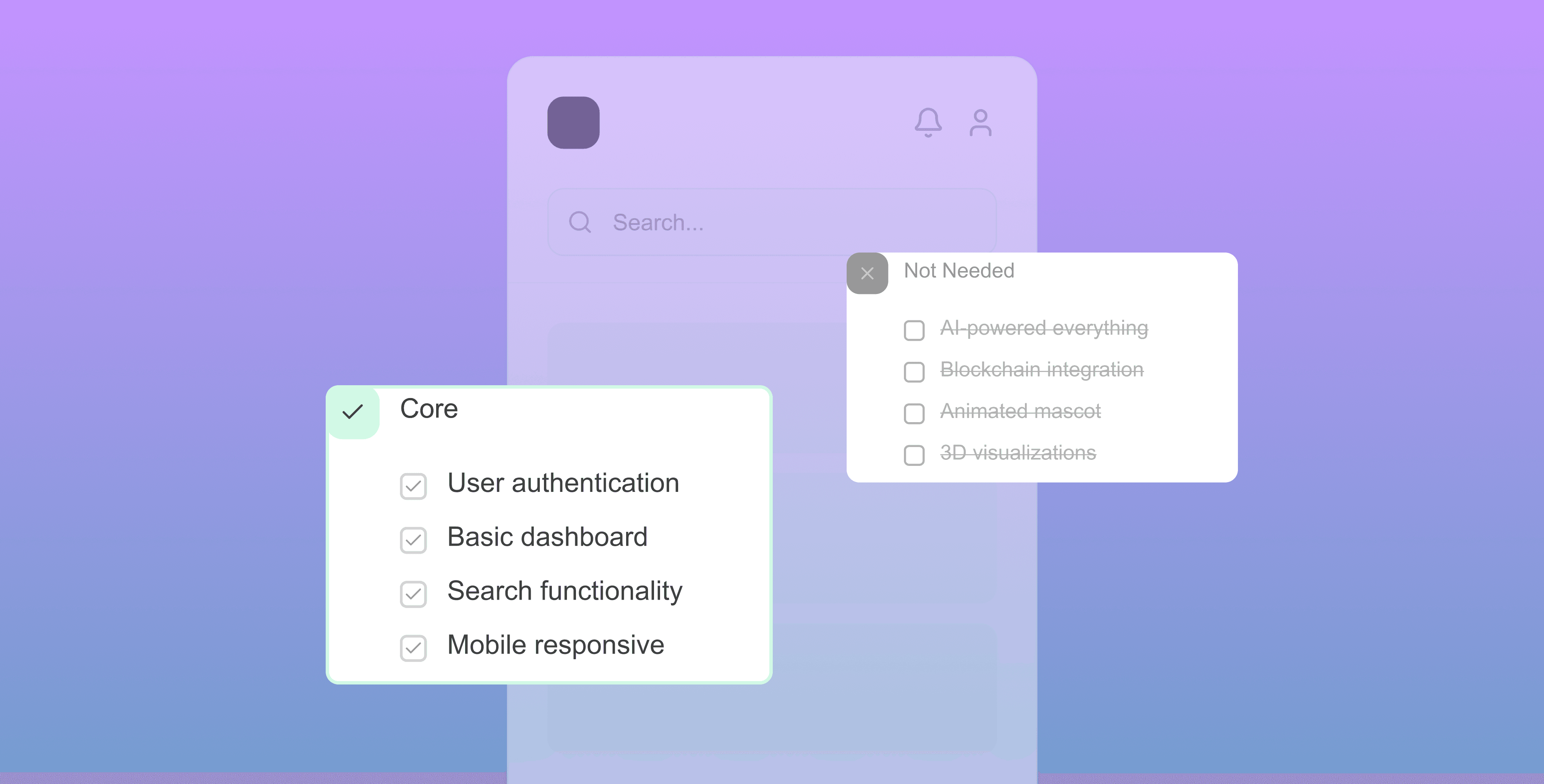
Feature prioritization is one of the most critical factors in preventing unnecessary development. Many teams fall into the trap of treating the MVP as a smaller version of the final product, which leads to scope creep, longer timelines, and diluted learning.
At Neon Apps, we run structured prioritization sessions with founders and product teams to identify high-impact features that directly support MVP objectives. We evaluate each feature by asking whether it helps validate the idea, improves activation, or supports a measurable outcome.
In a caregiver-matching platform we developed, limiting the MVP to onboarding, search, and secure messaging significantly reduced development time while still delivering meaningful value to users. This focused scope enabled faster launch, clearer insights, and a stronger foundation for future iterations.
By defining objectives clearly, applying lean principles, and prioritizing features with discipline, teams can build MVPs that are efficient, informative, and strategically aligned with long-term growth.
4. Use Iterative Design and Agile Development Practices
An iterative design process combined with agile development practices ensures that an MVP evolves in response to real user behavior rather than internal assumptions. Instead of building everything upfront, teams release small, focused improvements, observe how users respond, and refine the product continuously. This approach helps prevent unnecessary development of features that add complexity but deliver little value.
In one of our enterprise-level applications, we implemented weekly sprints, rapid prototyping, and continuous usability testing. Each sprint focused on a clearly defined improvement, informed by actual usage data. This allowed us to steadily improve usability and performance without bloating the codebase or increasing technical debt. Iterative execution also made it easier to adapt priorities as new insights emerged, supporting user experience optimization while accelerating the overall mobile app launch strategy.
5. Incorporate User Feedback Early and Often
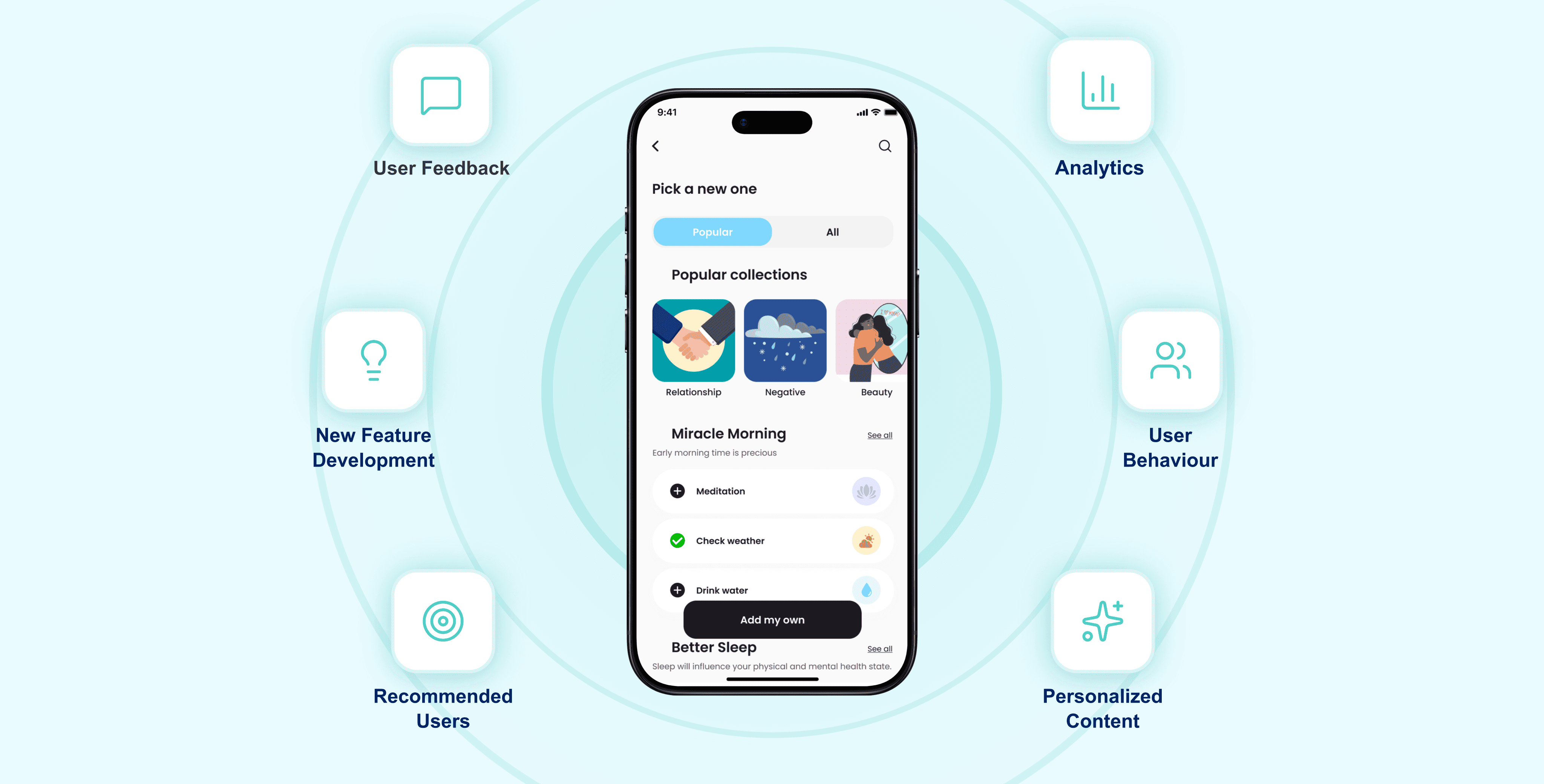
An MVP only creates value when teams actively listen to users and respond to their behavior. Without structured feedback integration, product decisions rely on assumptions, which often leads to wasted effort and low adoption rates.
At Neon Apps, we build feedback loops directly into every project. These include tracking engagement metrics, analyzing drop-off points, and collecting qualitative insights where needed. For a subscription-based learning app, we closely monitored how users interacted with content and where engagement declined. Based on this data, we introduced features such as smart reminders and personalized content recommendations. Each addition was driven by real usage patterns, not speculation.
By incorporating user feedback early and consistently, teams ensure that every new feature improves retention, strengthens value delivery, and moves the product closer to market fit without unnecessary development.
6. Plan the Software Development Life Cycle Efficiently
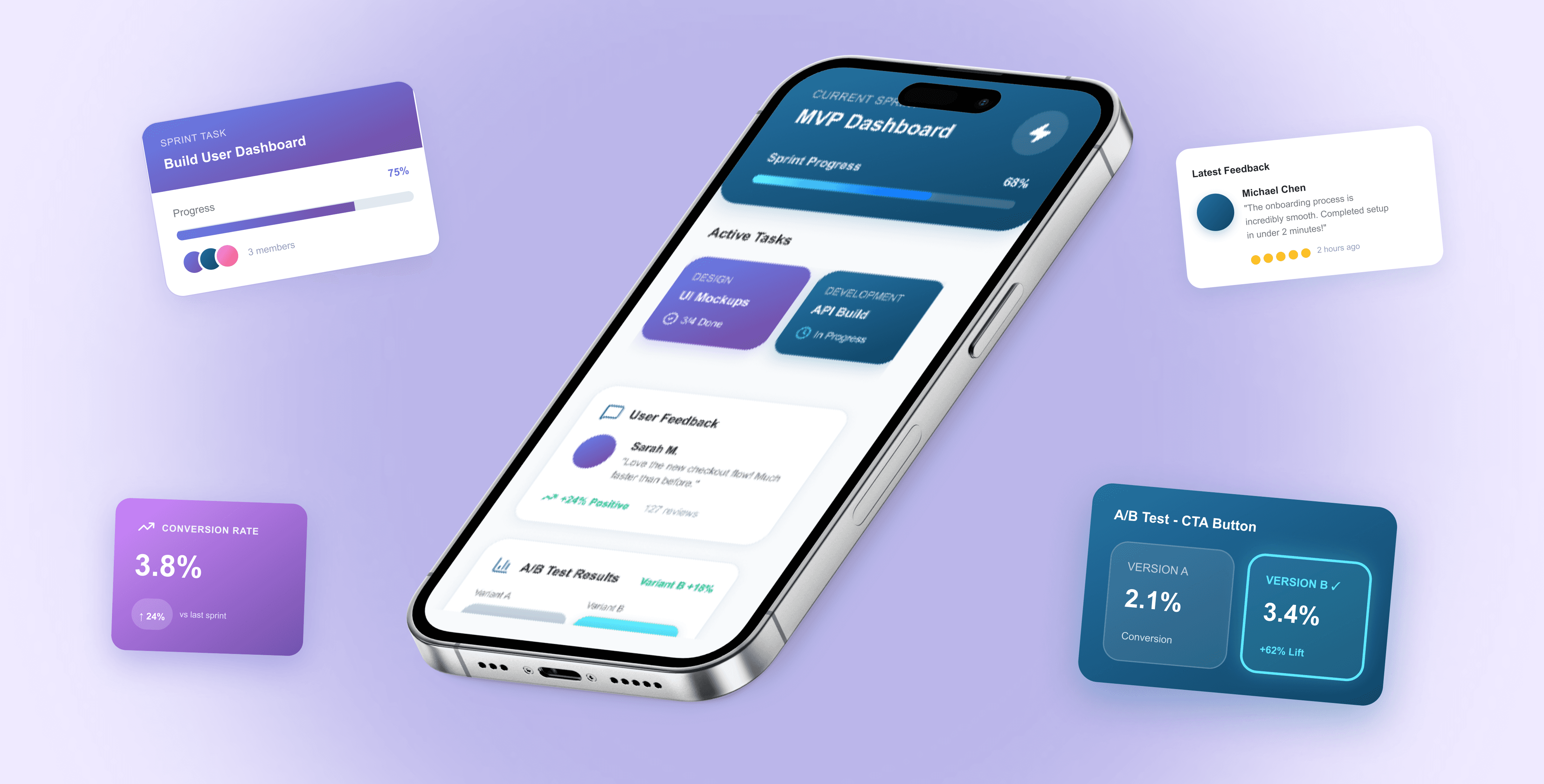
Efficient management of the software development life cycle is essential to keeping an MVP focused and cost-effective. Without clear structure, teams risk overengineering solutions or spending time on low-impact tasks. Defining clear milestones, review points, and testing stages helps maintain momentum while ensuring that each phase serves a specific purpose.
In our MVP projects, we intentionally break the development process into clear phases such as discovery, design, development, testing, and feedback. Each phase has defined goals and decision checkpoints. This structure allows teams to move quickly without losing control, ensuring the product is delivered on time while remaining flexible enough to adapt based on real learnings. By planning the life cycle deliberately, teams can avoid unnecessary complexity and keep development aligned with validation goals.
7. Testing Techniques for Maximum Validation
Strong MVP testing techniques are critical for understanding whether a product truly meets user needs. Rather than relying on intuition, we use a combination of quantitative and qualitative methods to gather reliable insights. These include A/B testing, usability testing, and behavioral analytics that reveal how users interact with the product in real scenarios.
For example, in a lifestyle subscription app we launched, testing two different onboarding flows uncovered a clear winner in terms of conversion and engagement. This insight allowed us to confidently move forward with the most effective approach, scale the product strategically, and avoid adding unnecessary features. Thoughtful testing ensures that future development decisions are grounded in evidence, maximizing validation while minimizing wasted effort.
FAQ
Why is understanding MVP limits important in mobile app development?
What happens when teams exceed MVP scope?
How does Neon Apps prioritize features in an MVP?
Why is user feedback critical during MVP development?
How does Neon Apps prevent unnecessary mobile app development?
Stay Inspired
Get fresh design insights, articles, and resources delivered straight to your inbox.
Get stories, insights, and updates from the Neon Apps team straight to your inbox.
Latest Blogs


Stay Inspired
Get stories, insights, and updates from the Neon Apps team straight to your inbox.
Got a project?
Let's Connect
Got a project? We build world-class mobile and web apps for startups and global brands.

Neon Apps is a product development company building mobile, web, and SaaS products with an 85-member in-house team in Istanbul and New York, delivering scalable products as a long-term development partner.
Development
Understanding MVP Limits to Prevent Unnecessary Mobile App Development
Understanding MVP Limits to Prevent Unnecessary Mobile App Development
Build smarter MVPs by focusing on what truly matters, reducing wasted effort and accelerating real validation with Neon Apps.
Build smarter MVPs by focusing on what truly matters, reducing wasted effort and accelerating real validation with Neon Apps.
At Neon Apps, we work closely with startups and app studios to develop minimum viable products that validate ideas quickly while saving time, budget, and engineering effort. Understanding the limits of an MVP is critical to this process. An MVP is not about building everything you might need in the future, but about delivering just enough to test assumptions and learn from real users.
Many teams lose momentum by spending months building non-essential features, over-polishing early versions, or trying to anticipate every edge case before launch. This approach delays market entry and significantly increases development costs without reducing risk. By applying clear feature prioritization, iterative design, and continuous user feedback integration, we help teams stay focused on what truly matters at each stage.
Our goal is to maximize efficiency across the software development life cycle by ensuring that every feature serves a validation purpose. This allows teams to launch faster, learn earlier, and make informed decisions about where to invest next, instead of committing resources to assumptions that have not yet been proven.
1. Define Core Objectives Clearly
Before starting an MVP, it is essential to clearly define what problem the app solves and what success looks like at this early stage. Without well-defined objectives, teams often drift toward overbuilding, adding features that feel useful internally but do not contribute to real market validation or user adoption.
At Neon Apps, we help clients translate high-level ideas into concrete MVP goals by asking the right questions early. What assumption are we testing? What user behavior would prove this idea works? What metrics will signal success or failure? By grounding decisions in these answers, the MVP stays focused and purposeful.
For example, in one of our subscription-based wellness apps, we intentionally limited the first release to onboarding, subscription setup, and content access. This narrow scope allowed us to collect actionable insights quickly, validate willingness to pay, and avoid wasting time on secondary features users had not yet asked for.
2. Embrace the Lean Startup Methodology
The lean startup methodology emphasizes speed, experimentation, and learning over perfection. Yet many teams struggle to apply it in practice, often trying to ship a highly polished product on the first release. This approach increases risk, delays launch, and makes it harder to adapt when assumptions prove wrong.
By embracing lean principles, we design MVPs with just enough functionality to test the core value proposition. Each feature exists to answer a specific question, not to impress visually or cover every possible use case.
For instance, when building a community app for padel players, we launched only match scheduling and basic messaging. This allowed us to validate real demand and usage patterns before investing in gamification, rankings, or advanced social mechanics. Lean execution helped the team learn faster and make confident decisions about the next iteration.
3. Focus on Feature Prioritization
Feature prioritization is one of the most critical factors in preventing unnecessary development. Many teams fall into the trap of treating the MVP as a smaller version of the final product, which leads to scope creep, longer timelines, and diluted learning.
At Neon Apps, we run structured prioritization sessions with founders and product teams to identify high-impact features that directly support MVP objectives. We evaluate each feature by asking whether it helps validate the idea, improves activation, or supports a measurable outcome.
In a caregiver-matching platform we developed, limiting the MVP to onboarding, search, and secure messaging significantly reduced development time while still delivering meaningful value to users. This focused scope enabled faster launch, clearer insights, and a stronger foundation for future iterations.
By defining objectives clearly, applying lean principles, and prioritizing features with discipline, teams can build MVPs that are efficient, informative, and strategically aligned with long-term growth.
4. Use Iterative Design and Agile Development Practices
An iterative design process combined with agile development practices ensures that an MVP evolves in response to real user behavior rather than internal assumptions. Instead of building everything upfront, teams release small, focused improvements, observe how users respond, and refine the product continuously. This approach helps prevent unnecessary development of features that add complexity but deliver little value.
In one of our enterprise-level applications, we implemented weekly sprints, rapid prototyping, and continuous usability testing. Each sprint focused on a clearly defined improvement, informed by actual usage data. This allowed us to steadily improve usability and performance without bloating the codebase or increasing technical debt. Iterative execution also made it easier to adapt priorities as new insights emerged, supporting user experience optimization while accelerating the overall mobile app launch strategy.
5. Incorporate User Feedback Early and Often
An MVP only creates value when teams actively listen to users and respond to their behavior. Without structured feedback integration, product decisions rely on assumptions, which often leads to wasted effort and low adoption rates.
At Neon Apps, we build feedback loops directly into every project. These include tracking engagement metrics, analyzing drop-off points, and collecting qualitative insights where needed. For a subscription-based learning app, we closely monitored how users interacted with content and where engagement declined. Based on this data, we introduced features such as smart reminders and personalized content recommendations. Each addition was driven by real usage patterns, not speculation.
By incorporating user feedback early and consistently, teams ensure that every new feature improves retention, strengthens value delivery, and moves the product closer to market fit without unnecessary development.
6. Plan the Software Development Life Cycle Efficiently
Efficient management of the software development life cycle is essential to keeping an MVP focused and cost-effective. Without clear structure, teams risk overengineering solutions or spending time on low-impact tasks. Defining clear milestones, review points, and testing stages helps maintain momentum while ensuring that each phase serves a specific purpose.
In our MVP projects, we intentionally break the development process into clear phases such as discovery, design, development, testing, and feedback. Each phase has defined goals and decision checkpoints. This structure allows teams to move quickly without losing control, ensuring the product is delivered on time while remaining flexible enough to adapt based on real learnings. By planning the life cycle deliberately, teams can avoid unnecessary complexity and keep development aligned with validation goals.
7. Testing Techniques for Maximum Validation
Strong MVP testing techniques are critical for understanding whether a product truly meets user needs. Rather than relying on intuition, we use a combination of quantitative and qualitative methods to gather reliable insights. These include A/B testing, usability testing, and behavioral analytics that reveal how users interact with the product in real scenarios.
For example, in a lifestyle subscription app we launched, testing two different onboarding flows uncovered a clear winner in terms of conversion and engagement. This insight allowed us to confidently move forward with the most effective approach, scale the product strategically, and avoid adding unnecessary features. Thoughtful testing ensures that future development decisions are grounded in evidence, maximizing validation while minimizing wasted effort.
FAQ
Why is understanding MVP limits important in mobile app development?
What happens when teams exceed MVP scope?
How does Neon Apps prioritize features in an MVP?
Why is user feedback critical during MVP development?
How does Neon Apps prevent unnecessary mobile app development?
Stay Inspired
Get fresh design insights, articles, and resources delivered straight to your inbox.
Get stories, insights, and updates from the Neon Apps team straight to your inbox.
Latest Blogs
Stay Inspired
Get stories, insights, and updates from the Neon Apps team straight to your inbox.
Got a project?
Let's Connect
Got a project? We build world-class mobile and web apps for startups and global brands.
Neon Apps is a product development company building mobile, web, and SaaS products with an 85-member in-house team in Istanbul and New York, delivering scalable products as a long-term development partner.
Development
Understanding MVP Limits to Prevent Unnecessary Mobile App Development
Understanding MVP Limits to Prevent Unnecessary Mobile App Development
Build smarter MVPs by focusing on what truly matters, reducing wasted effort and accelerating real validation with Neon Apps.
Build smarter MVPs by focusing on what truly matters, reducing wasted effort and accelerating real validation with Neon Apps.
At Neon Apps, we work closely with startups and app studios to develop minimum viable products that validate ideas quickly while saving time, budget, and engineering effort. Understanding the limits of an MVP is critical to this process. An MVP is not about building everything you might need in the future, but about delivering just enough to test assumptions and learn from real users.
Many teams lose momentum by spending months building non-essential features, over-polishing early versions, or trying to anticipate every edge case before launch. This approach delays market entry and significantly increases development costs without reducing risk. By applying clear feature prioritization, iterative design, and continuous user feedback integration, we help teams stay focused on what truly matters at each stage.
Our goal is to maximize efficiency across the software development life cycle by ensuring that every feature serves a validation purpose. This allows teams to launch faster, learn earlier, and make informed decisions about where to invest next, instead of committing resources to assumptions that have not yet been proven.
1. Define Core Objectives Clearly
Before starting an MVP, it is essential to clearly define what problem the app solves and what success looks like at this early stage. Without well-defined objectives, teams often drift toward overbuilding, adding features that feel useful internally but do not contribute to real market validation or user adoption.
At Neon Apps, we help clients translate high-level ideas into concrete MVP goals by asking the right questions early. What assumption are we testing? What user behavior would prove this idea works? What metrics will signal success or failure? By grounding decisions in these answers, the MVP stays focused and purposeful.
For example, in one of our subscription-based wellness apps, we intentionally limited the first release to onboarding, subscription setup, and content access. This narrow scope allowed us to collect actionable insights quickly, validate willingness to pay, and avoid wasting time on secondary features users had not yet asked for.
2. Embrace the Lean Startup Methodology
The lean startup methodology emphasizes speed, experimentation, and learning over perfection. Yet many teams struggle to apply it in practice, often trying to ship a highly polished product on the first release. This approach increases risk, delays launch, and makes it harder to adapt when assumptions prove wrong.
By embracing lean principles, we design MVPs with just enough functionality to test the core value proposition. Each feature exists to answer a specific question, not to impress visually or cover every possible use case.
For instance, when building a community app for padel players, we launched only match scheduling and basic messaging. This allowed us to validate real demand and usage patterns before investing in gamification, rankings, or advanced social mechanics. Lean execution helped the team learn faster and make confident decisions about the next iteration.
3. Focus on Feature Prioritization
Feature prioritization is one of the most critical factors in preventing unnecessary development. Many teams fall into the trap of treating the MVP as a smaller version of the final product, which leads to scope creep, longer timelines, and diluted learning.
At Neon Apps, we run structured prioritization sessions with founders and product teams to identify high-impact features that directly support MVP objectives. We evaluate each feature by asking whether it helps validate the idea, improves activation, or supports a measurable outcome.
In a caregiver-matching platform we developed, limiting the MVP to onboarding, search, and secure messaging significantly reduced development time while still delivering meaningful value to users. This focused scope enabled faster launch, clearer insights, and a stronger foundation for future iterations.
By defining objectives clearly, applying lean principles, and prioritizing features with discipline, teams can build MVPs that are efficient, informative, and strategically aligned with long-term growth.
4. Use Iterative Design and Agile Development Practices
An iterative design process combined with agile development practices ensures that an MVP evolves in response to real user behavior rather than internal assumptions. Instead of building everything upfront, teams release small, focused improvements, observe how users respond, and refine the product continuously. This approach helps prevent unnecessary development of features that add complexity but deliver little value.
In one of our enterprise-level applications, we implemented weekly sprints, rapid prototyping, and continuous usability testing. Each sprint focused on a clearly defined improvement, informed by actual usage data. This allowed us to steadily improve usability and performance without bloating the codebase or increasing technical debt. Iterative execution also made it easier to adapt priorities as new insights emerged, supporting user experience optimization while accelerating the overall mobile app launch strategy.
5. Incorporate User Feedback Early and Often
An MVP only creates value when teams actively listen to users and respond to their behavior. Without structured feedback integration, product decisions rely on assumptions, which often leads to wasted effort and low adoption rates.
At Neon Apps, we build feedback loops directly into every project. These include tracking engagement metrics, analyzing drop-off points, and collecting qualitative insights where needed. For a subscription-based learning app, we closely monitored how users interacted with content and where engagement declined. Based on this data, we introduced features such as smart reminders and personalized content recommendations. Each addition was driven by real usage patterns, not speculation.
By incorporating user feedback early and consistently, teams ensure that every new feature improves retention, strengthens value delivery, and moves the product closer to market fit without unnecessary development.
6. Plan the Software Development Life Cycle Efficiently
Efficient management of the software development life cycle is essential to keeping an MVP focused and cost-effective. Without clear structure, teams risk overengineering solutions or spending time on low-impact tasks. Defining clear milestones, review points, and testing stages helps maintain momentum while ensuring that each phase serves a specific purpose.
In our MVP projects, we intentionally break the development process into clear phases such as discovery, design, development, testing, and feedback. Each phase has defined goals and decision checkpoints. This structure allows teams to move quickly without losing control, ensuring the product is delivered on time while remaining flexible enough to adapt based on real learnings. By planning the life cycle deliberately, teams can avoid unnecessary complexity and keep development aligned with validation goals.
7. Testing Techniques for Maximum Validation
Strong MVP testing techniques are critical for understanding whether a product truly meets user needs. Rather than relying on intuition, we use a combination of quantitative and qualitative methods to gather reliable insights. These include A/B testing, usability testing, and behavioral analytics that reveal how users interact with the product in real scenarios.
For example, in a lifestyle subscription app we launched, testing two different onboarding flows uncovered a clear winner in terms of conversion and engagement. This insight allowed us to confidently move forward with the most effective approach, scale the product strategically, and avoid adding unnecessary features. Thoughtful testing ensures that future development decisions are grounded in evidence, maximizing validation while minimizing wasted effort.
FAQ
Why is understanding MVP limits important in mobile app development?
What happens when teams exceed MVP scope?
How does Neon Apps prioritize features in an MVP?
Why is user feedback critical during MVP development?
How does Neon Apps prevent unnecessary mobile app development?
Stay Inspired
Get fresh design insights, articles, and resources delivered straight to your inbox.
Get stories, insights, and updates from the Neon Apps team straight to your inbox.
Latest Blogs
Stay Inspired
Get stories, insights, and updates from the Neon Apps team straight to your inbox.
Got a project?
Let's Connect
Got a project? We build world-class mobile and web apps for startups and global brands.
Neon Apps is a product development company building mobile, web, and SaaS products with an 85-member in-house team in Istanbul and New York, delivering scalable products as a long-term development partner.