Clients
Inside Neon Apps: How We Ship Mobile Products at Scale
Inside Neon Apps: How We Ship Mobile Products at Scale

How an 85 person team ships mobile and web products across nine industries, with offices in Istanbul and New York.
How an 85 person team ships mobile and web products across nine industries, with offices in Istanbul and New York.
Inside Neon Apps: How an 85 Person Team Ships Mobile Products Across 9 Industries
Most mobile app agencies look the same on the surface. They list services, post case studies, and promise quality. The difference shows up in the details: who actually builds the product, how decisions get made, what happens after launch, and how the team handles the messy realities of shipping software. This is a closer look at how Neon Apps works. We are an 85 person in house team based in Istanbul and New York, we have shipped more than 500 digital products since 2020, and our work spans nine industries. The pattern that holds across everything we do is simple: long term product partnership over project handoffs.
The Team Behind the Apps
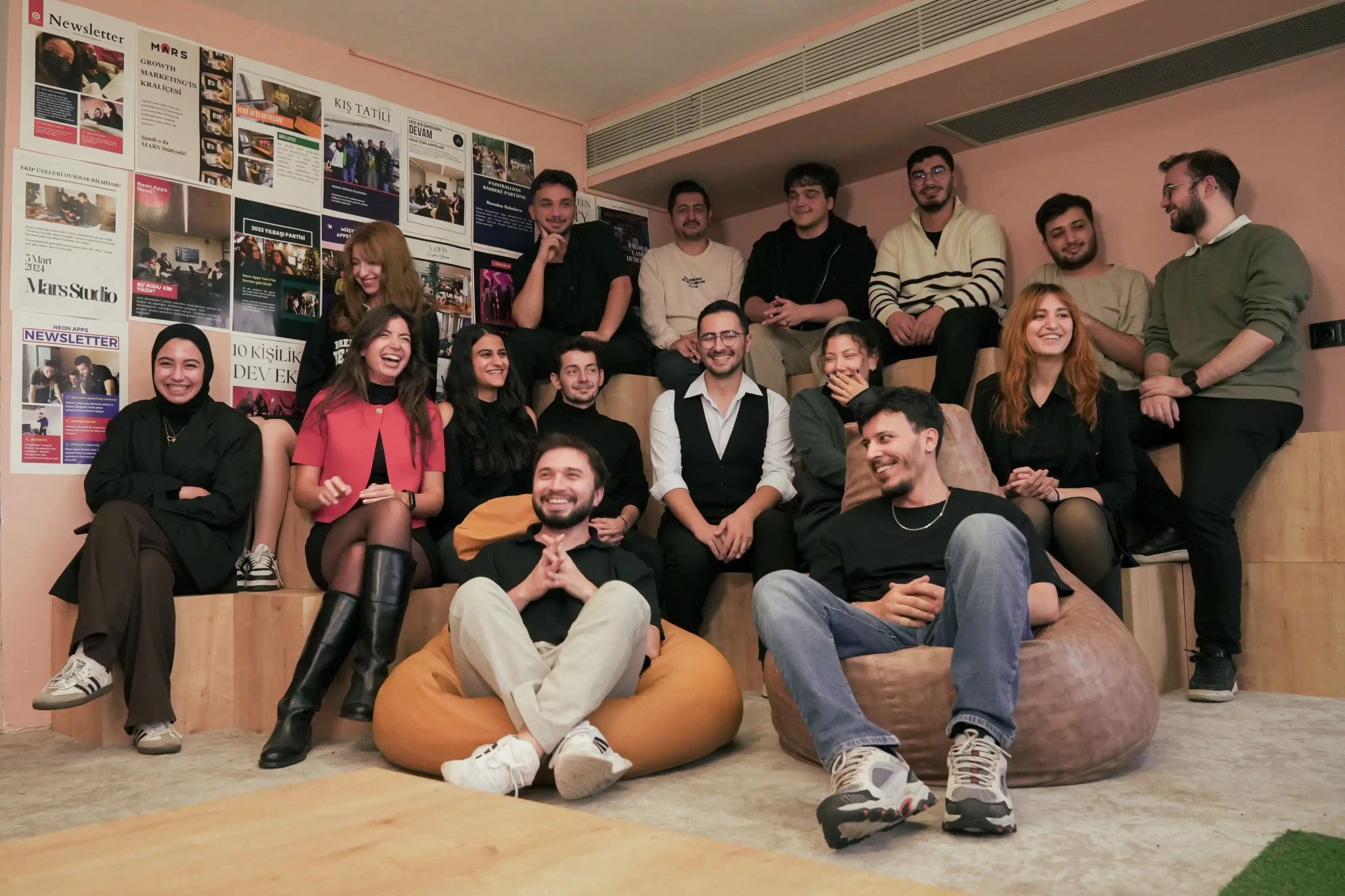
Neon Apps started in Istanbul and grew into a cross continental team without losing its in house culture. We have engineers, designers, product managers, and growth specialists working together on the same projects from day one. There is no offshore layer, no subcontractor chain, no rotating staff. The person who scopes your project is on the same Slack channel as the person who pushes code on launch day.
The team operates from two offices. The Istanbul office in Sarıyer is the engineering and design center. The New York office at 31 Hudson Yards is the client and partnership hub. The structure lets us serve American clients during their working hours while keeping the build team co located in one timezone. It also gives founders a real place to visit if they want to meet the people building their product, which more clients ask for than most agencies expect.
In house also means the work stays accountable. When something breaks, the engineer who built it fixes it. When a design decision needs revisiting, the designer who shipped the original is the person who reopens it. That continuity is the difference between an agency that ships a product and an agency that owns its quality after launch.
The Nine Industries We Work In
Industry breadth matters more than founders usually realize. The technical patterns that work in one category often transfer to another, and the patterns that fail in one category often warn the team about risks in a similar one. Across nine industries, the team has built up a working library of decisions that compound across projects.
The industries we serve are Banking & Finance, Transportation & Mobility, E Commerce, Social & Community, Enterprise & Corporate, AI Chatbot, AI Based Short Drama & Video, Entertainment, and Health & Fitness. Each industry brings its own constraints. Banking and Finance demand strict compliance and audit trails. Transportation and Mobility require real time location services and offline support. E Commerce needs payment infrastructure and conversion focused UX. Social and Community apps depend on moderation and trust signals. Enterprise tools need SSO, role permissions, and integration depth.
The industries that have grown fastest in our pipeline since 2024 are the AI categories: AI Chatbot products and AI Based Short Drama & Video apps. Both reflect where consumer attention is moving. We have shipped image recognition apps, voice transcription apps, AI driven entertainment products, and AI assisted productivity tools. The technical patterns from these AI builds inform how we approach every new AI project, including model selection, on device versus cloud tradeoffs, and the privacy decisions that shape user trust.
What this breadth gives clients is faster orientation. When a fintech founder asks how to handle KYC, we have done it. When a marketplace founder asks how to design a dispute resolution flow, we have done it. The breadth is not a marketing line. It is a working knowledge base the team brings to every new project.
How We Define Long Term Product Partnership
Most agencies sell projects. We sell partnerships. The difference shows up in three places.
The first is the kickoff. We start with a discovery phase that maps the product to the business model, the target user, and the success criteria. This usually takes one to two weeks and produces a scope document the founder can use to evaluate every later decision. The output is not a contract. It is a shared understanding of what we are building and why.
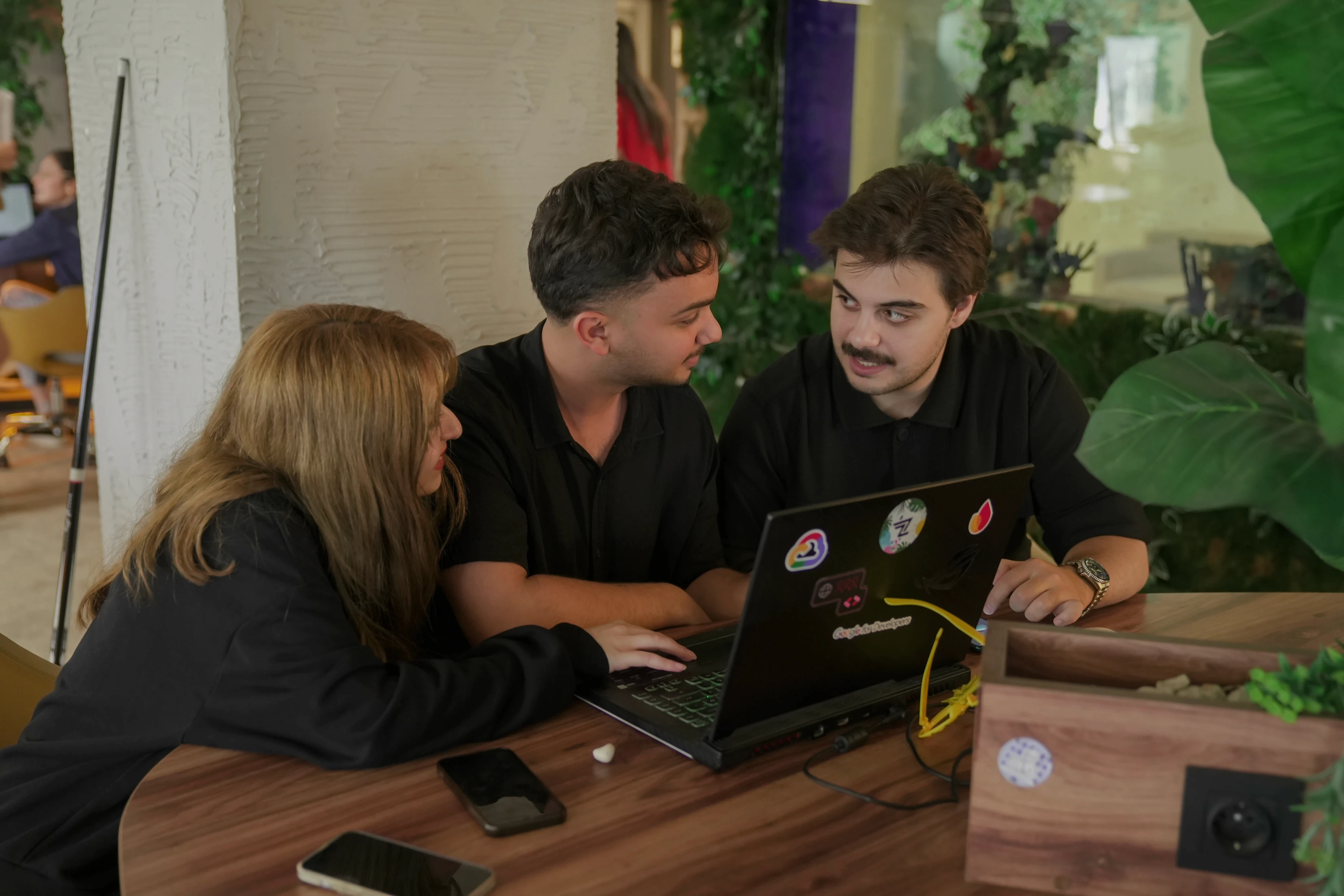
The second is the build. We assemble a dedicated team for the project, typically engineers, designers, and a product manager working as a single squad. The team stays the same throughout the project. We do not rotate engineers between accounts mid build, which is the single biggest source of quality problems in agency work. Continuity is the most important quality lever we have.
The third is what happens after launch. We do not hand the product off and walk away. Most of our client relationships continue past launch into post launch support, optimization, and growth work. This is where the partnership framing matters: we treat the launch as the first milestone of a long product cycle, not the end of an engagement. Some of our longest client relationships have been ongoing for several years, with the same core team adding new features as the product evolves.
This model is more expensive per hour than offshore alternatives, and we do not pretend otherwise. It is also why our clients have generated more than $100 million in revenue from products we built. Continuity, ownership, and partnership compound over time in a way that hourly rate comparisons miss.

How We Decide What to Build
The first technical decision on most projects is the framework. We default to Flutter for cross platform mobile builds because of its UI consistency, mature tooling, and predictable performance across iOS and Android. We use Swift natively in cases where the product depends on deep iOS platform integration, advanced camera and audio features, or strict performance requirements that cross platform cannot match. The decision is always tied to the product requirements, not framework preference.
The second decision is on device versus cloud for any AI or data heavy features. For AI image recognition, voice transcription, or content moderation, we usually start with cloud APIs to validate the use case quickly, then move logic on device when latency, cost, or privacy demands it. This pattern has played out across our AI work, including image identification apps and voice notes products, and it consistently produces a faster path to a working product than starting from a custom model.
The third decision is monetization. Most consumer apps in our portfolio use subscription models, often with a hybrid free tier. We integrate subscription infrastructure cleanly across iOS and Android, including pricing experiments, paywall variants, and analytics tooling. Our mobile app development team treats these decisions as foundational, because the wrong monetization architecture is one of the most expensive mistakes to fix after launch.
The fourth decision is the launch plan. Many agencies treat the App Store and Play Store submission as a checkbox at the end of the project. We treat it as a critical phase that starts weeks before submission, with metadata, screenshots, store listing copy, and app review preparation all built into the timeline. Apps that get rejected on first submission lose two to four weeks of momentum, and most of those rejections are avoidable with the right pre submission process.

What 500+ Shipped Products Has Taught Us
Patterns emerge when a team ships at this volume. The most consistent lesson is that products fail more often from product decisions than from engineering decisions. A perfectly built app with the wrong onboarding still loses users in the first session. A clean codebase with the wrong monetization model still leaks revenue. A polished UI with no retention loop still churns by month two.
The second lesson is that the first version is rarely the right version. The fastest projects in our portfolio shipped early, learned from real user behavior, and iterated quickly. The slowest projects spent months building features the user never asked for. Discipline at the scope level, not feature breadth, is what separates the apps that succeed from the ones that stall.
The third lesson is that talent compounds. The same engineers who built our most complex products in 2020 are the engineers leading our most complex projects today. In a category where most agencies churn through staff every two years, retention of senior talent is one of the most undervalued assets a client gets when they pick the right partner.
FAQ
What kinds of mobile app projects does Neon Apps work on?
How does Neon Apps structure its project teams?
Where is Neon Apps located?
What does Neon Apps do after a product launches?
How does Neon Apps choose the technology stack for a project?
Stay Inspired
Get fresh design insights, articles, and resources delivered straight to your inbox.
Get stories, insights, and updates from the Neon Apps team straight to your inbox.
Latest Blogs


Stay Inspired
Get stories, insights, and updates from the Neon Apps team straight to your inbox.
Got a project?
Let's Connect
Got a project? We build world-class mobile and web apps for startups and global brands.

Neon Apps is a product development company building mobile, web, and SaaS products with an 85-member in-house team in Istanbul and New York, delivering scalable products as a long-term development partner.
Industries
Primary Services
Delivery & Product Services
Supporting Services
Clients
Inside Neon Apps: How We Ship Mobile Products at Scale
Inside Neon Apps: How We Ship Mobile Products at Scale
How an 85 person team ships mobile and web products across nine industries, with offices in Istanbul and New York.
How an 85 person team ships mobile and web products across nine industries, with offices in Istanbul and New York.
Inside Neon Apps: How an 85 Person Team Ships Mobile Products Across 9 Industries
Most mobile app agencies look the same on the surface. They list services, post case studies, and promise quality. The difference shows up in the details: who actually builds the product, how decisions get made, what happens after launch, and how the team handles the messy realities of shipping software. This is a closer look at how Neon Apps works. We are an 85 person in house team based in Istanbul and New York, we have shipped more than 500 digital products since 2020, and our work spans nine industries. The pattern that holds across everything we do is simple: long term product partnership over project handoffs.
The Team Behind the Apps
Neon Apps started in Istanbul and grew into a cross continental team without losing its in house culture. We have engineers, designers, product managers, and growth specialists working together on the same projects from day one. There is no offshore layer, no subcontractor chain, no rotating staff. The person who scopes your project is on the same Slack channel as the person who pushes code on launch day.
The team operates from two offices. The Istanbul office in Sarıyer is the engineering and design center. The New York office at 31 Hudson Yards is the client and partnership hub. The structure lets us serve American clients during their working hours while keeping the build team co located in one timezone. It also gives founders a real place to visit if they want to meet the people building their product, which more clients ask for than most agencies expect.
In house also means the work stays accountable. When something breaks, the engineer who built it fixes it. When a design decision needs revisiting, the designer who shipped the original is the person who reopens it. That continuity is the difference between an agency that ships a product and an agency that owns its quality after launch.
The Nine Industries We Work In
Industry breadth matters more than founders usually realize. The technical patterns that work in one category often transfer to another, and the patterns that fail in one category often warn the team about risks in a similar one. Across nine industries, the team has built up a working library of decisions that compound across projects.
The industries we serve are Banking & Finance, Transportation & Mobility, E Commerce, Social & Community, Enterprise & Corporate, AI Chatbot, AI Based Short Drama & Video, Entertainment, and Health & Fitness. Each industry brings its own constraints. Banking and Finance demand strict compliance and audit trails. Transportation and Mobility require real time location services and offline support. E Commerce needs payment infrastructure and conversion focused UX. Social and Community apps depend on moderation and trust signals. Enterprise tools need SSO, role permissions, and integration depth.
The industries that have grown fastest in our pipeline since 2024 are the AI categories: AI Chatbot products and AI Based Short Drama & Video apps. Both reflect where consumer attention is moving. We have shipped image recognition apps, voice transcription apps, AI driven entertainment products, and AI assisted productivity tools. The technical patterns from these AI builds inform how we approach every new AI project, including model selection, on device versus cloud tradeoffs, and the privacy decisions that shape user trust.
What this breadth gives clients is faster orientation. When a fintech founder asks how to handle KYC, we have done it. When a marketplace founder asks how to design a dispute resolution flow, we have done it. The breadth is not a marketing line. It is a working knowledge base the team brings to every new project.
How We Define Long Term Product Partnership
Most agencies sell projects. We sell partnerships. The difference shows up in three places.
The first is the kickoff. We start with a discovery phase that maps the product to the business model, the target user, and the success criteria. This usually takes one to two weeks and produces a scope document the founder can use to evaluate every later decision. The output is not a contract. It is a shared understanding of what we are building and why.
The second is the build. We assemble a dedicated team for the project, typically engineers, designers, and a product manager working as a single squad. The team stays the same throughout the project. We do not rotate engineers between accounts mid build, which is the single biggest source of quality problems in agency work. Continuity is the most important quality lever we have.
The third is what happens after launch. We do not hand the product off and walk away. Most of our client relationships continue past launch into post launch support, optimization, and growth work. This is where the partnership framing matters: we treat the launch as the first milestone of a long product cycle, not the end of an engagement. Some of our longest client relationships have been ongoing for several years, with the same core team adding new features as the product evolves.
This model is more expensive per hour than offshore alternatives, and we do not pretend otherwise. It is also why our clients have generated more than $100 million in revenue from products we built. Continuity, ownership, and partnership compound over time in a way that hourly rate comparisons miss.
How We Decide What to Build
The first technical decision on most projects is the framework. We default to Flutter for cross platform mobile builds because of its UI consistency, mature tooling, and predictable performance across iOS and Android. We use Swift natively in cases where the product depends on deep iOS platform integration, advanced camera and audio features, or strict performance requirements that cross platform cannot match. The decision is always tied to the product requirements, not framework preference.
The second decision is on device versus cloud for any AI or data heavy features. For AI image recognition, voice transcription, or content moderation, we usually start with cloud APIs to validate the use case quickly, then move logic on device when latency, cost, or privacy demands it. This pattern has played out across our AI work, including image identification apps and voice notes products, and it consistently produces a faster path to a working product than starting from a custom model.
The third decision is monetization. Most consumer apps in our portfolio use subscription models, often with a hybrid free tier. We integrate subscription infrastructure cleanly across iOS and Android, including pricing experiments, paywall variants, and analytics tooling. Our mobile app development team treats these decisions as foundational, because the wrong monetization architecture is one of the most expensive mistakes to fix after launch.
The fourth decision is the launch plan. Many agencies treat the App Store and Play Store submission as a checkbox at the end of the project. We treat it as a critical phase that starts weeks before submission, with metadata, screenshots, store listing copy, and app review preparation all built into the timeline. Apps that get rejected on first submission lose two to four weeks of momentum, and most of those rejections are avoidable with the right pre submission process.
What 500+ Shipped Products Has Taught Us
Patterns emerge when a team ships at this volume. The most consistent lesson is that products fail more often from product decisions than from engineering decisions. A perfectly built app with the wrong onboarding still loses users in the first session. A clean codebase with the wrong monetization model still leaks revenue. A polished UI with no retention loop still churns by month two.
The second lesson is that the first version is rarely the right version. The fastest projects in our portfolio shipped early, learned from real user behavior, and iterated quickly. The slowest projects spent months building features the user never asked for. Discipline at the scope level, not feature breadth, is what separates the apps that succeed from the ones that stall.
The third lesson is that talent compounds. The same engineers who built our most complex products in 2020 are the engineers leading our most complex projects today. In a category where most agencies churn through staff every two years, retention of senior talent is one of the most undervalued assets a client gets when they pick the right partner.
FAQ
What kinds of mobile app projects does Neon Apps work on?
How does Neon Apps structure its project teams?
Where is Neon Apps located?
What does Neon Apps do after a product launches?
How does Neon Apps choose the technology stack for a project?
Stay Inspired
Get fresh design insights, articles, and resources delivered straight to your inbox.
Get stories, insights, and updates from the Neon Apps team straight to your inbox.
Latest Blogs
Stay Inspired
Get stories, insights, and updates from the Neon Apps team straight to your inbox.
Got a project?
Let's Connect
Got a project? We build world-class mobile and web apps for startups and global brands.
Neon Apps is a product development company building mobile, web, and SaaS products with an 85-member in-house team in Istanbul and New York, delivering scalable products as a long-term development partner.
Industries
Primary Services
Delivery & Product Services
Supporting Services
Clients
Inside Neon Apps: How We Ship Mobile Products at Scale
Inside Neon Apps: How We Ship Mobile Products at Scale
How an 85 person team ships mobile and web products across nine industries, with offices in Istanbul and New York.
How an 85 person team ships mobile and web products across nine industries, with offices in Istanbul and New York.
Inside Neon Apps: How an 85 Person Team Ships Mobile Products Across 9 Industries
Most mobile app agencies look the same on the surface. They list services, post case studies, and promise quality. The difference shows up in the details: who actually builds the product, how decisions get made, what happens after launch, and how the team handles the messy realities of shipping software. This is a closer look at how Neon Apps works. We are an 85 person in house team based in Istanbul and New York, we have shipped more than 500 digital products since 2020, and our work spans nine industries. The pattern that holds across everything we do is simple: long term product partnership over project handoffs.
The Team Behind the Apps
Neon Apps started in Istanbul and grew into a cross continental team without losing its in house culture. We have engineers, designers, product managers, and growth specialists working together on the same projects from day one. There is no offshore layer, no subcontractor chain, no rotating staff. The person who scopes your project is on the same Slack channel as the person who pushes code on launch day.
The team operates from two offices. The Istanbul office in Sarıyer is the engineering and design center. The New York office at 31 Hudson Yards is the client and partnership hub. The structure lets us serve American clients during their working hours while keeping the build team co located in one timezone. It also gives founders a real place to visit if they want to meet the people building their product, which more clients ask for than most agencies expect.
In house also means the work stays accountable. When something breaks, the engineer who built it fixes it. When a design decision needs revisiting, the designer who shipped the original is the person who reopens it. That continuity is the difference between an agency that ships a product and an agency that owns its quality after launch.
The Nine Industries We Work In
Industry breadth matters more than founders usually realize. The technical patterns that work in one category often transfer to another, and the patterns that fail in one category often warn the team about risks in a similar one. Across nine industries, the team has built up a working library of decisions that compound across projects.
The industries we serve are Banking & Finance, Transportation & Mobility, E Commerce, Social & Community, Enterprise & Corporate, AI Chatbot, AI Based Short Drama & Video, Entertainment, and Health & Fitness. Each industry brings its own constraints. Banking and Finance demand strict compliance and audit trails. Transportation and Mobility require real time location services and offline support. E Commerce needs payment infrastructure and conversion focused UX. Social and Community apps depend on moderation and trust signals. Enterprise tools need SSO, role permissions, and integration depth.
The industries that have grown fastest in our pipeline since 2024 are the AI categories: AI Chatbot products and AI Based Short Drama & Video apps. Both reflect where consumer attention is moving. We have shipped image recognition apps, voice transcription apps, AI driven entertainment products, and AI assisted productivity tools. The technical patterns from these AI builds inform how we approach every new AI project, including model selection, on device versus cloud tradeoffs, and the privacy decisions that shape user trust.
What this breadth gives clients is faster orientation. When a fintech founder asks how to handle KYC, we have done it. When a marketplace founder asks how to design a dispute resolution flow, we have done it. The breadth is not a marketing line. It is a working knowledge base the team brings to every new project.
How We Define Long Term Product Partnership
Most agencies sell projects. We sell partnerships. The difference shows up in three places.
The first is the kickoff. We start with a discovery phase that maps the product to the business model, the target user, and the success criteria. This usually takes one to two weeks and produces a scope document the founder can use to evaluate every later decision. The output is not a contract. It is a shared understanding of what we are building and why.
The second is the build. We assemble a dedicated team for the project, typically engineers, designers, and a product manager working as a single squad. The team stays the same throughout the project. We do not rotate engineers between accounts mid build, which is the single biggest source of quality problems in agency work. Continuity is the most important quality lever we have.
The third is what happens after launch. We do not hand the product off and walk away. Most of our client relationships continue past launch into post launch support, optimization, and growth work. This is where the partnership framing matters: we treat the launch as the first milestone of a long product cycle, not the end of an engagement. Some of our longest client relationships have been ongoing for several years, with the same core team adding new features as the product evolves.
This model is more expensive per hour than offshore alternatives, and we do not pretend otherwise. It is also why our clients have generated more than $100 million in revenue from products we built. Continuity, ownership, and partnership compound over time in a way that hourly rate comparisons miss.
How We Decide What to Build
The first technical decision on most projects is the framework. We default to Flutter for cross platform mobile builds because of its UI consistency, mature tooling, and predictable performance across iOS and Android. We use Swift natively in cases where the product depends on deep iOS platform integration, advanced camera and audio features, or strict performance requirements that cross platform cannot match. The decision is always tied to the product requirements, not framework preference.
The second decision is on device versus cloud for any AI or data heavy features. For AI image recognition, voice transcription, or content moderation, we usually start with cloud APIs to validate the use case quickly, then move logic on device when latency, cost, or privacy demands it. This pattern has played out across our AI work, including image identification apps and voice notes products, and it consistently produces a faster path to a working product than starting from a custom model.
The third decision is monetization. Most consumer apps in our portfolio use subscription models, often with a hybrid free tier. We integrate subscription infrastructure cleanly across iOS and Android, including pricing experiments, paywall variants, and analytics tooling. Our mobile app development team treats these decisions as foundational, because the wrong monetization architecture is one of the most expensive mistakes to fix after launch.
The fourth decision is the launch plan. Many agencies treat the App Store and Play Store submission as a checkbox at the end of the project. We treat it as a critical phase that starts weeks before submission, with metadata, screenshots, store listing copy, and app review preparation all built into the timeline. Apps that get rejected on first submission lose two to four weeks of momentum, and most of those rejections are avoidable with the right pre submission process.
What 500+ Shipped Products Has Taught Us
Patterns emerge when a team ships at this volume. The most consistent lesson is that products fail more often from product decisions than from engineering decisions. A perfectly built app with the wrong onboarding still loses users in the first session. A clean codebase with the wrong monetization model still leaks revenue. A polished UI with no retention loop still churns by month two.
The second lesson is that the first version is rarely the right version. The fastest projects in our portfolio shipped early, learned from real user behavior, and iterated quickly. The slowest projects spent months building features the user never asked for. Discipline at the scope level, not feature breadth, is what separates the apps that succeed from the ones that stall.
The third lesson is that talent compounds. The same engineers who built our most complex products in 2020 are the engineers leading our most complex projects today. In a category where most agencies churn through staff every two years, retention of senior talent is one of the most undervalued assets a client gets when they pick the right partner.
FAQ
What kinds of mobile app projects does Neon Apps work on?
How does Neon Apps structure its project teams?
Where is Neon Apps located?
What does Neon Apps do after a product launches?
How does Neon Apps choose the technology stack for a project?
Stay Inspired
Get fresh design insights, articles, and resources delivered straight to your inbox.
Get stories, insights, and updates from the Neon Apps team straight to your inbox.
Latest Blogs
Stay Inspired
Get stories, insights, and updates from the Neon Apps team straight to your inbox.
Got a project?
Let's Connect
Got a project? We build world-class mobile and web apps for startups and global brands.
Neon Apps is a product development company building mobile, web, and SaaS products with an 85-member in-house team in Istanbul and New York, delivering scalable products as a long-term development partner.
Industries
Primary Services
Delivery & Product Services
Supporting Services