
Development
How to Build a Mental Health App
How to Build a Mental Health App

Building a mental health app takes more than adding the right features. This guide explores the development process, cost, and timeline through Neon Apps’ work on Mindio and Unwine.
Building a mental health app takes more than adding the right features. This guide explores the development process, cost, and timeline through Neon Apps’ work on Mindio and Unwine.
The line these apps cannot cross
A mental health app can support someone between professional appointments, but it cannot replace one, and the product has to make that boundary obvious rather than implied. This guide covers the architecture, cost, and timeline behind building one responsibly.
What a Mental Health App Actually Does
A mental health app supports a user's emotional wellbeing or behavior change through conversation, tracking, or structured exercises, without positioning itself as a clinical treatment. The global mental health apps market is projected to reach 9.6 billion dollars in 2026, according to Global Market Insights, growing at a 17.4 percent compound annual rate through 2035. The app itself mainly handles the interaction model, whether that is chat, tracking, or guided content. It also handles the data protection that comes with working in a category built entirely on sensitive personal information. None of this requires a clinical license to build. It requires being explicit with users about what the app is and is not, and choosing that framing before a single feature gets designed. That boundary needs to work as a product requirement, not as a legal disclaimer buried in a settings screen.

Two Ways to Support Someone's Mental Health
Not every app in this category works the same way, and the two real approaches ask for genuinely different product thinking.
Approach | Best for | Tradeoff |
Conversational AI support | Always available, empathetic check ins | Needs careful crisis escalation design |
Habit and progress tracking | Behavior change goals like sobriety or routines | No real time support in an acute moment |
Licensed clinical or therapy platform | Diagnosis, treatment, prescribing | Regulatory overhead Neon Apps has not taken on |
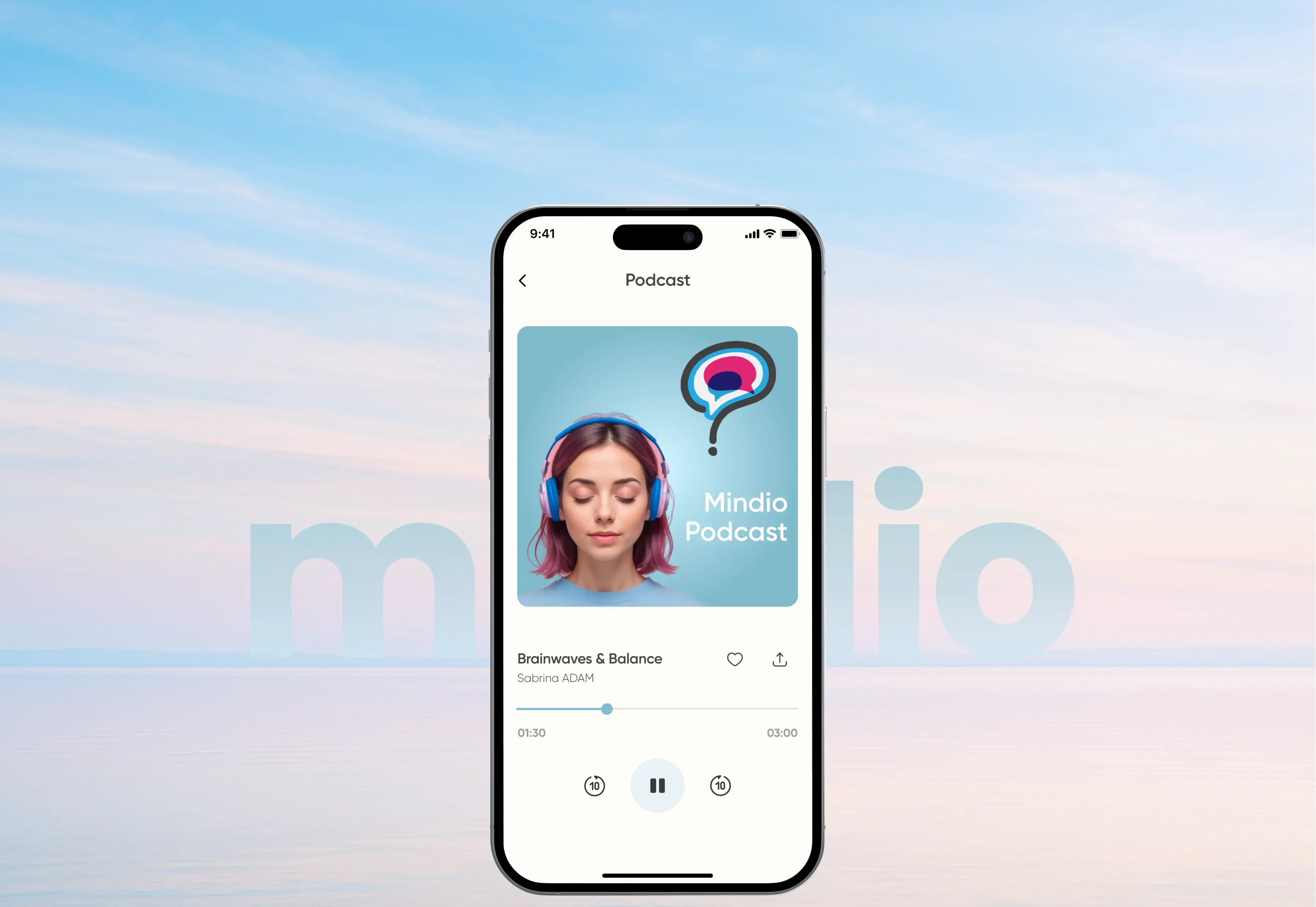
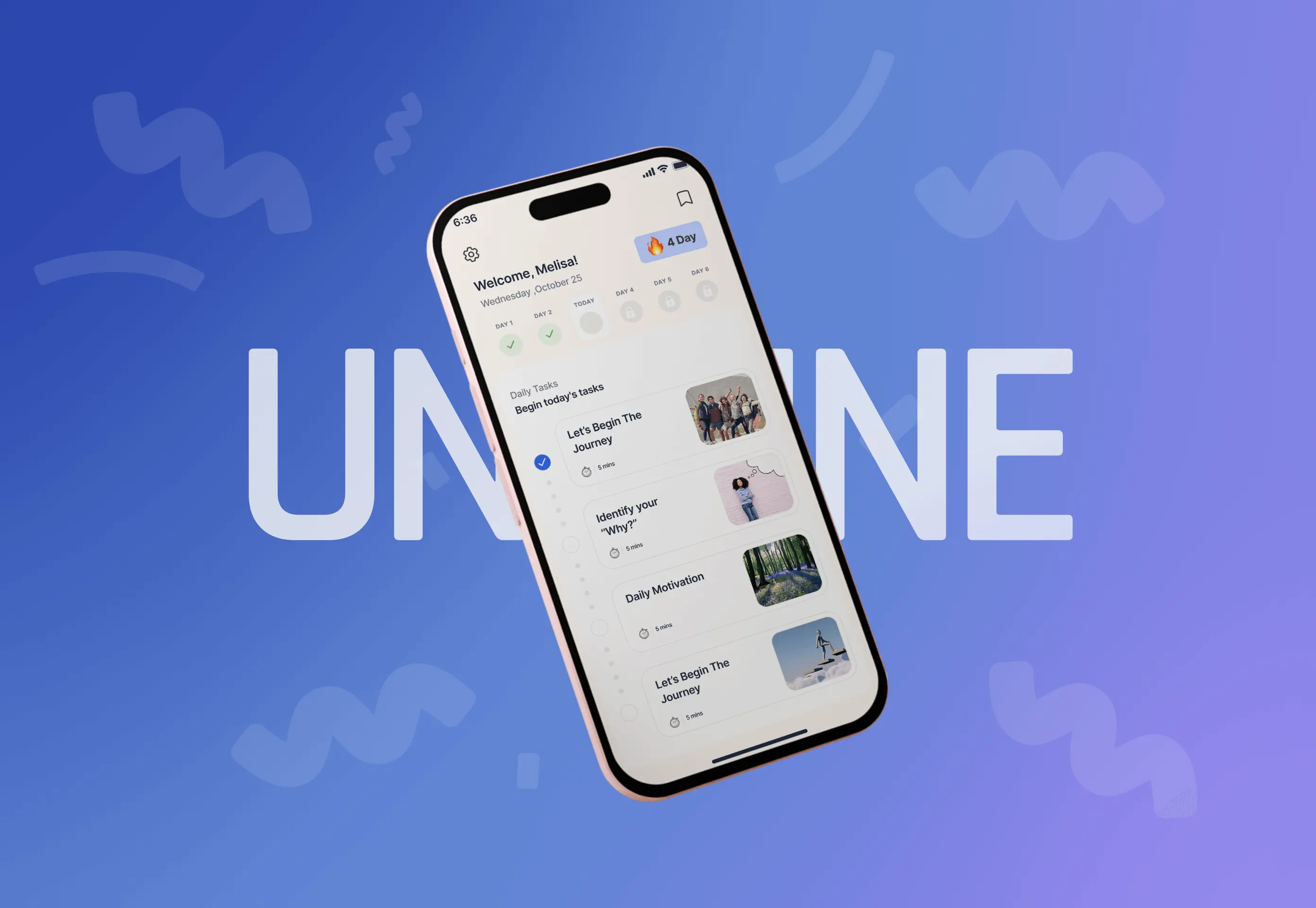
Mindio takes the conversational path: users talk to it like they would a person, and it responds with empathy while tracking mood over time. Unwine takes a completely different path with no AI conversation at all, tracking a sobriety streak, milestones, and progress with motivational reminders. Licensed clinical or therapy platforms, the kind offering diagnosis or prescribing through a network of credentialed providers, sit in a different regulatory category entirely. Neon Apps has not built one of these, since that path requires a compliance and liability structure well beyond app development itself.
The right approach depends on what kind of support the product is actually offering:
Choose conversational AI support when the value is an always available, low pressure check in, and invest early in how the app responds to messages that suggest real risk
Choose habit and progress tracking when the goal is behavior change over time, since a counter or streak, the way Unwine uses it, needs no language model at all
Never present either approach as a substitute for licensed care, and design the interface to say so clearly rather than in fine print
The two approaches also fail differently, which matters when deciding where to invest testing time. A conversational companion can say the wrong thing in the moment, which is an acute risk concentrated in a single exchange. A tracking app can quietly reinforce the wrong pattern over weeks instead. That risk is slower and easier to miss, since it shows up in the data rather than in any one message.
How to Scope the First Version
Most mental health apps fail on unclear boundaries, not on the underlying feature set. A narrow first version with an honest scope beats an ambitious one that quietly overpromises.
Pick one support model, conversational or tracking based, and resist adding the other until the first one is tested and stable
Write the app's explicit non clinical boundary into the onboarding flow itself, not only into a terms of service document nobody reads
Design the crisis escalation path before launch, including what the app says and where it points a user when a message suggests real risk
Test that escalation path against real, difficult phrasing rather than a single clean example written by the team
Teams that treat crisis escalation as a later addition usually end up building it under pressure, after a real conversation exposed the gap. That is a far worse time to design a safety feature than before a single user ever sees the app.
What a Realistic Build Timeline Looks Like
Shipped examples in this category range from four to six months, longer than most categories Neon Apps builds in, and four stages make up that window.
Discovery and scope, where the team locks the support model, the non clinical boundary language, and the escalation policy before any screen gets designed
Core build, the largest block on the calendar, where the chat or tracking interface and the data model come together against that locked scope
Safety and tone testing, run against a wide range of real phrasing, including difficult and ambiguous messages, not just polite test cases
Launch and monitor, the first few weeks live, when real users test the boundaries and the escalation path in ways internal testing rarely covers
Skipping safety testing is the most common reason a warm, well intentioned companion produces a response the team would never have approved, on exactly the message that mattered most.


Four Things That Move the Budget and Timeline
These four factors move the budget on a mental health app more than anything else in the brief:
Conversational AI versus tracking only, since a language model integration with mood analysis, the way Mindio works, costs more to build and test than a streak counter like Unwine's
Crisis escalation depth, since a well designed response to concerning messages takes real design and testing time, not just a hardcoded hotline number
Family or multi user features, since Mindio's family focused content added its own scope on top of the core one to one conversation
Compliance scope, since published 2026 guides put a basic tracking MVP around 45,000 to 80,000 dollars, while a mid tier build with AI features and HIPAA compliance runs 80,000 to 200,000 dollars or more
Neon Apps shipped Mindio in four months and Unwine in six, and neither project needed full clinical grade compliance, since both were positioned as wellness support rather than treatment.
What This Costs Beyond the Build Fee
The build fee covers the app. What happens after launch depends heavily on which of the two approaches was chosen.
Language model API fees for conversational apps, which in 2026 range from about 0.10 dollars per million input tokens for budget models up to 30 dollars per million for frontier models
Compliance and security maintenance, since published guides estimate ongoing infrastructure, audits, and content upkeep at 25 to 35 percent of the initial build cost annually for apps handling sensitive health data
Moderation or review capacity for anything conversational, since a person may eventually need to review flagged messages that the automated escalation path cannot fully resolve on its own
A tracking only app like Unwine carries almost none of the first or third cost. Its ongoing cost is closer to standard app hosting than to the compliance heavy cost structure a conversational health app takes on. That difference is worth naming early. Two apps in the same broad category can carry very different long term cost profiles, depending entirely on which of the two approaches was chosen at the start.

Where These Apps Break in Production
The feature set is rarely the failure point. The boundary around it is.
Missed escalation, since a model or a rule set that fails to recognize a genuinely concerning message is the single most serious failure mode in this entire category
Overclaiming in marketing copy, since language that sounds like a treatment promise instead of a wellness one invites exactly the regulatory and app store scrutiny the product was trying to avoid
Privacy exposure, since this category handles some of the most sensitive personal data a person will ever put into an app, and a breach here causes more real harm than in almost any other category
Punitive streak design, since a sobriety or habit app that treats a broken streak as failure rather than as data can push a struggling user further away right when they need the app most
None of this shows up in a five message test conversation or a week of clean internal testing. It shows up on the message or the missed day that matters most, which is why safety and tone testing needs real difficult cases, not polished demo scripts. A team that only tests the version of a user having a good day never finds out how the app behaves on a bad one.
Mental Health Apps We Have Shipped
Neon Apps has built two apps in this category, each taking a different support approach.
Project | Client | Year | Build time | What it solved |
Mindio Technology | 2023 | 4 months | 24/7 empathetic chat companion with mood tracking | |
Stoikk | 2023 | 6 months | Sobriety tracking with milestones and motivational support |
Mindio and Unwine represent the two real approaches side by side. Mindio built its trust around privacy, launching with an explicit no data collected policy so users would believe a private conversation stayed private. It also added family focused content, like calming stories, on top of the core chat experience. Unwine built its trust around encouragement rather than judgment. It tracks a sobriety counter and milestones with motivational messages designed to keep a user engaged through setbacks rather than shamed by them. Neither app claims to diagnose or treat anything. Both stay inside a wellness and support framing, and that framing shaped the product decisions from day one rather than getting added afterward. Even the small choices, like how a notification is worded or how a missed day is displayed, trace back to that same framing decision. Planning UI/UX design around that honest framing, including how the app talks about itself in onboarding, kept both of these inside a support category. Neither drifted into a clinical claim it was never built to back up.
related projects
FAQ
What is a mental health app?
What does Neon Apps bring to a mental health app project?
Should the app use AI conversation or simple tracking?
How does Neon Apps scope a mental health app project?
How long and how much does a mental health app cost to build?
Stay Inspired
Get fresh design insights, articles, and resources delivered straight to your inbox.
Get stories, insights, and updates from the Neon Apps team straight to your inbox.
Latest Blogs


Stay Inspired
Get stories, insights, and updates from the Neon Apps team straight to your inbox.
Got a project?
Let's Connect
Got a project? We build world-class mobile and web apps for startups and global brands.

Neon Apps is a product development company building mobile, web, and SaaS products with an 85-member in-house team in Istanbul and New York, delivering scalable products as a long-term development partner.
Industries
Development
How to Build a Mental Health App
How to Build a Mental Health App
Building a mental health app takes more than adding the right features. This guide explores the development process, cost, and timeline through Neon Apps’ work on Mindio and Unwine.
Building a mental health app takes more than adding the right features. This guide explores the development process, cost, and timeline through Neon Apps’ work on Mindio and Unwine.
The line these apps cannot cross
A mental health app can support someone between professional appointments, but it cannot replace one, and the product has to make that boundary obvious rather than implied. This guide covers the architecture, cost, and timeline behind building one responsibly.
What a Mental Health App Actually Does
A mental health app supports a user's emotional wellbeing or behavior change through conversation, tracking, or structured exercises, without positioning itself as a clinical treatment. The global mental health apps market is projected to reach 9.6 billion dollars in 2026, according to Global Market Insights, growing at a 17.4 percent compound annual rate through 2035. The app itself mainly handles the interaction model, whether that is chat, tracking, or guided content. It also handles the data protection that comes with working in a category built entirely on sensitive personal information. None of this requires a clinical license to build. It requires being explicit with users about what the app is and is not, and choosing that framing before a single feature gets designed. That boundary needs to work as a product requirement, not as a legal disclaimer buried in a settings screen.
Two Ways to Support Someone's Mental Health
Not every app in this category works the same way, and the two real approaches ask for genuinely different product thinking.
Approach | Best for | Tradeoff |
Conversational AI support | Always available, empathetic check ins | Needs careful crisis escalation design |
Habit and progress tracking | Behavior change goals like sobriety or routines | No real time support in an acute moment |
Licensed clinical or therapy platform | Diagnosis, treatment, prescribing | Regulatory overhead Neon Apps has not taken on |
Mindio takes the conversational path: users talk to it like they would a person, and it responds with empathy while tracking mood over time. Unwine takes a completely different path with no AI conversation at all, tracking a sobriety streak, milestones, and progress with motivational reminders. Licensed clinical or therapy platforms, the kind offering diagnosis or prescribing through a network of credentialed providers, sit in a different regulatory category entirely. Neon Apps has not built one of these, since that path requires a compliance and liability structure well beyond app development itself.
The right approach depends on what kind of support the product is actually offering:
Choose conversational AI support when the value is an always available, low pressure check in, and invest early in how the app responds to messages that suggest real risk
Choose habit and progress tracking when the goal is behavior change over time, since a counter or streak, the way Unwine uses it, needs no language model at all
Never present either approach as a substitute for licensed care, and design the interface to say so clearly rather than in fine print
The two approaches also fail differently, which matters when deciding where to invest testing time. A conversational companion can say the wrong thing in the moment, which is an acute risk concentrated in a single exchange. A tracking app can quietly reinforce the wrong pattern over weeks instead. That risk is slower and easier to miss, since it shows up in the data rather than in any one message.
How to Scope the First Version
Most mental health apps fail on unclear boundaries, not on the underlying feature set. A narrow first version with an honest scope beats an ambitious one that quietly overpromises.
Pick one support model, conversational or tracking based, and resist adding the other until the first one is tested and stable
Write the app's explicit non clinical boundary into the onboarding flow itself, not only into a terms of service document nobody reads
Design the crisis escalation path before launch, including what the app says and where it points a user when a message suggests real risk
Test that escalation path against real, difficult phrasing rather than a single clean example written by the team
Teams that treat crisis escalation as a later addition usually end up building it under pressure, after a real conversation exposed the gap. That is a far worse time to design a safety feature than before a single user ever sees the app.
What a Realistic Build Timeline Looks Like
Shipped examples in this category range from four to six months, longer than most categories Neon Apps builds in, and four stages make up that window.
Discovery and scope, where the team locks the support model, the non clinical boundary language, and the escalation policy before any screen gets designed
Core build, the largest block on the calendar, where the chat or tracking interface and the data model come together against that locked scope
Safety and tone testing, run against a wide range of real phrasing, including difficult and ambiguous messages, not just polite test cases
Launch and monitor, the first few weeks live, when real users test the boundaries and the escalation path in ways internal testing rarely covers
Skipping safety testing is the most common reason a warm, well intentioned companion produces a response the team would never have approved, on exactly the message that mattered most.
Four Things That Move the Budget and Timeline
These four factors move the budget on a mental health app more than anything else in the brief:
Conversational AI versus tracking only, since a language model integration with mood analysis, the way Mindio works, costs more to build and test than a streak counter like Unwine's
Crisis escalation depth, since a well designed response to concerning messages takes real design and testing time, not just a hardcoded hotline number
Family or multi user features, since Mindio's family focused content added its own scope on top of the core one to one conversation
Compliance scope, since published 2026 guides put a basic tracking MVP around 45,000 to 80,000 dollars, while a mid tier build with AI features and HIPAA compliance runs 80,000 to 200,000 dollars or more
Neon Apps shipped Mindio in four months and Unwine in six, and neither project needed full clinical grade compliance, since both were positioned as wellness support rather than treatment.
What This Costs Beyond the Build Fee
The build fee covers the app. What happens after launch depends heavily on which of the two approaches was chosen.
Language model API fees for conversational apps, which in 2026 range from about 0.10 dollars per million input tokens for budget models up to 30 dollars per million for frontier models
Compliance and security maintenance, since published guides estimate ongoing infrastructure, audits, and content upkeep at 25 to 35 percent of the initial build cost annually for apps handling sensitive health data
Moderation or review capacity for anything conversational, since a person may eventually need to review flagged messages that the automated escalation path cannot fully resolve on its own
A tracking only app like Unwine carries almost none of the first or third cost. Its ongoing cost is closer to standard app hosting than to the compliance heavy cost structure a conversational health app takes on. That difference is worth naming early. Two apps in the same broad category can carry very different long term cost profiles, depending entirely on which of the two approaches was chosen at the start.
Where These Apps Break in Production
The feature set is rarely the failure point. The boundary around it is.
Missed escalation, since a model or a rule set that fails to recognize a genuinely concerning message is the single most serious failure mode in this entire category
Overclaiming in marketing copy, since language that sounds like a treatment promise instead of a wellness one invites exactly the regulatory and app store scrutiny the product was trying to avoid
Privacy exposure, since this category handles some of the most sensitive personal data a person will ever put into an app, and a breach here causes more real harm than in almost any other category
Punitive streak design, since a sobriety or habit app that treats a broken streak as failure rather than as data can push a struggling user further away right when they need the app most
None of this shows up in a five message test conversation or a week of clean internal testing. It shows up on the message or the missed day that matters most, which is why safety and tone testing needs real difficult cases, not polished demo scripts. A team that only tests the version of a user having a good day never finds out how the app behaves on a bad one.
Mental Health Apps We Have Shipped
Neon Apps has built two apps in this category, each taking a different support approach.
Project | Client | Year | Build time | What it solved |
Mindio Technology | 2023 | 4 months | 24/7 empathetic chat companion with mood tracking | |
Stoikk | 2023 | 6 months | Sobriety tracking with milestones and motivational support |
Mindio and Unwine represent the two real approaches side by side. Mindio built its trust around privacy, launching with an explicit no data collected policy so users would believe a private conversation stayed private. It also added family focused content, like calming stories, on top of the core chat experience. Unwine built its trust around encouragement rather than judgment. It tracks a sobriety counter and milestones with motivational messages designed to keep a user engaged through setbacks rather than shamed by them. Neither app claims to diagnose or treat anything. Both stay inside a wellness and support framing, and that framing shaped the product decisions from day one rather than getting added afterward. Even the small choices, like how a notification is worded or how a missed day is displayed, trace back to that same framing decision. Planning UI/UX design around that honest framing, including how the app talks about itself in onboarding, kept both of these inside a support category. Neither drifted into a clinical claim it was never built to back up.
related projects
FAQ
What is a mental health app?
What does Neon Apps bring to a mental health app project?
Should the app use AI conversation or simple tracking?
How does Neon Apps scope a mental health app project?
How long and how much does a mental health app cost to build?
Stay Inspired
Get fresh design insights, articles, and resources delivered straight to your inbox.
Get stories, insights, and updates from the Neon Apps team straight to your inbox.
Latest Blogs
Stay Inspired
Get stories, insights, and updates from the Neon Apps team straight to your inbox.
Got a project?
Let's Connect
Got a project? We build world-class mobile and web apps for startups and global brands.
Neon Apps is a product development company building mobile, web, and SaaS products with an 85-member in-house team in Istanbul and New York, delivering scalable products as a long-term development partner.
Industries
Development
How to Build a Mental Health App
How to Build a Mental Health App
Building a mental health app takes more than adding the right features. This guide explores the development process, cost, and timeline through Neon Apps’ work on Mindio and Unwine.
Building a mental health app takes more than adding the right features. This guide explores the development process, cost, and timeline through Neon Apps’ work on Mindio and Unwine.
The line these apps cannot cross
A mental health app can support someone between professional appointments, but it cannot replace one, and the product has to make that boundary obvious rather than implied. This guide covers the architecture, cost, and timeline behind building one responsibly.
What a Mental Health App Actually Does
A mental health app supports a user's emotional wellbeing or behavior change through conversation, tracking, or structured exercises, without positioning itself as a clinical treatment. The global mental health apps market is projected to reach 9.6 billion dollars in 2026, according to Global Market Insights, growing at a 17.4 percent compound annual rate through 2035. The app itself mainly handles the interaction model, whether that is chat, tracking, or guided content. It also handles the data protection that comes with working in a category built entirely on sensitive personal information. None of this requires a clinical license to build. It requires being explicit with users about what the app is and is not, and choosing that framing before a single feature gets designed. That boundary needs to work as a product requirement, not as a legal disclaimer buried in a settings screen.
Two Ways to Support Someone's Mental Health
Not every app in this category works the same way, and the two real approaches ask for genuinely different product thinking.
Approach | Best for | Tradeoff |
Conversational AI support | Always available, empathetic check ins | Needs careful crisis escalation design |
Habit and progress tracking | Behavior change goals like sobriety or routines | No real time support in an acute moment |
Licensed clinical or therapy platform | Diagnosis, treatment, prescribing | Regulatory overhead Neon Apps has not taken on |
Mindio takes the conversational path: users talk to it like they would a person, and it responds with empathy while tracking mood over time. Unwine takes a completely different path with no AI conversation at all, tracking a sobriety streak, milestones, and progress with motivational reminders. Licensed clinical or therapy platforms, the kind offering diagnosis or prescribing through a network of credentialed providers, sit in a different regulatory category entirely. Neon Apps has not built one of these, since that path requires a compliance and liability structure well beyond app development itself.
The right approach depends on what kind of support the product is actually offering:
Choose conversational AI support when the value is an always available, low pressure check in, and invest early in how the app responds to messages that suggest real risk
Choose habit and progress tracking when the goal is behavior change over time, since a counter or streak, the way Unwine uses it, needs no language model at all
Never present either approach as a substitute for licensed care, and design the interface to say so clearly rather than in fine print
The two approaches also fail differently, which matters when deciding where to invest testing time. A conversational companion can say the wrong thing in the moment, which is an acute risk concentrated in a single exchange. A tracking app can quietly reinforce the wrong pattern over weeks instead. That risk is slower and easier to miss, since it shows up in the data rather than in any one message.
How to Scope the First Version
Most mental health apps fail on unclear boundaries, not on the underlying feature set. A narrow first version with an honest scope beats an ambitious one that quietly overpromises.
Pick one support model, conversational or tracking based, and resist adding the other until the first one is tested and stable
Write the app's explicit non clinical boundary into the onboarding flow itself, not only into a terms of service document nobody reads
Design the crisis escalation path before launch, including what the app says and where it points a user when a message suggests real risk
Test that escalation path against real, difficult phrasing rather than a single clean example written by the team
Teams that treat crisis escalation as a later addition usually end up building it under pressure, after a real conversation exposed the gap. That is a far worse time to design a safety feature than before a single user ever sees the app.
What a Realistic Build Timeline Looks Like
Shipped examples in this category range from four to six months, longer than most categories Neon Apps builds in, and four stages make up that window.
Discovery and scope, where the team locks the support model, the non clinical boundary language, and the escalation policy before any screen gets designed
Core build, the largest block on the calendar, where the chat or tracking interface and the data model come together against that locked scope
Safety and tone testing, run against a wide range of real phrasing, including difficult and ambiguous messages, not just polite test cases
Launch and monitor, the first few weeks live, when real users test the boundaries and the escalation path in ways internal testing rarely covers
Skipping safety testing is the most common reason a warm, well intentioned companion produces a response the team would never have approved, on exactly the message that mattered most.
Four Things That Move the Budget and Timeline
These four factors move the budget on a mental health app more than anything else in the brief:
Conversational AI versus tracking only, since a language model integration with mood analysis, the way Mindio works, costs more to build and test than a streak counter like Unwine's
Crisis escalation depth, since a well designed response to concerning messages takes real design and testing time, not just a hardcoded hotline number
Family or multi user features, since Mindio's family focused content added its own scope on top of the core one to one conversation
Compliance scope, since published 2026 guides put a basic tracking MVP around 45,000 to 80,000 dollars, while a mid tier build with AI features and HIPAA compliance runs 80,000 to 200,000 dollars or more
Neon Apps shipped Mindio in four months and Unwine in six, and neither project needed full clinical grade compliance, since both were positioned as wellness support rather than treatment.
What This Costs Beyond the Build Fee
The build fee covers the app. What happens after launch depends heavily on which of the two approaches was chosen.
Language model API fees for conversational apps, which in 2026 range from about 0.10 dollars per million input tokens for budget models up to 30 dollars per million for frontier models
Compliance and security maintenance, since published guides estimate ongoing infrastructure, audits, and content upkeep at 25 to 35 percent of the initial build cost annually for apps handling sensitive health data
Moderation or review capacity for anything conversational, since a person may eventually need to review flagged messages that the automated escalation path cannot fully resolve on its own
A tracking only app like Unwine carries almost none of the first or third cost. Its ongoing cost is closer to standard app hosting than to the compliance heavy cost structure a conversational health app takes on. That difference is worth naming early. Two apps in the same broad category can carry very different long term cost profiles, depending entirely on which of the two approaches was chosen at the start.
Where These Apps Break in Production
The feature set is rarely the failure point. The boundary around it is.
Missed escalation, since a model or a rule set that fails to recognize a genuinely concerning message is the single most serious failure mode in this entire category
Overclaiming in marketing copy, since language that sounds like a treatment promise instead of a wellness one invites exactly the regulatory and app store scrutiny the product was trying to avoid
Privacy exposure, since this category handles some of the most sensitive personal data a person will ever put into an app, and a breach here causes more real harm than in almost any other category
Punitive streak design, since a sobriety or habit app that treats a broken streak as failure rather than as data can push a struggling user further away right when they need the app most
None of this shows up in a five message test conversation or a week of clean internal testing. It shows up on the message or the missed day that matters most, which is why safety and tone testing needs real difficult cases, not polished demo scripts. A team that only tests the version of a user having a good day never finds out how the app behaves on a bad one.
Mental Health Apps We Have Shipped
Neon Apps has built two apps in this category, each taking a different support approach.
Project | Client | Year | Build time | What it solved |
Mindio Technology | 2023 | 4 months | 24/7 empathetic chat companion with mood tracking | |
Stoikk | 2023 | 6 months | Sobriety tracking with milestones and motivational support |
Mindio and Unwine represent the two real approaches side by side. Mindio built its trust around privacy, launching with an explicit no data collected policy so users would believe a private conversation stayed private. It also added family focused content, like calming stories, on top of the core chat experience. Unwine built its trust around encouragement rather than judgment. It tracks a sobriety counter and milestones with motivational messages designed to keep a user engaged through setbacks rather than shamed by them. Neither app claims to diagnose or treat anything. Both stay inside a wellness and support framing, and that framing shaped the product decisions from day one rather than getting added afterward. Even the small choices, like how a notification is worded or how a missed day is displayed, trace back to that same framing decision. Planning UI/UX design around that honest framing, including how the app talks about itself in onboarding, kept both of these inside a support category. Neither drifted into a clinical claim it was never built to back up.
related projects
FAQ
What is a mental health app?
What does Neon Apps bring to a mental health app project?
Should the app use AI conversation or simple tracking?
How does Neon Apps scope a mental health app project?
How long and how much does a mental health app cost to build?
Stay Inspired
Get fresh design insights, articles, and resources delivered straight to your inbox.
Get stories, insights, and updates from the Neon Apps team straight to your inbox.
Latest Blogs
Stay Inspired
Get stories, insights, and updates from the Neon Apps team straight to your inbox.
Got a project?
Let's Connect
Got a project? We build world-class mobile and web apps for startups and global brands.
Neon Apps is a product development company building mobile, web, and SaaS products with an 85-member in-house team in Istanbul and New York, delivering scalable products as a long-term development partner.
Industries