
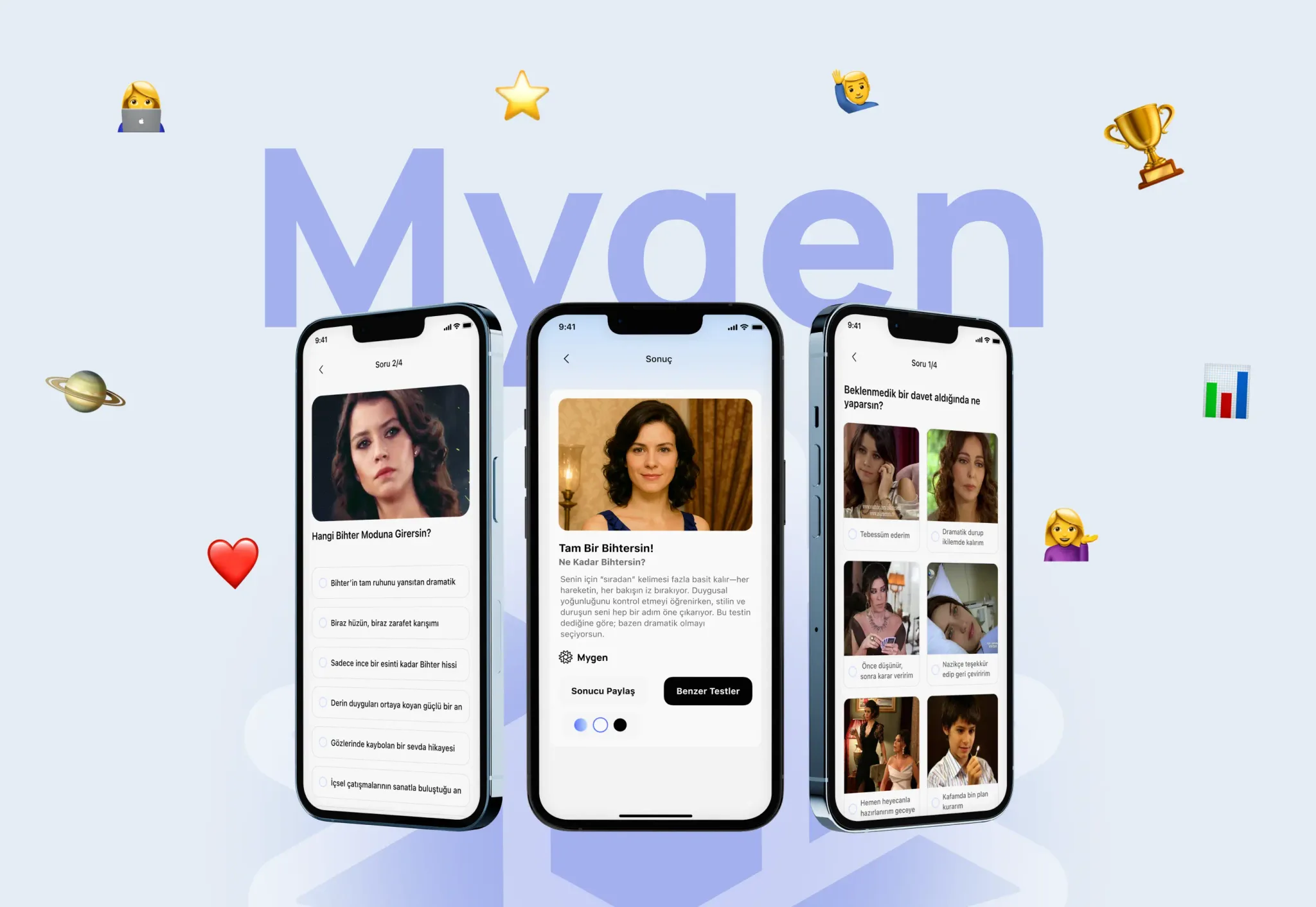
Mygen
Onedio’s tests had a large web audience and no app. We built Mygen for iOS and Android, and designed the result screen to be the thing people share.
In Short
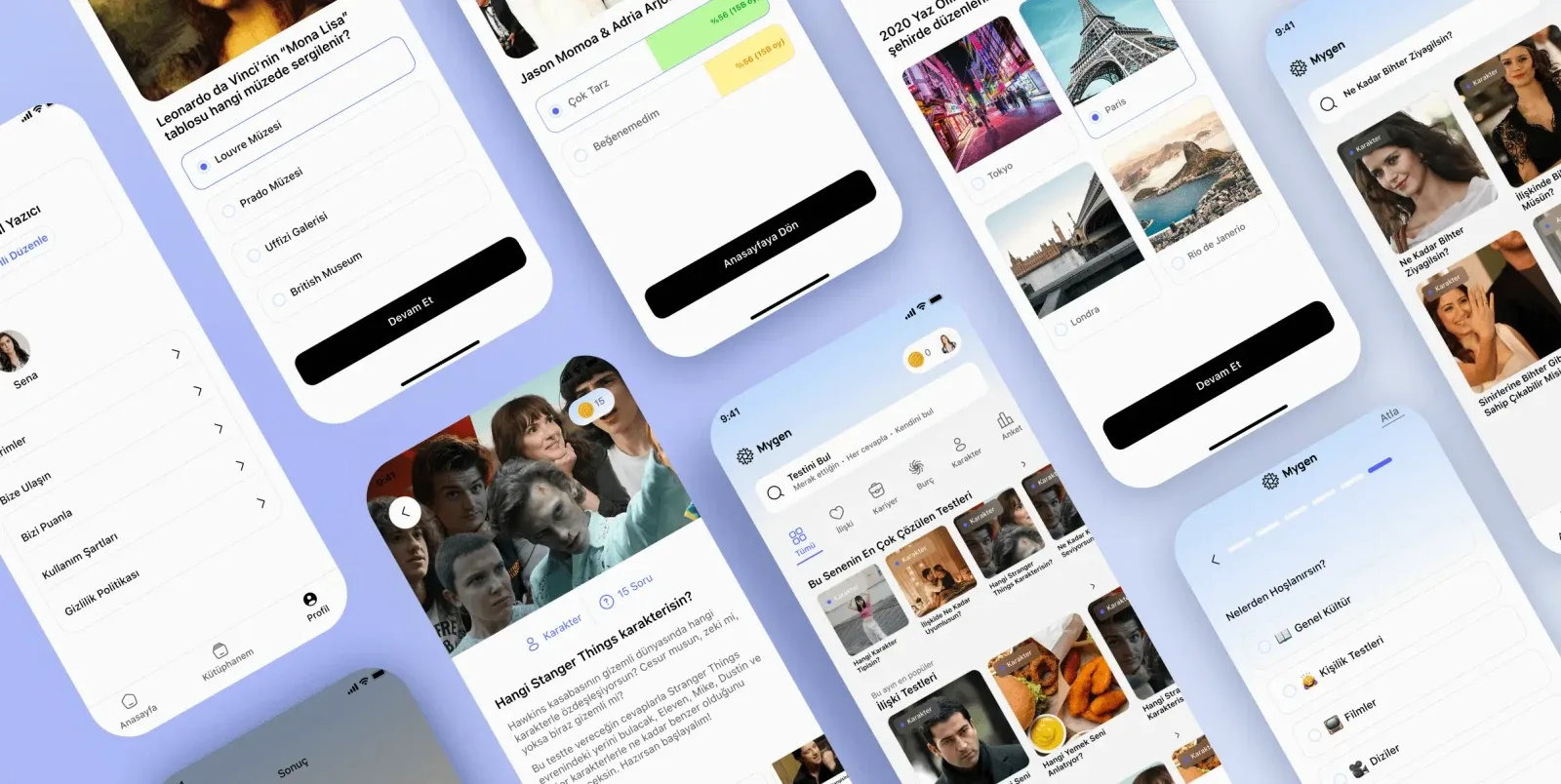
Mygen is Onedio’s test and quiz app for iOS and Android, designed and built by Neon Apps in a two-month project in 2025. It takes the tests Onedio’s readers already knew from the web and puts them in one browsable library. Before the first question, the app asks for a name, a photo and a few interests, so the result at the end is about the person who took the test. That result arrives with a share sheet and a version already sized for stories. Everything runs on one Flutter codebase, and the tests themselves are data, so Onedio’s editors can publish a new test without waiting for an app update.
Onedio is one of Turkey’s best-known digital content platforms, and its tests are a large part of why people go there. Readers take one, screenshot the result and send it to a friend. All of that was happening in a browser, one link at a time. Mygen is the same content as a product of its own. Neon Apps ran it end to end, scoping the product with Onedio’s editorial team, designing it and building it for iOS and Android.
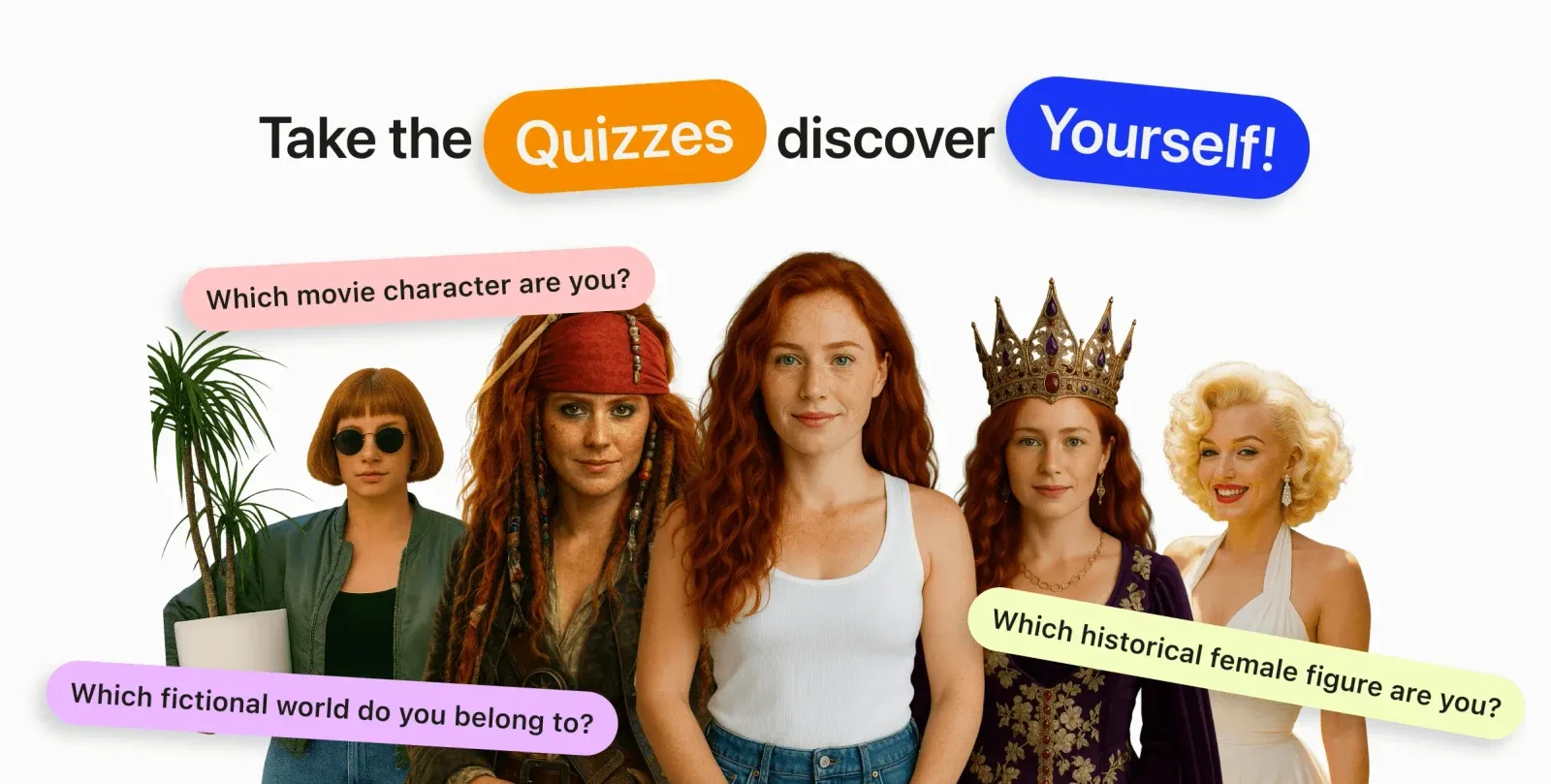
Tests that only lived as links
On the web, a test is a single page you land on, take and leave. There is nothing to come back to and nothing to open tomorrow. Three things had to change before an app made sense.
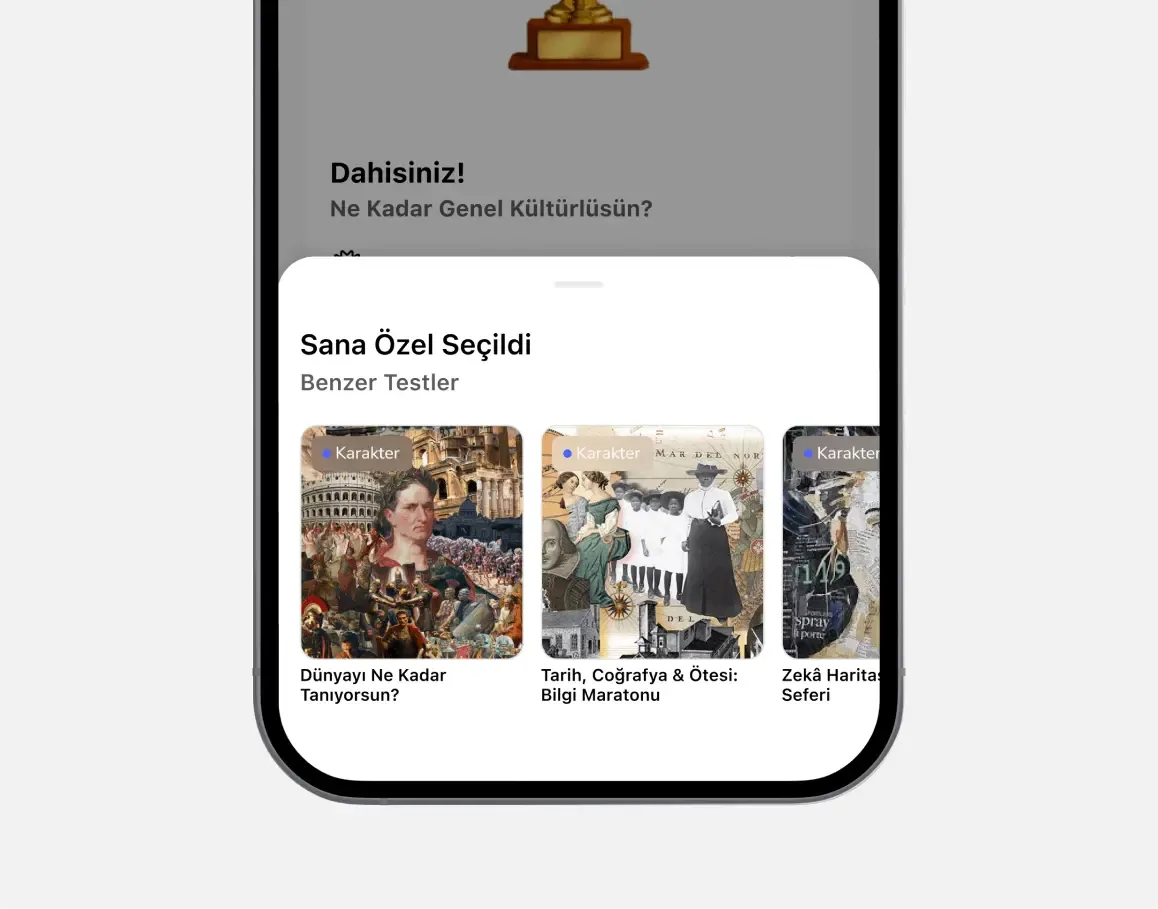
A library, not a link. The tests needed a place people could browse, with categories, editorial picks and a home screen worth opening a second time.
Results that are about you. A generic result is forgettable. If the app knows your name and has your photo, the last screen is worth reading and worth keeping.
Sharing faster than a screenshot. Screenshots were already the habit. The app had to be faster than taking a screenshot, and hand people an image that already looks right in a story.
How we scoped it
A user does four things. They find a test, take it, get a result and share it. We started there, and anything that did not serve one of those four stayed out of the first version. The larger decision was to treat tests as content rather than as screens, because Onedio publishes constantly and could not wait on our release cycle.
Four screens, one flow. Discovery, question, result, share. Each screen is there because the next one depends on it.
Personal before the first question. Name, photo and interests come first, in three quick steps, so the result at the end has real details to use.
One engine for every format. Single choice, photo questions, polls and true or false all run on the same engine. A new test became a content job instead of a design job.
Why Flutter
Two platforms, one team, two months. Flutter let us build iOS and Android from a single codebase and spend the time on the flow instead of writing it twice. The other decision that mattered was keeping the tests in data. The app knows how to render each question type, and Onedio provides the content.
Frequently asked questions
Let's Connect
Got a project? We build world-class mobile and web apps for startups and global brands.
